Showing posts with label wine tasting. Show all posts

17 April 2009

News + The Manhattan Project

A couple of quick news items:

First up, frequent commenter and fellow wine blogger Samantha Dugan has moved her site from Yahoo back to Blogspot. The new address for Samantha Sans Dosage is http://sansdosage.blogspot.com/. While I'm mucking around with bean-stuffed potatoes and Serbian prune brandy, she's tasting great Champagne and fine Burgundy. I think you'll find the new site easier to read, and definitely easier for commenting. Stop by her new site and show some love for the west coast sister.

Secondly... I've got another online wine tasting coming up. Thursday, April 30th at 7:00 p.m. (Central Daylight Time). Again, this will be held over at Whining & Dining, a blog affiliated with my hometown newspaper The Commercial Appeal. This time it's fried chicken and sparkling wine. Get your bucket or box o' chicken, and pick up a bottle of the non-vintage Domaine Ste. Michelle Blanc de Noirs. Chill the wine ahead of time, chill the chicken if you prefer yours cold, and join us at 7:00 to chat about it. Just keep a napkin handy so your keyboard doesn't get greasy.

* * *

Now, about the Manhattan Project... My buddy Paul and I have been enjoying Manhattans as a nice pre-dinner beverage for the past year, and lately I've been mixing it up with different bitters. Since I have ten different bottles at home, I decided I needed to go through all of them. Note that this is not a review of which bitters are inherently good or bad, just which ones are best for this particular cocktail. Grapefruit didn't work so well, but would be great in a Sea Breeze or a traditional Margarita (i.e., not a green beverage mostly comprised of corn syrup).

For the sake of science, these were all tested over the course of a few weeks, using the following baseline recipe:

2 oz. Maker's Mark Bourbon
1 oz. Noilly Prat Sweet Red Vermouth
(stir the above in a cocktail shaker with ice)
1 maraschino cherry*
2 dashes of bitters

Here's the reviews of 10 Manhattans with 10 different bitters:

Commonly Available Bitters
  • Angostura: The baseline bitters found everywhere, turns it almost like cola or root beer
  • Peychaud's: Medicinal, bracing. Outside of a Sazerac it's hard to find a good use for Peychaud's. Inside of a Sazerac, it's too dark. With apologies to Groucho.
Fee Brothers Bitters
(see a previous post for more details)

  • Lemon: Too overpowering for a Manhattan; too bright and citric
  • West Indian Orange: Quite good, a decent standard
  • Old Fashion: A great standard like the West Indian Orange but with more spice and depth
  • Rhubarb: Too delicate for this cocktail, the Bourbon completely overwhelmed it
  • Grapefruit: Too tart and distracting, it throws off the entire balance of the cocktail
  • Mint: Oddly fun--it impacts the aroma more than the flavor, but it had its own crazy charm
  • Cherry: For this I omitted the cherry from the cocktail, but the bitters provided a great flavor without the syrup texture and sweet edge
  • Peach: The surprise winner of the group. Wow. Peach and cherry go together in dessert, but here they blend in a new and unexpected way. This is the one to use when you want to amaze your friends with the power of bitters.
*For additional fun, buy a jar of maraschino cherries and strain out all the red juice. Then pour your bourbon of choice over the cherries, and let sit. Over time the cherries take on a great flavor, and when you're done you've got a sweet Bourbon-Cherry syrup that you can use over ice cream or in some other dessert.

16 January 2008

Barolo Tasting

Every once in a while I am fortunate enough to taste wines outside of my usual sub-$30 beat. Mike Whitfield, local food/wine guru and longtime family friend, gave me a call this past weekend and asked if I wanted to taste some Barolos, including those up to 40 years old. He didn't have to beg me.

Sunday we met up at the Brooks Museum of Art to join around a dozen others for a tasting of 16 Barolos ranging in vintage from 1967 to 1985, with one 1996 thrown in for good measure. The tasting was hosted and guided by Mary Lynn and Tom Cassidy, who provided a wealth of background information on the various producers and vintages. I would copy all that here, but it would become a book and not a blog post.

I'm not going to provide details on all of these, but will point out a few notes in general. The 20-year old Barolos were dark red, and still fairly bold. As they moved back to the 30- and 40-year old flights, the color got lighter and more orange, providing sort of a brick color. Most still had firm acidity. Some had passed their prime, most others were delightful. All were decanted and allowed to breathe for about an hour and a half before serving.

For those wanting more information on the Barolo region (northwest Italy/Nebbiolo grape), here's a decent summary. And here's Lettie Teague on the Barolo Wars between the traditionlists and the modernists.

The food was out of this world, and it was fun to try the different wines on their own and with the various courses. By the last course you had seventeen glasses in front of you spanning 30 years.

Flight 1:
1967 Giuseppe Marbarini
1967 Bersano
1967 Monforte Massolino Mascarello e Figlio
1967 Terre del Barolo Falletto Reserva

Course 1: grilled baby octopus with fingerling potatoes. Baby octopus is one of my favorite ingredients in the world, and I was overjoyed to see it on my plate.

Note: Drinking several wines from this year was a real treat. When those grapes were picked, my parents were in high school and the moon landing was still two years away. I like to think of the rain that fell in Italy, traveled up the roots, plumped up the grapes, and eventually found its way into that bottle. Forty years later, the voyage of those raindrops continued into my glass.

Flight 2:
1968 Ferruccio Nicolello
1970 Ferruccio Nicolello
1970 Pio Cesare

Course 2: dates stuffed with sweet sausage and wrapped with bacon, risotto, surrounded by chestnut soup. Heavenly. The sweet/salty/savory combination was amazing, and the chestnut soup was a unique addition to the dish.

Flight 3:
1978 Terre del Barolo Falletto Reserva
1978 Pio Cesare
1978 Giovanni Scanavino (my favorite, thanks mostly to the beautiful cedar chest nose)
1978 Massolino Vigna Rionda

Course 3: lamb ribeyes, ravioli stuffed with sweetbreads, spinach, and pomegranate au jus. The ribeyes were tiny but full-flavored, and the ravioli were delicate and mild.

Flight 4:
1982 Marchesi di Barolo Sarmassa
1982 Pio Cesare (a clear favorite of the group)
1985 Pio Cesare
1985 Terre del Barolo Falletto Reserva
1985 Massolino Vigna Rionda
1996 Cannubi (provided an excellent younger benchmark to better understand the older wines)

Course 4: Barolo-braised short ribs with olives and gnocchi drizzled with a basil purée. By far the lightest and most delicate gnocchi I've ever eaten, and the meat was fork-tender.

Note: While I've got a few fragmentary memories of 1979 forward, the period of 1982-1985 is pretty vivid for me. Six to nine was a fun age, full of Legos and building forts and church baseball and riding bikes all day long.

I've used this phrase in the past, but sitting down with great wines over a couple of hours is an excellent way to spend a Sunday afternoon. The Brooks is hosting a number of wine-related events in the next several months as part of The Art of Good Taste 2008. These tastings and auctions are a great way to experience some fantastic wine as well as support the oldest and largest art museum in the Volunteer State.

14 February 2007

Tasting Notes for February 10, 2007

For this tasting, the theme was Valentine's Day, sometimes by the name or label rather than the wine itself.

Wine 1: 2002 Domaine Carneros by Taittinger. Napa Valley, California. A wonderful sparkling wine with a lot of acclaim and a nice price tag. Yeasty aroma, a crisp start with a smooth finish. Spice cake flavors. Lovely wine. $27.

Wine 2: 2005 Arrogant Frog "Ribet White". Languedoc, France. 60% Chardonnay, 40% Viognier. Strong dried fruit aromas, very dry and mild, not tart. Slightly bitter. $10.

Wine 3: 2005 Little Black Dress Chardonnay. California. "Fashioned specifically to capture the pure essence of what a woman wants in a wine..." I've gotten mixed responses from female friends on wine marketing targeted at women. I'm just waiting for the day when Oprah starts her own on-air wine club. Bright fruit aromas, a little tart, and medium dry. Lovely balance and a good value. $10.

Wine 4: 2004 Virgin Vines Chardonnay. California. This one gets a lot of bad press, but I didn't think it was terrible. Little or no nose, creamy flavor with light citrus notes. $10.

Wine 5: 2005 Cycles Gladiator. Central Coast, California. This is a dry rosé from unknown grapes. Bright cherry aromas, but virtually no flavors discernible on the tongue. Bitter finish. $10.

Wine 6: 2005 Bodegas Ada "Red Guitar". Navarra, Spain. 55% Tempranillo and 45% Garnacha. Black cherry aromas and flavors, mild mouth feel with balanced tannins. Smooth finish. Great bargain. $13.

Wine 7: 2003 Reilly's "Barking Mad" Cabernet Sauvignon. Clare Valley, Australia. Slightly hot aroma, almost Zinfandel like. Firm tannins with a strong finish. Could use some breathing. $16.

Wine 8: 2004 Shannon Ridge "Two Angels" Petite Sirah. Lake County, California. Another slightly hot one, very spicy but with some berry flavors that develop on the finish. $27.

Wine 9: 2005 3 Rings Shiraz. Barossa Valley, Australia. Peppery, luscious fruit flavors, particularly blackberry. Excellent structure. Why doesn't Marquis Phillips have a website? $20.

Wine 10: NV Bleasdale "The Red Brute" Sparkling Shiraz. Langhorne Creek, Australia. Sparkling Shiraz is sort of a new thing around here, and it hasn't really caught on. And given the old geezer on the label, the packaging isn't exactly romantic. However, I was quite taken with the wine. Bright raspberry aroma, light bubbles, just a touch of tannins. I'm looking forward to experimenting with this class of wine in the future. $17.

Wine 11: 2005 Bonny Doon "The Heart Has Its Rieslings. Washington. Nice petrol aroma, sweet, but the sweetness fades quickly. Honey and nectar flavors. $18.

Wine 12: NV Bonny Doon Framboise. Washington. This is a raspberry liqueur, made from Meeker, Tulameen, and Morrison varieties of raspberry. Big raspberry aromas, but not quite as sweet as you might imagine. Excellent tartness and acidity. Would go great with high-quality vanilla ice cream, or even served in a cordial glass alongside a slice of cheesecake. I had something similar from Bonny Doon about eight years ago that was made from strawberries. This offering brought back many good memories. $16 (375mL bottle).

28 January 2007

Tasting Notes for January 20 & January 27, 2007

This was a two-part wine tasting spread out over two weeks. Great Wines & Spirits likes to do an Affordable French tasting, and this season they had two dozen. I'm just going to keep the whites together and the reds together rather than separate them by date. As usual with French wines, there's not always a website for the producer. So I try to link to a distributor, retailer, or blog, something that has any useful information. Sometimes the only information isn't available in English.

I should note yet again for the record that I do not speak French beyond basic conversation/pleasantries, nor do I have any formal training in that language, but I've picked up a lot over the years. Malheureusement, je parle le français comme une vache espagnole. I try hard to use the proper spellings for all of these different châteaux et vins. (If any other bloggers want help with displaying custom European characters, drop a note in the comments and I'll do a tutorial post later. Those are easy; the Greek and Eastern European/Russian characters generally require the person on the viewing end to have their browser configured properly.) Since most of my French vocabulary revolves around food and wine, I can usually muddle through websites or recipes without too much trouble, though browsing for 24 French wines in a row wore me out. In Italian, the longer I go the more comfortable I get, but with German and French I start getting a headache after a while. C'est la vie.

By the way, if you're looking for something pricier, Slate has a good story on a writer's quest for a certain $700 White Burgundy.

Wine 1: 2005 La Vieille Ferme Blanc. Côtes du Luberon, France. An organic wine made of Grenache Blanc, Roussanne and Ugni Blanc. The name means "The Old Farm". Fruity nose of nectarines. Bright and crisp flavor yet pleasantly dry. Great bargain at $9, also available in a magnum for around $15.

Wine 2: 2005 Château Trocard Sauvignon Blanc. Bordeaux, France. 80% Sauvignon Blanc and 20% Semillon. Fairly closed on the nose. A fruity flavor, yet slightly bitter. I had mixed reactions to this wine, would prefer to have it with food. $12.

Wine 3: 2004 Kuentz-Bas Pinot Blanc. Alsace, France. Very light nose, almost bubbly crispness. Tart and acidic. $16.

Wine 4: 2001 Lycée Viticole Blanc. Beaune, Burgundy, France. A fun white Burgundy with popcorn and cotton candy nose, very smooth and easy drinking. A short finish. This wine and the Lycée Viticole Rouge below are both produced at a French wine school there in Burgundy. The site linked is in French; there's not much English language information about these wines. $30.

Wine 5: 2002 Jean Thevenet Domaine de la Bongran. Mâconnais, Burgundy, France. Solid flavors, with some green apple present. Medium tartness with good balance. Might benefit from a little time to open up, but I enjoyed it as is. $35.

Wine 6: 2004 Félines Jourdan Picpoul de Pinet. Coteaux du Languedoc, France. Made of 100% Picpoul de Pinet. Lemon and peach aroma, more peach flavor. Smooth, not tart with a short finish. Very pleasant. $14.

Wine 7: 2005 Château Graville-Lacoste. Graves, Bordeaux, France. 80% Semillon, 15% Sauvignon Blanc, and 5% Muscadelle. Harsh aroma, but with a creamy mouth feel and mild flavors. Unusual wine. $18.

Wine 8: 2005 Earl Delaille Domaine Salvard Cheverny. Loire, France. Citric, grapefruit aroma with matching flavors. Medium tartness, a little thin. $15.

Wine 9: 2005 2005 "Les Charmes" Macon-Lugny. Mâconnais, Burgundy, France. A lovely unoaked Chardonnay, a little creamy a little ash, well balanced. Excellent bargain White Burgundy. $13.

Wine 10: 2004 Red Bicyclette Chardonnay. Limoux, France. Round and creamy with decent oak notes, some pear flavors on the finish. Good everyday white. $11.

Wine 11: 2004 Domaine Canto Perdrix Tavel Rosé. Provence, France. I am a lover of dry rosés but I wasn't impressed with this one. There are some very mild berry flavors, but it's ultimately watery and thin. Needs a lot more body, and I'm not talking about a fruit bomb. $20.

Wine 12: NV Verget "Au Fil du Temps" Vin de Table Francais. Burgundy, France. Jammy, Port-style nose. Overripe strawberry flavors dominate. Surprisingly smooth, though. $11.

Wine 13: 2000 Cote de Beaune Domaine du Lycée Viticole. Beaune, Burgundy, France. Another entry from the French winemaking school. Mild cherry aromas with a hint of meat. Light and delicate, through a few tannins remain. Melts in your mouth. I picked up a bottle of this, more detailed notes will follow in a future post. $23.

Wine 14: 2004 Clos La Coutale. Cahors, France. 70% Malbec, 15% Merlot, and 15% Tannat. The third Cahors wine that I've had, that oddball region of France that's the last bastion of majority Malbec production. This one has a mild nose, with medium tannins and no big surprises on the palate. I'd be willing to give it a chance with another year or two of aging. $15.

Wine 15: 2003 Château Trocard Bordeaux Superieur. Bordeaux, France. Roast beef aroma, melting tannins. Mild and easy drinking. Good claret-style bargain. $12.

Wine 16: 2004 Château Filet Rouge. Fronsac, Bordeaux, France. Right bank Merlot with a mild nose, medium tannins. Long finish where the plum skin flavors come through. $20.

Wine 17: 2003 Château Moulin de Lavaud. Lalande de Pomerol, Bordeaux, France. Slightly hot on the nose, but with a wonderful black pepper aroma and black cherry flavors. $33.

Wine 18: NV Roncier Rouge. Burgundy, France. Meat and strawberries on the nose, very peppery, a little tangy. I try a bottle or two of this every year, and it's always a little different. $10.

Wine 19: 2005 La Vieille Ferme Rouge. Côtes du Ventoux, France. A blend of Grenache, Syrah, Carignan and Cinsault. Really enjoyable--black cherry aromas, flavors continue on the palate but are not jammy. Delicate and incredible for the price. $9.

Wine 20: 2003 Domaine de Gournier Merlot. Vin de Pays Cevennes, France. Not much on the nose, slightly hot aroma with some plum flavors. $13.

Wine 21: 2004 Maison Rivière Menuts. Saint-Emilion, Bordeaux. 75% Merlot, 15% Cabernet Sauvignon, 10% Cabernet Franc. Some notes of leather and cherry on the nose, with a firm structure, medium tannins, and a short finish. I picked up a bottle, so more details will follow in a later post. $15.

Wine 22: 2000 Château de Francs. Côtes de Francs, Bordeaux, France. Very earthy aroma, tangy flavor. Difficult to pin down characteristics. Needs breathing time. $25.

Wine 23: NV Vin de Pays de la Petite Crau. Bouches-du-Rhone, France. A French table wine with mild cherry flavor, firm tannins, and a bright fruit mouthfeel. $13.

Wine 24: 2005 Cuvée Richette. Côtes du Rhône, France. Couldn't find any information on this wine. It's a decent CDR with a mild fruit flavor, medium tannins, and a good overall balance. $15.

19 January 2007

Tasting Notes for January 6, 2007

Ah, the first tasting of 2007 at Great Wines. The theme was decent bargain wines under $15 (with two higher end wines thrown in).

Wine 1: Voga Pinot Grigio. Veneto/Trentino, Italy. Fairly sure this is non-vintage. The packaging tends to suggest a shampoo, premium olive oil, or a prop in a science-fiction film. Yet even though I'm not a big fan of Pinot Grigio, I found this one interesting. It's crisp, ever-so-slightly sweet, with a lemony flavor to it. $13.

Wine 2: Fazi Battaglia Verdicchio dei Castelli di Jesi. Le Marche, Italy. Another unusual bottle shape, imagine a classic glass Coke bottle stretched out to the height of a standard wine bottle. This has that sort of "wet rocks" minerality that one writer described as petrichor. Mild with a tart finish, light and refreshing. Good bargain, and definitely something to talk about. $12.

Wine 3: 2003 Cucao Chardonnay. Casablanca Valley, Chile. (Incidentally, that link comes via Andrew. He and I worked together on the Combinations challenges, and he's up for various blog awards. His photography is stunning.) This has a big, fruity nose, with flavors of pear nectar but not sweet. Unusual for a Chardonnay, but enjoyable. $11.

Wine 4: 2006 Nobilo Sauvignon Blanc. Marlborough, New Zealand. If you ever wanted a fantastic textbook example of New Zealand Sauvignon Blanc, look no further. Full of rich grapefruit aroma and flavor. Dry and well balanced. Screams out for shellfish or grilled fish or a salad. $12.

Wine 5: Liberty School Chardonnay. Monterey County, California. Little floral notes one the nose. Peachy. Unusual flavor for a Chardonnay with a slight, Muscat-like musk. $14.

Wine 6: 2005 Mirassou Pinot Noir. California. Strawberry jam aroma, soft and balanced. Surprisingly good, and I wasn't impressed with some recent vintages. It's still damned hard to find a decent Pinot Noir under $20, but this can be a starting point if you're new to the grape. $10.

Wine 7: 2003 Columbia Crest Grand Estates Merlot. Columbia Valley, Washington. Bold flavor for a Merlot, with stewed fruits and plums dominating, with just a mild ashy feeling on the tongue. Excellent and a good bargain. $13.

Wine 8: 2004 Concannon Petite Sirah. Livermore Valley, California. I love this grape, and these are the folks responsible for making it popular. Dark cherry and plum flavors, medium tannins, with a nice long finish. If you want a hearty, fruit-forward red to go with a steak or grilled burgers, try this out. $12.

Wine 9: 2005 Henry's Drive "Pillar Box" Red. Padthaway, Australia. Cabernet Sauvignon, Shiraz, and Merlot, imported by the folks at Grateful Palate. Creamy mouth feel, a little spice, and with some dark fruit. An excellent table red. $12.

Wine 10: 2004 The Wishing Tree Shiraz. Western Australia/South Australia. Part of The Australian Premium Wine Collection. Woody, vegetal aroma, mild flavor. Interesting nontraditional Shiraz. $13.

Wine 11: 2004 Penfolds Koonunga Hill Shiraz-Cabernet. Barossa/McLaren/Coonawarra, Australia. Bright cherry flavor, and Penfolds is often a crowd pleaser at all of its product levels. $11.

Wine 12: 2001 White Oak Syrah. Alexander Valley, California. Well aged and balanced. Plum flavors with properly mellowed tannins. $25.

Wine 13: 2003 Pine Ridge Crimson Creek Merlot. Napa Valley, California. Ripe strawberry aromas and flavors, good balance, soft but still holding on to mouth-drying tannins. $30.

03 December 2006

Tasting Notes for December 2, 2006

With the holidays and other commitments, it's been a while since I've been to a proper wine tasting. What better way to get back in gear than with a sparkling wine tasting?

Note: All of these wines are Non Vintage unless otherwise specified. Also, I've had about half of these wines before, but it's always interesting to give something a second try.

Wine 1: Louis Perdrier Brut Blanc de Blanc. Beaune, Burgundy. There's a little toasted bread on top, and the flavor is slightly tart with a short finish. A little bit of an odd aftertaste, but it's still a great bargain if you're making cocktails or just want a bottle of bubbly to open. $9.

Wine 2: Segura Viudas Aria. Catalonia, Spain. A lovely sparkling rosé made of Pinot Noir. Definitely a fun wine to drink. Strawberry flavors and aromas are present though subtle, with a fruity nose and crisp mouth feel. $12.

Wine 3: Nino Franco "Rustico" Prosecco. Valdobbiadene, Italy. The sheet provided at the tasting notes that this is the wine used to make the first Bellini at Harry's Bar in Venice. (A Bellini is just sparkling wine mixed with either a fresh peach puree or peach juice.) There are some apple aromas, clean with a crisp flavor and fairly neutral but not bad. Dry and refreshing. $18.

Intermission: On Wine #4 and Wine #12, I got an aroma of roast duck right off the bat. It's the first time I've encountered this in a wine, and though the first one could have been a fluke, the second time confirmed it. Maybe it's just because of the amount of duck I've had in the past month, but it was spot-on. I'm guessing that it's a combination of the toast aromas you often get in sparklers, combined with a little gaminess and maybe just a hint of sulfur. I don't want it to sound like a flaw--it was wonderful, just surprising.

Wine 4:
Gloria Ferrer Sonoma Brut
. Sonoma, California. Aside from the roast duck aroma, it's got solid fruitiness, a little tart, dry and with a clean finish. $18.

Wine 5: 2003 Bailly-Lapierre Crémant de Bourgogne Rosé. Burgundy, France. Creamy cherry aroma, some bright berry flavors. Soft finish, a nice fun wine. And I'm always up for a roseé. $20.

Wine 6: Schramsberg Blanc de Noirs. Napa, California. Fresh bread dough aromas, some vegetal and slightly herbal flavors, with a crisp finish. A well balanced and mature sparkling wine. $35.

Wine 7: Nicholas Feuillatte Brut Champagne. Champagne, France. Very mild and smooth, dignified. Dry and properly balanced. $40.

Wine 8: Louis Roederer Brut Premier Champagne. Champagne, France. From the producer of the famous Cristal. Strong toasted bread aroma, light citrus elements, wonderful aftertaste and crisp bubbles. Pretty amazing for the price. $45.

Wine 9: 1995 Perrier-Jouet Fleuer de Champagne Brut. Champagne, France. Dark and musky aroma, almost like a Muscat-based wine. Lemon custard flavors, with a little spice cake on the finish. Probably the star of the tasting. $140.

Wine 10: Mumm Cuvée M. Napa, California. Light aroma, creamy mouth feel, with a slightly sweet finish. $20.

Wine 11: Schramsberg Crémant. Napa, California. Lovely, light sweetness, creamy flavor and utterly delicious. $35.

Wine 12: Chandon California Rosé. Napa, California. Again, I got roast duck on the nose. The flavor was full fruit, but pleasantly dry and not sweet. Also, the wine isn't anywhere near as bright pink as it looks on the website. $20.

13 October 2006

Tasting Notes for October 7, 2006

Theme for the day: Rhone Varietals.

Wine 1: 2004 Guigal Côtes du Rhône Blanc. Rhone, France. Mix of Grenache Blanc, Marsanne, and Roussanne. Light and fruity, with a little sweetness. Lots of pear, some peach flavors. $11.

Wine 2: 2004 Rosenblum Chateau La Paws Cote du Bone Blanc. California. Rhone whites with some Viognier in there. Bright, green apple nose. Very mild and light with a slightly bitter aftertaste. $15.

Wine 3: 2004 Tablas Creek Grenache Blanc. Paso Robles, California. This is the first pure Grenache Blanc that I've had. No discernable nose to it; I found it kind of neutral. Perhaps it should have been a little closer to room temperature? $28.

Wine 4: 2003 Rosenblum Roussane Fess Parker Vineyard. Santa Barbara, California. Prominent taste and aroma of bananas with a little citrus. Full, round mouth feel. An unusual yet delicious wine. $21.

Wine 5: 2005 Rosenblum Viognier Kathy's Cuvee. California. Lightly sweet, acidic and crisp. Missing the herbal notes that you get in some Viogniers, but a good solid wine. $19.

Wine 6: 2004 La Vielle Ferme Rouge Cotes du Ventoux. Rhone, France. 50% Grenache, 20% Syrah, 15% Carignan, 15% Cinsault. Ripe strawberry and cherry aromas, light and refreshing with mild tannins. Good bargain. $9.

Wine 7: 2004 Las Rocas Garnacha. Calatayud, Spain. This is the second or third time I've had this wine, and I still love it. $10.

Wine 8: 2001 Caves des Papes "Oratorio" Gigondas. Rhone, France. 80% Grenache, 10% Syrah, 10% Mourvedre. Very light and mild, mineral notes on the finish. Very delicate. $34.

Wine 9: La Crau de Ma Mere Châteauneuf-du-Pape. Rhone, France. Not much of a nose, but some barnyard flavors with good fruit. Drying tannins. $36.

Wine 10: 2003 Tablas Creek Esprit de Beaucastel Rouge. Paso Robles, California. 50% Mourvèdre, 27% Syrah, 16% Grenache, 7% Counoise. Hey, another new grape! Counoise is a Rhone grape used in blending Châteauneuf-du-Pape. Black cherry nose, with matching flavors including plum. Full, firm tannins. $40.

Wine 11: 2004 Altos de Luzon. Jumilla, Spain. Blend of Mourvedre, Cabernet Sauvignon, and Tempranillo. Very dark. Rich, deep dark plum and blackberry flavors. Complex and delicious. $16.

08 October 2006

Cognac Tasting Notes for October 5, 2006

Last Thursday, I took my father to a guided Cognac tasting hosted by Frédéric Goossens, the Southern USA Regional Director for Pierre Ferrand. Frédéric is from France originally, and in addition to providing information on the various Cognacs we tasted, he also lectured on the history of Cognac as well as details of the production process. Dad and I arrived early, and got to hang out with Frédéric. I got to show off my poor mastery of the French language, and when Frédéric asked us how we heard about the tasting, I mentioned that I was a regular at this particular host's tastings, and that I'd brought my father because of his love of Cognac. We then proceded to tell him about the time 15 years ago when I, a mere teenager, was awakened by my father on Christmas Eve. He had been at work (at the airport) late that night, receiving gifts from abroad: expensive French cognac from some Japanese friends and fresh smoked salmon from his Norwegian contacts. It was two in the morning, and we stayed up watching old black and white movies, eating huge slabs of smoked salmon, and sipping cognac.

Interesting bits of trivia:
  • Cognac became really popular after the marriage of Eleanor of Aquitaine to Henry Plantagenet in 1152, where it was a featured beverage.
  • Armagnac never really became popular worldwide, as it is landlocked and distribution was difficult over land. Cognac, on the other hand, is situated right next to the Charente River, providing easy access to the Atlantic Ocean.
  • To properly sniff Cognac, you must do it three times: hold it against your chest, then at neck level, and finally stick your nose in the glass.
  • Contrary to popular opinion, snifters are not the ideal drinking glasses. Regular wine glasses are much more appropriate.

We tasted six in all--five Cognacs and one Armagnac. The Cognacs can all be found at the above link, and the Armagnac is on a nearby page. We tasted the Armagnac last, but I'm going to write about it first because it was the least impressive of the group, and frankly, after the really old Cognacs, it never had a chance. I found it strong and bold, rougher on the palate than any of the other selections. Much of this was due to single distillation rather than the double distillation required for Cognac. $42.

All of these come from Grand Champagne, the premiere subregion within Cognac. All were served in separate glasses and allowed to breathe for at least 30 minutes before tasting.

Cognac 1: 10 Year Old Ambre. I found it a little thin, but it had a wonderful aroma. It was definitely the most pale of all the offerings. $43.

Cognac 2: 20 Year Old Reserve. Probably my favorite of the tasting, if by favorite you mean something I could potentially afford and really enjoyed. Very smooth, with a light sweetness. Touches of almonds and licorice on the nose and tongue. $64.

Cognac 3: 25 Year Old Cigare. Designed with an attractive cigar band style label above the main label and intended for pairing with cigars. I found more orange and spice on this one, though it was in many ways similar to the 20 year old. $90.

Cognac 4: 30 Year Old Selection des Anges. Named after the "angel's share", that portion of a distilled spirit that is lost due to evaporation. A mild aroma, and smooth as cream on the palate. Smells and tastes included candied fruits, mint, vanilla. Quite complex. $116.

Cognac 5: 45 Year Old Abel. Named after the grandfather of Pierre Ferrand, and poured into a lovely handblown bottle. Smooth and creamy like the 30 year old, but even more so. Some aromas of cherry and almonds. It was hard to keep myself from licking the inside of the glass to get every last drop. $240.

24 September 2006

Tasting Notes for September 23, 2006

I was pretty excited about this tasting... All of the wines below come from Shelton Vineyards in the Yadkin Valley of North Carolina. I've never had North Carolina wine before. Based off my experience with Tennessee wines, I was a little apprehensive, but everything was great. All of the wines use traditional European grapes as opposed to the American natives and hybrids you get elsewhere in the South. There was a representative from the vineyard on hand to answer questions. Currently, about 70% of their sales are in North Carolina, and the wines are available in limited quantities in ten other states.

Wine 1: NV Shelton Madison Lee White. 72% Chardonnay, 14% Viognier, 10% Riesling, 3% Pinot Blanc, 1% Sauvignon Blanc. Bright and tart, lemony but not sweet. Very refreshing. Nice way to open up the palate. $10.

Wine 2: NV Shelton Vineyards Riesling. 95% Riesling and 5% Viognier. Lightly sweet, but with a very full mouth feel. Honey like. Lots of fun, low acidity. A really surprising Riesling. Reminded me of some similar bottles from Oregon. $12.

Wine 3: 2005 Shelton Vineyards Bin 17 Chardonnay. Pure Chardonnay. This one didn't do much for me, I thought it had an unusual taste that I couldn't quite pin down and a bitter finish. Probably should have tasted it before the Riesling, though. $10.

Wine 4: NV Salem Fork Blush. The website claims this is made with Sangiovese and Viognier, but the rep said it was a rosé of Sangiovese and Zinfandel. The latter is the reason why it doesn't bear the Shelton name on the label--they don't grow Zinfandel grapes in that area and have to import them. Despite the appearance, it's not a sweet wine. Rather, it's bold and fruity. I really enjoyed it. $8.

Wine 5: NV Shelton Madison Lee Red. 33% Merlot, 28.6% Cabernet Sauvignon, 22.1% Sangiovese, 10.4% Cabernet Franc, 3.3% Syrah, 2.6% Petite Verdot. Sort of a Bordeaux with Sangiovese thrown in for fun. A surprisingly good table red, well balanced and applicable to a wide range of foods. She said that it was their pizza and burger wine, and I think it would work well with even higher class fare. $10.

Wine 6: 2002 Shelton Cabernet Franc. 92% Cabernet Franc, 5% Cabernet Sauvignon, 3% Merlot. Wow. Black cherry flavors and aromas, with some of that nice herbal character you get from the Cab Franc. I was really happy with this wine, and ended up purchasing a bottle after the tasting. It's difficult to find a basically pure Cab Franc for $15.

Wine 7: 2002 Shelton Merlot. 93% Merlot, 7% Cabernet Sauvignon. Medium tannins, mild and light. I found it a little thin, but that could have been the influence of the Cabernet Franc from the previous wine. $15.

Wine 8: 2002 Shelton Cabernet Sauvignon. 85% Cabernet Sauvignon, 15% Merlot. Smooth, cherry flavors abound. Light tannins, light acidity and mild oak. $15.

10 September 2006

Tasting Notes for September 9, 2006

Odd mixed tasting of Spanish, Italian, and Chilean wines.

Wine 1: 2005 Tiefenbrunner Pinot Grigio. Alto Adige, Italy. Probably the best Pinot Grigio I've ever had. A little sweet, but with surprisingly decent body. A little lemon, firm tartness. $16.

Wine 2: 2004 Las Brisas. Rueda, Spain. I tasted this back in June of 2005, and enjoyed it enough to pick up a bottle. It remains a decent bargain white wine--full bodied and fruity, with some grapefruit flavors. Slight bitter edge, but not tart. Perfect for shellfish. $10.

Wine 3: 2005 Cavalchina Bianco di Custoza. Verona, Italy. Mostly Trebbiano, some Cortese and Tocai. Slight sweetness, but sort of flabby. Ultimately dull on the tongue. $15.

Wine 4: 2003 Morandé Terrarum Chardonnay. Maipo Valley, Chile. Clean and thin, some apple aromas. Really a rather neutral wine. Apparently Morandé is ceasing US distribution. $12.

Wine 5: 2004 Piccini Chianit. Tuscany, Italy. I had this a week ago, and it still remains a great bargain Chianti. $9.

Wine 6: 2004 Las Rocas Garnacha. Calatayud, Spain. Lovely little Spanish Grenache. Aromas and flavors run towards ripe strawberries with some plum. Light and refreshing, should be good for a wide range of foods. Just turn the bottle around so you don't have to see the big Comic Sans text on the label. $10.

Wine 7: Bodegas Tikalo 2004 "Rubens" Tierra de Castilla Tempranillo. Ciudad Real, Spain. Some toasted bread aromas on top. Well balanced, light and fruity--odd for a young, inexpensive Tempranillo. Medium tannins. Another great bargain. $10.

Wine 8: 2003 Venta Mazzaron Tempranillo. Castilla de León, Spain. Little heavy and tannic. Dark plum flavors, but very dry. I'd like to try this again after some decanting or breathing. $14.

Wine 9: 2005 Bodega Finca Luzón. Jumilla, Spain. Syrah and Monastrell blend. Black cherry aromas. Good fruit, but exceptionally well balanced. Medium tannins, short finish. $10.

Wine 10: 2003 Mas Donis Barrica. Montsant, Spain. A Grenache and Syrah blend. Light flavor, heavy tannins. A smooth finish, but a little watery. Needs some more punch to it. $14.

03 September 2006

Tasting Notes for August 26, 2006

Here's some week old notes, and a few of these may be repeats from previous weeks... The last of the blind tastings for the summer:

Wine 1: 2005 Hendry Unoaked Napa Chardonnay. Napa, California. Floral and tart. Bright fruit flavor and a slightly bitter finish. $18.

Wine 2: 2005 Casa Silva Sauvignon Blanc. Slight creamy quality, very fruity. Apple and pear dominate. Lovely little wine. Colchagua Valley, Chile. $15.

Wine 3: 2005 Craneford Viognier. Very sweet for a Viognier. Lots of honey and lemon flavors, and the finish tends more to the dry side. Adelaide Hills, Australia. $18.

Wine 4: 2004 Hermanos Lurton Rueda Bianco. Mild and dry with some herbal notes. No prominent flavors, but a pleasant and balanced wine. Rueda, Spain. $13.

Wine 5: 2004 Concha y Toro Casa Concha Chardonnay. Thin aroma. Mild tartness, a little cream. Would be incredible with mild seafood dishes. Maipo Valley, Chile. $18.

Wine 6: 2004 Torres Viña Sol. Very crsip with mild acidity, very short finish. Penedes, Spain. $10.

Wine 7: 2004 Hayman & Hill Pinot Noir. Light strawberry aroma, very mild. Low tannins with a smooth finish. Excellent bargain Pinot Noir. Much improvement since the last time I tried this wine (different patch of grapes, different year, but same producer and varietal). Santa Lucia Highlands, California. $15.

Wine 8: 2003 Cellier des Dauphins Côtes du Rhône. Light, mild tannins, cherry flavors abound. Very enjoyable. Côtes du Rhône, France. $10.

Wine 9: 2003 Domaine La Milliere Merlot. Somewhat hard aroma. Strong unripe strawberry flavors, mild tannins, a short finish. France. $13.

Wine 10: Yauquen Cabernet-Merlot. Harsh tannins, off flavor, bitter flavor. Not impressed. Argentina. $10.

Wine 11: 2001 Osborne Shiraz-Tempranillo. Slightly sweet with full fruit flavors. Plum and black cherry. Mellow tannins. Spain. $11.

Wine 12: 2002 Sebastiani Sonoma County Merlot. Some light pepper aromas and flavor. Strong tannins with a deep structure. Never would have guessed this was a Merlot. Sonoma, California. $17.

Wine 13: 2003 Jacob's Creek Reserve Shiraz. Very deep and dark. Bold fruit, dark plum flavors. Mild tannins. Australia. $16.

Wine 14: 2001 Zenato Ripassa Valpolicella. Strong hot alcohol aroma, but with good raspberry flavors. Full round mouth feel. Complex wine that requires a little extra time to enjoy. Veneto, Italy. $27.

06 August 2006

Tasting Notes for August 5, 2006

The theme for this blind tasting was South America.

Wine 1: 2005 Casa Silva Sauvignon Blanc. Colchagua Valley, Chile. Powerful fruit, mostly peach flavored but dry, light, and refreshing. Lovely wine. $15.

Wine 2: 2005 Casa Lapostelle Sauvignon Blanc. Casablanca Valley, Chile. Thin and creamy, slightly bitter finish. $13.

Wine 3: 2004 Marques de Casa Concha Chardonnay. Maipo Valley, Chile. Thin, mild wine. Some banana aromas and flavors with a hint of lemon. $17.

Wine 4: 2004 Finca La Escondida Reserva Chardonnay. San Juan, Argentina. Buttered toast aromas, mild flavors and smooth finish. Classic Chardonnay. $16.

Wine 5: 2005 Don Rodolfo Torrontés. Argentina. No website found. Honey and flower aromas, dry but with full fruit flavors. Wonderful. $12.

Wine 6: 2004 Tikal Patriota Bonarda-Malbec. Mendoza, Argentina. Black cherry, dry and complex. Medium tannins and overall excellent balance. $26.

Wine 7: 2003 Antis Malbec. Mendoza, Argentina. Dry and mild, very thin with a few hints of raspberry. $15.

Wine 8: 2004 Paul Hobbs El Felino Malbec. Mendoza, Argentina. Plum aromas and flavors, great construction. Nice wine. $31.

Wine 9: 2004 Ruca Malen Yauquen Cabernet Sauvignon-Malbec. Mendoza, Argentina. Great black cherry flavors, firm tannins, and a long finish. Oddly savory for an inexpensive wine. $10.

Wine 10: 2005 Altos Las Hormigas Malbec. Mendoza, Argentina. Harsh alcohol/cough syrup aroma, but a fruity and slightly creamy taste. Mild tannins. Might need some time to breathe and open up. $15.

31 July 2006

Tasting Notes for July 29, 2006

This was a blind tasting of French wines, of which I did fairly well picking out the grape varieties.

Wine 1: 2003 Domaine Félines Jourdan Picpoul de Pinet. Languedoc, France. I think this is the first time I've had wine made from Picpoul Blanc grapes. Lots of fruit, high acidity. Some peach and apple flavors. Not bad. 14.

Wine 2: 2004 Fat Bastard Chardonnay. Southern France. No discernible aroma, but a mild and creamy flavor with some floral elements. Saw this one as a Chardonnay from a mile away. $12.

Wine 3: 2005 Remy Pannier Vouvray. I love this wine. Light and sweet, honey flavors abound. Medium acidity. Perfect Vouvray. Loire, France. $12.

Wine 4: 2004 Pierre Sparr Alsace One. Alsace, France. A blend of Pinot Blanc, Pinot Gris, Muscat, Riesling, and Gewurztraminer. Light, slightly sweet Riesling style flavors. Some lemon, but a slightly bitter aftertaste. Not a huge fan of Alsatian wines, but this is a good representative. $13.

Wine 5: NV Domaine de Pouy. Gascony, France. Very crisp, firm acidity, lemony flavor. I thought it was Sauvignon blanc, but it turns out to be made from Ugni Blanc. $10.

Wine 6: 2004 Verget Saint-Veran. Burgundy, France. Chardonnay. Mild aroma, mild, flavor, definitely an unoaked Chardonnay. Not impressed, but might have been better with food or a fuller glass. $28.

Wine 7: 2004 Red Bicyclette Chardonnay. Toasted bread aromas, aged oak flavors. A little hint of pencil shavings. Odd complexity for a bargain wine. Limoux, France. $11.

Wine 8: 2004 High Vines Pinot Noir. Limoux, France. No English websites with any useful information, and I got tired of reading German. Little thin, with some strawberry flavors. $14.

Wine 9: 2003 Guigal Côtes du Rhône. Rhone, France. Standard GSM blend. Cherry aromas, light tannins, some cherry flavors help with the finish. $12.

Wine 10: 2004 Chateau de la Chaize Brouilly. Beaujolais, France. Smooth and mild, low tannins. Another one that I guessed right away. Wild strawberry flavor, that included some spice on the aftertaste. $15.

Wine 11: 2003 Domaine La Milliere Merlot. Vaucluse, France. Pepper and cherry flavors. Medium tannins. Oddly flavorful for a French Merlot that's not from Bordeaux. $13.

Wine 12: 2003 Cellier des Dauphins Côtes du Rhône Rouge. Vaucluse, France. 85% Grenache, 15% Syrah. Medium body, with dark berry and earthy, spicy notes on the edge. Good bargain, odd old fashioned bottle shape. $10.

23 July 2006

Tasting Notes for July 22, 2006

This blind tasting covered Spanish and Portuguese wines. And with the exception of the rosé, I didn't identify a single one correctly. Of course, I have never claimed any expertise in that region, and I did get a couple of grapes right, just not the producer.

Note: I think most of these wines would be better with food. On their own I wasn't terribly impressed.

Wine 1: 2004 Torres Viña Sol. Penedes, Spain. Made from Parellada grapes. Light and fruity, but I found it to have a bitter aftertaste. $10.

Wine 2: 2003 Viña Mein Blanco. Ribera del Duero, Spain. 70% Treixadura, 15% Godello, 10% Loureira, and 5% Albariño. Alcoholic, bitter, thin. Not sweet, but there was that sugary flavor to it that tasted slightly chemical. $18.

Wine 3: 2004 Hermanos Lurton Rueda Blanco. Castilla y Leon, Spain. 60% Verdejo and 40% Viura. Light, medium bodied, but there was an off flavor that was difficult to pinpoint. $13.

Wine 4: 2004 Pazo San Mauro Albariño. Rias Baixas, Spain. Pungent citrus aroma and flavor, dominated by lemon and very ripe grapefruit. I loved this one. $22.

Wine 5: 2005 Marques de Riscal Rueda Bianco. Rueda, Spain. Full bodied and fruity, not sweet. Some grapefruit flavors. Good bargain at $11.

Wine 6: 2003 Condesa de Leganza Tempranillo Rosé. La Mancha, Spain. Lovely salmon color, earthy aroma, delicate unripe strawberry flavors. Not my favorite, but not bad either. $10.

Wine 7: 2004 Torres Sangre de Toro. Catalunya, Spain. Made from Garnacha and Cariñena. A creamy red with Pinot Noir-style feel and flavor. Interesting. $10.

Wine 8: 2003 Riscal Tempranillo. Duero, Spain. Mild tannins, some berry flavors but ultimately a little flat. $14.

Wine 9: 2003 Quinta do Vale Meão Meandro Douro Red. Douro, Portugal. 30% Touriga Nacional, 30% Tinta Roriz, 25% Toriga Franca, and 15% Tinta Barroca. Never heard of these grapes? If you've ever drunk Port, you probably have sippled some blend involving these grapes. I'm not as fond of them in their unfortified state, but this does have some of those spicy and raisin flavors you expect. Think of a thin ruby Port and you're halfway there. $20.

Wine 10: 2001 Osborne Solaz Shiraz-Tempranillo. Spain. An unusual blend of Shiraz and Tempranillo. Full tannins, dry, but with thin flavor. Maybe a little age or breathing would help. $11.

Wine 11: 2004 Dow Vale do Bonfim Douro Reserva. Douro, Portugal. No website found. Made by a Port producer, this is again an unfortified Port. 40% Touriga Franca, 40% Tinta Roriz, and 20% Tinta Barroca. Dry and a little bitter. Very strong tannins. Definite age needed. $13.

Wine 12: 2002 Castel de Remei Gotim Bru. Cabernet Sauvignon, Merlot, and Tempranillo. I picked out the Cabernet Sauvignon in this one. It's got firm tannins on top of a Bordeaux-style construction, but obviously it's a little different. Black cherry dominates the aroma and flavor. $12.

08 July 2006

Tasting Notes for July 8, 2006

Last week was the first round of the blind tastings held by a local wine shop. They do this every summer, and it can be fun. All of the wines this week were Italian. Somehow I aced the whites and completely screwed up on the reds, which is unfortunate because I wasn't all that fond of the whites. Hey, I've never claimed to be an expert on Italian wines. I have found that I prefer them with food, at least in terms of the bargain wines. For the most part I was not impressed with these wines.

Wine 1: Terredora Di Paolo Prosecco NV. Campania, Italy. So this wasn't too hard to pick out. Two sparkling wines, one dry, one sweet. Fish in a barrel. The prosecco was crisp and lemony, with a sparkling mineral water quality to it. Prosecco is one of my bargain favorites for kicking off a dinner party. $11.

Wine 2: 2005 Principessa Gavia di Gavi. Piemonte, Italy. Very light and thin, with a slightly harsh aftertaste. Made from the Cortese grape. $15.

Wine 3: 2005 Kris Pinot Grigio. Vento, Italy. Mild, with a little fruit, but ultimately unspectacular. Very flat. And of course, it's a Pinot Grigio. $14.

Wine 4: 2004 Villa Sparina Gavi. Piemonte, Italy. Hints of nutmeg, bolder fruit than the previous wines. A little apple comes through on the flavor. $20.

Wine 5: 2004 Bigi Est! Est!! Est!!!. Orvieto, Italy. I don't think I've drunk any wines with exclamation points in their names. Light and watery, not interesting. Very little flavor. $10.

Wine 6: Scrapona Moscato d'Asti NV. No info. I love Moscato d'Asti, and this didn't disappoint. Honeysuckle aromas and flavor. Medium sweet. $19.

Wine 7: 2004 Tommasi Rompicollo Toscana IGT. Tuscany, Italy. Strawberries and mild tannins. Some plum flavors. $16.

WIne 8: 2000 Lodola Nuova Nobile di Montepulciano. Tuscany, Italy. Herbal and vegetal, slightly harsh aroma. Mild, light and slightly tannic. $24.

Wine 9: 2003 Caparzo Rosso di Montalcino. Tuscany, Italy. Very thin, no tannins, no dominant flavors and slightly bitter. Made from Sangiovese. $18.

Wine 10: 2001 Zaccagnini Montepulciano d'Abruzzo. Abruzzi, Italy. I love this wine, and didn't recognize it. Great berry flavors, firm and tart and delicious. $16.

Wine 11: 2003 Zenato Ripassa Valpolicella. Verona, Italy. Dark cherry flavors, full bodied and tannic. $26.

Wine 12: 2002 Vidussi Ari di Miute Collio Rosso. Friuli-Venezia, Italy. No info. Fuller alcohol aroma, dark fruit, mellow tannins and a smooth finish. Actually quite nice. $29.

18 June 2006

Tasting Notes for June 17, 2006

The theme for this tasting was supposed to be "Ugly Labels, Good Wines". I disagree with the statement about the labels for the most part--naturally it's a matter of personal opinion, but I've seen very few labels that are truly ugly. Some are better than others, but as long as it gets the information across and is distinctive enough to make it easy to remember, I don't have a problem with it. Hopefully the links will provide you with a chance to look at the labels, and just for kicks I'll give my opinion on each.

Wine 1: 2002 Rutz Sauvignon Blanc. North Cost, California. Major anise aromas, creamy and fruit-forward. Interesting flavor. $11. The label is obviously inspired by the work of Roy Lichtenstein, which I find cool. The "RVTS" thing is interesting, though I can't stand the font used for the thought bubbles.

Wine 2: 2004 Four Emus "Kylie" Sauvignon Blanc/Semillon. Western Australia. Big round fruit flavor aromas, but ultimately musky tasting and dull. $11. I don't have the huge aversion to animal-based labels that most people have, but a emu heads aren't the most attractive thing in the world. Still clever, and it seems to be successful for the casual wine drinking market.

Wine 3: 2003 Georges Dubœuf Macon Villages Fleur. Macon, France. This is an unoaked Chardonnay. Cake aromas, crisp and clean flavor, yet still elegant. I loved this one. $14. Once again, I'm fond of the floral Dubœuf designs combined with clean, easy to read text.

Wine 4: 2004 White Truck California White Wine. Oakley/Sonoma, California. A blend of Sauvignon Blanc, Viognier, Marsanne, and Roussanne. I enjoyed the Red Truck wine, and found it to be a fun casual sipper for barbecues and the like. This has aromas of apple, peach, and apricot. Pleasant fruit flavors and just a touch of oak. Good basic everyday white. $11. Hey, I've lived my whole live amongst old pickup trucks, and my first car was a 13-year old white pickup truck with large patches of rust and a gray tailgate. This label gets two thumbs up in my book.

Wine 5: Sushiwine. Loire, France. The wine is French, the website is in Italian, and you can read a little about it in English here. This is a Chenin Blanc made with input from Japanese chefs and designed to go with sushi. Specifically, to hold up to the strong flavors of soy sauce. It's also quite possibly the worst wine I've ever smelled or tasted. It smells somewhere between turpentine and a strong medical antiseptic. Really harsh and astringent flavors. One sip and I had to spit, dump the rest, and rinse thoroughly. Everyone else at the tasting had the same reaction, and we even opened a second bottle in case it was a fluke. The second was just as bad. My advice: stick with sake when eating sushi. $13. Despite all of that, I like the minimalist sketch of the fish and mountains on the label, and the Japanese text is a nice touch.

Wine 6: 2005 New Gewürz Gewürztraminer. North Coast, California. One of the driest Gewürztraminers I've ever had, which means I loved it. Very light, with floral and spice aromas dominating. Light spicy flavor. $10. The label's not spectacular but it's far from ugly. Traditional harvest images are used for all sorts of agricultural products with great success.

Wine 7: 2004 Vidanueva Rosado. Rueda, Spain. 100% Tempranillo. A really disappointing rosé. Butter and toast aromas, with wild strawberries, but almost no taste. Mild, no body, flabby acidity. $12. Couldn't find a website, but it's pink and burgundy. Again, not really ugly or beautiful.

Wine 8: 2003 Nobul Red Tempranillo. Madrid, Spain. Pure Tempranillo. It has an alcoholic, Zinfandel or Port-like aroma. Black cherry flavors, but thin and too mild. $11. This label does commit some fundamental graphic design errors: black text and drawings on a red background are difficult to read, and yellow and red can do weird things to the eyes when placed right next to each other.

Wine 9: 2004 Rex Goliath 47 Pound Rooster Cabernet Sauvignon. Central Coast, California. Oddly tastes like Pinot Noir--straweberry flavors and smooth. Nice drying tannins. Pleasant sipper and excellent bargain. I've passed by this wine a million times and never wanted to pick it up. $10. I love this label--it's based on an old circus poster.

Wine 10: 2004 Bodegas y Viñedos de Murcia Jumilla Mad Dogs and Englishmen. Jumilla, Spain. A blend of Monastrell (Mourvedre), Shiraz, and Cabernet Sauvignon. Unusual mix, but a great wine. Dark black cherry flavors, firm tannins, and a mild aftertaste. $11. I consider this a classy label with an allusion to an amusing song.

Wine 11: 2004 Eric Texier Côtes du Rhône. Rhone, France. A blend of Grenache and Gamay. You mostly taste the Grenache, but it's softer than that grape alone. Good raspberry fruit and big tannins. $16. Probably the only truly ugly label out of the bunch. Lots of overlapping text kills the readability factor, and a bunch of ugly colors don't help either. Reminds me of a school textbook cover from the 1970s.

Wine 12: 2004 Laurel Glen Reds. Lodi, California. "A Wine for the People", it claims on the front. A blend of Zinfandel, Carignan, and Petite Syrah. Smells like a white wine, like a light Sauvignon Blanc. Floral and with a little grapefruit. Tastes entirely different--the Zinfandel dominates, and it has a bold full flavor. Really bizarre experience (confirmed by several other tasters and the host), but good wine. $12. The label's not that bad, but I've always found Soviet kitsch to be in poor taste. Plus lower in the page, they show a statue of Mao Tse-Tung and claim "The Chairman would have approved!" Sure, after being responsible for the deaths of tens of millions of Chinese, why not pop open a bottle of wine? It's a screwcap now, but the corks used to bear the images of Lenin and Marx, as well as Americans accused of being Communist sympathizers. Granted, the Soviet Union has collapsed and the Chinese are racing towards capitalism, but you'd never market "Folkswein" with a big swastika on the front and a stern image of Göring on the cork.

04 June 2006

Tasting Notes for June 3, 2006

The theme for this tasting was Sauvignon... Sauvignon Blanc and Cabernet Sauvignon. The word sauvignon means wild, savage, or native plant in French, depending on who you ask. Surprisngly, none of these wines came from Bordeaux, the home of these grapes.

Wine 1: 2005 Zolo Sauvignon Blanc. Argentina. A good way to start the tasting--bold and fruity, with powerful grapefruit flavors and medium acidity. I remember enjoying the Malbec from Zolo, and this one is quite good as well. $13.

Wine 2: 2004 Rodney Strong "Charlotte's Home" Sauvignon Blanc. Sonoma County, California. Light nose, ashy flavor, a little flat. This and the Sancerre probably should have come before the more full-bodied whites. $14.

Wine 3: 2004 Chateau Potelle Sauvignon Blanc. Mendocino County, California. Charming story behind this winery. The husband and wife came over in the early 80s as tasters for the French government, but ended up settling in California and founding a vineyard. Very crisp, light fruit and a mineral quality that combines some of the best elements of California and France. $16.

Wine 4: 2004 Pascal Jolivet Sancerre. Loire Valley, France. Fresh bread aromas on the nose, light and mild. Easy sipper, and elegant. $25.

Wine 5: 2004 Pike & Joyce Sauvignon Blanc. Adelaide Hills, Australia. Citrus and pineapple aromas, similar flavors. Light and well-rounded with a smooth finish. $20.

Wine 6: 2004 The Jibe Sauvignon Blanc. Marlborough, New Zealand. Lots of grapefruit aroma, clean and clear but with mild flavors. $14.

Wine 7: 2005 Verget du Sud Rosé. Côtes du Luberon, France. A nice Provençal ros&0233; made from Cabernet Sauvignon. I don't think I've had Cab Sav as a pink wine before, but I enjoyed it. Lovely light salmon color, cherry tart nose with mild berry flavors and crisp acidity. $15.

Wine 8: 2003 Beringer Founders' Estate Cabernet Sauvignon. Napa Valley, California. Black cherry and cream aromas, jammy with medium tannins. Really impressive for the price. $11.

Wine 9: 2003 Chateau Ste. Michelle Indian Wells Cabernet Sauvignon. Columbia Valley, Washington. Mild spicy nose, very smooth plum flavors. Low tannins and a beautiful deep, dark color. I loved the Indian Wells Merlot, and am equally impressed with this wine. $21.

Wine 10: 2002 Artesa Napa/Sonoma Cabernet Sauvignon. 76% Napa Valley, 24% Sonoma County, California. Dark peppery aroma, fully tannic and dry. A bit too young in my opinion. Heavy red grape skin flavors dominate. $25.

Wine 11: 2003 Chateau la Grande Roche Cabernet Sauvignon. Napa Valley, California. Very little nose, no discernable flavors. Like the previous wine, I think it might need some time. $35.

Wine 12: 2003 Sbragia Family Vineyards Cabernet Sauvignon. Sonoma County, California. Part of the Beringer Reserve Club, made by the head winemaker. Spike cake on the nose, big round cherry flavors, hints of apple. Very dry, but not overly tannic. $35.

24 May 2006

Tennessee Wine Festival

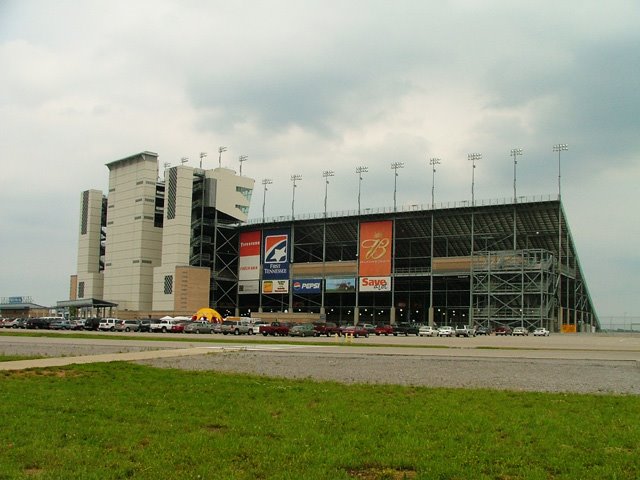
On May 20th, my lovely traveling companion and I attended the A Toast to Tennessee Wine Festival. A good friend in Nashville scored us some tickets to the event, and we spent the day in Middle Tennessee both at the festival and visiting with my friend. The event was held at the Nashville Superspeedway, a NASCAR race track to the east of the city. As of now, I may be the only wine blogger who has attended a tasting at a NASCAR facility.

If you want to try Tennessee wines, this annual event is the place to do it. There's about two dozen wineries in the state, and fourteen of them were present. I tasted at least one wine from each winery, and out of the hundred-odd wines present I sampled 26. I primarily sought out wines made from grapes that were either Native American varieties or French-American hybrids. I tasted a few made from traditional European grapes. There were some more I wanted to try, but I think I reached the limit of my palate. For that reason I also skipped almost all of the fruit-based wines (berries, mostly, with one rhubarb wine). In addition to the wines, Tennessee cheesemakers and other food producers were present, offering samples of their wares. This was a nice treat--I got to try some great artisanal cheeses, as well as fresh salsas, sausages, etc.

There's not a lot of online information on these wines, though I've provided links to contact information. When referencing some of the more unusual grape varieties, I've provided links to the Appellation America Grapes Varieties Index, which provides humorous character profiles and illustrations of each grape in addition to hard information about the background and growing regions of said grapes.

Unless otherwise noted, nearly all wines were fermented in stainless steel. After a dozen unoaked wines, you find yourself craving oak. For those unfamiliar with Tennessee geography, West Tennessee is flat, Middle Tennessee is hilly, and East Tennessee is mountainous.

Lauderdale Cellars, West Tennessee
  • Tennessee Peach: A sweet white wine with peach juice added. A really beautiful color--it had that slight blush of salmon you see in homemade peach ice cream. Really sweet, though.

Chateau Ross Vineyard & Winery, Middle Tennessee
  • Viognier: Lemon and big fruit flavors, clear and clean.
  • Maison Rouge: Cabernet Franc, Cabernet Sauvignon, Merlot. Creamy, spicy, some vegetable elements from the Cabernet Franc. Really quite nice.
  • Big Bitch Red: Amusing names were in abundance at this wine festival... A combination of many different red grapes. Soft, not too tannic, but the flavors are too heavily blended for anything to stand above the crowd. Good basic red wine.
  • Catawba: Native American grape. Smoky, foxy, but not sweet. I've had Catawba before that was as sweet as pancake syrup, but it was interesting to taste a drier version of the wine. The... earthiness can be offputting to some.

Beans Creek Winery, Middle Tennessee
  • Traminette: Very similar to Gewürtztraminer, which is one of the parent grapes of this hybrid. Spicy and sweet, but a rough aftertaste.
  • Chardonel: The flavors were similar to Chardonnay, but it needed more acidity. The name reminds me somewhat of the artificial vanilla substitute vanillin, or that it's a grey-market knockoff of Chardonnay.
  • Chambourcin Reserve: Wow. Tastes very similar to Merlot, but there's something in the background letting you know it's different. Mellow and fruit-forward, mild tannins. Definitely try a Chambourcin if you get the chance. This was aged in American oak for 8 months.

Keg Springs Winery, Middle Tennessee
  • Vidal Blanc: This hybrid grape is commonly used for making ice wine in Canada. Musky nose, semi-dry and lemony. Needs a little more punch, but definitely worth trying.
  • Crusade: Made from Concord grapes, which are native to North America. Sweet, but the flavor is a lot of fun. Rather than reminding you of wine, the taste is exactly that of purple grape juice and purple grape jelly. In fact, the flavor threw me back to Sunday School. Concord wines aren't taken seriously, but I found them one of the pleasant surprises of the day.

Sumner Crest Winery, Middle Tennessee
  • Sumner Queen: A white blend of Riesling and French hybrids. Very sweet, difficult to discern any dominant flavors. Reminiscent of a late harvest Riesling.

Holly Ridge Winery and Vineyard, Middle Tennessee
  • Hogeye Red: A sweet blush wine of unknown grapes. Good summertime wine if you like them sweet.
  • Seyval Blanc: A hybrid that's quite popular in England. Overly musky with a thin flavor.

Beachaven Vineyards & Winery, Middle Tennessee
  • Barrelhead Red: Chambourcin and Merlot Blend. Dry, mild fruit flavors and medium tannins. Excellent casual drinking red.

Stonehaus Winery, Middle Tennessee
  • Fairfield Red: Another Concord that was on the drier side, thanks to blending from some European grapes.

Highland Manor Winery, Middle Tennessee
  • Highland Red: Chambourcin and Marechal-Foch blend. Sort of rough, cough syrup flavor.

Mountain Valley Vineyards, East Tennessee
  • Cynthiana: Merlot-like, with cherry flavors abounding. Very enjoyable.
  • Mountain Valley Blush: Unknown grapes. Semi-dry, no prominent flavors.

Tennessee Valley Winery, East Tennessee
  • Appalachian Red: A combination of Cabernet Franc and Cynthiana, oak aged. Solid tannins, black cherry flavors, and decent balance. I'd definitely try this again.
  • Captain's Reserve: Chardonnay and Seyval Blanc blend. Burnt match nose, ultimately thin flavors.

Apple Barn Winery, East Tennessee
  • Vineyard White: Unknown grapes. Dry, with low fruit flavors and low acids. Similar to Pinot Grigio.
  • Applewood White: Made from Winesaps and other apples. I cheated here, because I love apples and really wanted to try an apple wine. It turned out to be my favorite out of the entire tasting. It's hard to describe: not terribly sweet, but amazing apple flavors and aromas. Unique feel and body that is distinct from apple juice, apple cider, and hard cider.

Savannah Oaks Winery, East Tennessee
  • Etowah Derailer: Sweet light red blend, bright cherry flavors. Think a sweet Beaujolais, but I'm not sure what grapes were used.

Striker's Premium, East Tennessee
  • Cynthiana: Also known as Norton in different parts of the country. Considered to be one of the Native American grapes with the best prospect for serious wine production. Peppery and spicy, low tannins and crisp acidity for a red. Definitely looking forward to trying more of these wines in the future.
  • Baco Noir: A hybrid red that I really didn't enjoy. Astringent nose and tasted like thin cough syrup.

14 May 2006

Tasting Notes for May 13, 2006

I was looking forward to this tasting for a couple of weeks... All of the wines featured were going to be from The Grateful Palate, a popular importer of Australian wines. (The website doesn't have any wine information, but you can see a comprehensive list of the Grateful Palate wines here.)

I got there a little early, and was going over the tasting sheet, checking off the ones I'd tried before. I was certainly going to try them again, but I saw some of my favorite Australian labels on there: Paringa, Marquis Philips, and Trevor Jones. A guy came up, tapped me on the shoulder and asked if I was there alone. I figured he wanted the other seat, which I was more than happy to give up. Instead, he shook my hand and said, "Hi, I'm Dan Philips." As in, the owner of The Grateful Palate. Super nice guy. We talked off and on throughout the tasting, and in particular I asked him about the Nuriootpa High School wines, which are produced by a sort of vocational education program. The students pick the grapes and make the wines, and all proceeds go back to the high school.

I've tasted about half of these wines before. Last year I got to sit down with Trevor Jones at a tasting and go through his entire product line, but I was happy to see those wines again.

Wine 1: 2004 Trevor Jones Boots White. Barossa Valley, Australia. A mix of Riesling and Muscat. Sweet nose with apple aromas and smoky notes on the tongue. Balanced acids and not as sweet as you first think. $13.

Wine 2: 2004 Marquis Philips Holly's Blend. Padthaway, Australia. You know, I forgot to ask for the preferred pronunciation of "Marquis" when referring to this wine. Americans tend to pronounce the first name "mar-KEE" and Australians I've met have called it "MAR-kwiss". I didn't particularly like this wine, it's got a heavy vegetal aroma that was offputting. Rough finish as well. A combination of Semillon and Verdelho. I liked this last year, so I'm willing to bet it was an off bottle. $10.

Wine 3: 2004 Paringa Chardonnay-Semillon-Sauvignon Blanc. South Australia. Grapefruit on the nose, but the creamy feel and taste of Chardonnay. Crisp acidic finish. Interesting little bargain. $10.

Wine 4: 2002 Trevor Jones Boots Grenache. Barossa Valley, Australia. I liked this one so much I took a bottle home and devoured most of it with dinner. It's got a creamy cherry aroma, almost like a cherry tart with whipped cream on it and lots of butter in the crust. Big fruit and soft tannins with a medium finish. Touch of chocolate flavor. Bigger than a Rhone-style wine but not as aggressive as some California Grenache I've had, even though it ranked in at 15% alcohol. $14.

Wine 5: 2004 McLean's Farm Shiraz-Cabernet Sauvignon. Barossa Valley, Australia. Some black cherry and pepper on the nose. Very dry, with mild tannins and a short finish. More alcohol becomes present on the tongue as you go along.

Wine 6: 2001 Alliance Shiraz. South Australia. Plum aromas, with a mild scent of a ruby Port. Delicious, with tannins that melt in your mouth. Quite nice for the price. $14.

Wine 7: 2001 Brothers in Arms Shiraz. Langhorne Creek, Australia. Alcoholic, hot aroma, but with plenty of classic Shiraz flavor. Short finish. I actually preferred the Alliance to this one. $36.

Wine 8: 2004 Marquis Philips S2 Cabernet Sauvignon. South Australia. Buttery aroma, deep and rich feel, very dark and intense color, yet velvety smooth on the tongue. Wow. $35.

Wine 9: Trevor Jones "Jonesy" Tawny Port. Barossa Valley, Australia. An amazing Port for the price. Molasses and raisins dominate the flavor, with some figs and chocolate in the background. Alcohol is subdued, and it's not too thick or sticky. $10.

11 April 2006

Tasting Notes for April 8, 2006

All of the wines listed below came from either Rudolf Müller or Dr. Thanisch, in the Mosel region of Germany. The winemaker for both vineyards is the elegant and charming Barbara Müller, who was there to answer questions. Even though I don't drink a lot of Riesling, I liked just about every wine at the tasting. At the end, I complimented her on the wonderful wines, shook her hand, and then in my most formal Hochdeutsch, I nodded and said, "Danke Schön, Frau Müller." She actually bowed slightly and replied with a smiling "Bitte."

Hey, two years of high school German had to pay off eventually.

Note: Keep in mind that except for one notable exception, all of these wines were of the same grape and of the same vineyards. So a lot of these tasting notes are going to look similar, but there were subtle differences that are sometimes hard to put into words for the amateur blogger and general non-enthusiast of Riesling. Also, these are listed in the order of the printed note sheet, but they were actually tasted in a different order arranged by Frau Müller.

Wine 1: 2004 Rudolf Müller "Bishop of Riesling". This is their most well-known offering, from what I understand. I found it a little thin, but not sweet. Clean and tasty. $12.

Wine 2: 2004 Rudolf Müller Kabinett. Mild and smooth, with some honey flavors involved. $13.

Wine 3: 2003 Rudolf Müller Piesporter Goldtröpfchen Kabinett. Honey sweet, tart beginning and smooth finish. $15.

Wine 4: 2003 Dr. Thanisch Bernkasteler QBA "Classic". Light and lemony, dry and tart. $18.

Wine 5: 2003 Dr. Thanisch Bernkasteler Badstube Kabinett. Musky and sugary, sticky and just a little too sweet for my tastes. $21.

Wine 6: 2004 Rudolf Müller Spätlese. Some lemon, thin yet sweet. $14.

Wine 7: 2003 Dr. Thanisch Gracher Himmelreich Spätlese. Tickles the tongue, some medium acidity. Really enjoyed this one. $24.

Wine 8: 2003 Dr. Thanisch Bernkasteler Graben Spätlese. Similar to the previous wine, but with more fruit flavors. $28.

Wine 9: 2003 Dr. Thanisch Bernkasteler Doctor Spätlese. Very sweet but with a dark flavor, reminded me of peach nectar. Even though I don't normally seek sweet wines these days, I loved this wine. $53.

Wine 10. 2002 Dr. Thanisch Pinot Noir. Actually the first one we tasted, followed by a rinsing of the glasses. What's this? A German Pinot Noir? The next thing you know polar bears will be waddling through the Sahara. Seriously though, this was an awesome wine. Berries all over, slightly tart and ultimately delicious. Assistance provided by a winemaker from New Zealand. I would definitely recommend this wine for a blind tasting to completely screw over your friends. $23.

Wine 11. 2004 Rudolf Müller. Good and well rounded. Honey flavors, but a little too sweet for me.

Wine 12. 2004 Rudolf Müller Eiswein. Not that sweet, but with elements of petrol and minerals on the nose. Delightful dry-style Eiswein. $23.

Wine 13. 2002 Dr. Thanisch Bernkasteler Doctor Auslese. Actually the last wine tasted. Wow. Honeysuckle, firm acids, lemon tart... Utterly wonderful. I was sniffing my glass for a few minutes after I'd wrung out the last drop from the sample. $46.