Showing posts with label tempranillo. Show all posts

12 July 2013

Online Ribera del Duero Tasting

I recently got a chance to join an online tasting featuring the wines of Spain's Ribera del Duero region with my pals from Snooth. I have more detail on the region and additional tasting notes from my NYC Ribera tasting.

If you're interested in these wines you can watch the video with Snooth's Gregory Dal Piaz and Ribera del Duero Sommelier Roger Kugler. We happy wine bloggers were joining in the chat session and on Twitter and elsewhere.

2012 Bodegas Peñalba López Montecastrillo Rosado
100% Tempranillo
$14, 14% abv.

I was most excited to open this bottle, given the fact that I firmly believe every summah season should feature as many rosés as possible. This one featured bright acidity with elements of lemon and watermelon. Highly recommended to keep cold in the fridge so that after a long day at work and a rough commute, you can pour yourself a glass of pure summer pleasure.

2011 Bodegas Cuevas Jiménez Ferratus A0
100% Tempranillo
$22, 14% abv.

This was a personal favorite of mine. French oak, big body, huge tannins, bright acidity, delicious. Meaty aromas, deep with spice and dark fruit and all sorts of delicious old world elements. I loved the label and said that it reminded me of Blade Runner. Later, I would make this:


2008 Bodegas Matarromera Crianza
100% Tempranillo
$30, 14.5% abv.

For the first time in my lengthy wine tasting career, I found a bottle that was entirely about the forest. This particular wine was deep and green with dried figs, stewed fruits, under notes of pine sap. I found myself wanting to grab the backpack and go hiking for a few days.

2009 Bodegas Emilio Moro Malleolus Reserva
100% Tempranillo
$49, 14.5% abv.

For a wine region that has a lot of challenges and does not pump out the massive volume of easier vineyards, there is an amazing level of diversity in the aromas and flavors represented. This well-aged example was rich with mint, plum, and huckleberries. However, the firm tannins indicate that this wine could continue to improve over the next several years.

My exposure to the wines of Ribera del Duero over the past year has convinced me that when and if I get the chance to visit Spain, this region will be at the top of my list of places I must see.

Note: These wines were provided as samples.

29 April 2013

Snooth PVA: Ribera del Duero

During my weekend in New York, I kept getting whisked away to a different cuisine or wine region every few hours. At moments, I was reminded of the classic quip "If it's Tuesday, this must be Belgium." And thus on Saturday at noon, we gathered for lunch at the Spanish restaurant Salinas in Chelsea, featuring the wines of Ribera del Duero.

Ribera del Duero perches on a plateau about 200km/125 miles north of Madrid. Wine production there is difficult and yields are small but spectacular. The land was scraped and destroyed by retreating Moors in the 15th century, leaving it almost useless for farming. (The environment is so harsh that even phylloxera has a hard time surviving.) The focus is almost exclusively on the Tempranillo grape. Legally wines in the Denominación de Origen are required to have at least 75% Tempranillo (or Tinto Fino as they call it), but most of the 280 producers do not blend.

Why stick around in such a harsh area, making wine from only one grape? This is also Basque country, where the people are tenacious and tied to their native land, language, cuisine, and wine. As our host remarked, "Before God was God and rocks were rocks, the Basque were Basque."

While we were fed exceptionally well over the entirety of the weekend, this was my favorite meal, starting off with...

ensalada de jamon con peras: baby arugula, shaved Serrano ham, d'Anjou pear, Manchego cheese, vinaigrette

A light and refreshing start to the meal, and while I would have loved a crisp Albariño, it was time to dive into the reds.

2009 Bodegas y Viñdeos Ortega Fournier Urban Ribera, $14: Dark cherry and firm tannins, touch of leather.

2011 Bodegas Félix Callejo Flores de Callejo, $20: Firm tannins with a plum character, just enough oak.

2011 Bodegas Barco de Piedra, $15: Smooth red cherry profile with mellow tannins, and a mild, melt-in-your-mouth finish. Great bargain.

2007 Bodegas y Viñdeos Montecastro, $41: Robust and bold, with a strong body and firm tannins. Earth and plum aromas once it breathes a bit.

caldo de temporada: Galician style pumpkin-chicken soup, smoked bacon, chorizo, potato, broccoli rabe

I've been craving this soup ever since I got back. Why haven't I made it yet? So simple yet so savory, and it's just the kind of thing I need to fix before it gets too warm here in Memphis.

2005 Legaris, $36: The first wine of the day with the enticing whiff of mint on top. Underneath were rich and dark aromas of plum and coffee.

2006 Bodegas Convento San Francisco, $34: One of my favorites, with lots of vegetal aromas. Bell peppers, a little brett, and earth. This wine brings the funk in the best possible way.

2009 Bodegas Cepa 21 Malabrigo, $66: Ripe red fruit, low tannins, and a bright character.

2010 Bodegas Astrales, $40: Red cherries, with firm tannins and a tart, rich finish.

costilla al vino tinto: Ribera del Duero braised short ribs, confit fingerling potatoes, crispy leeks

I found this a novel way to serve short ribs--just two ribs and sliced potatoes in a crème brûlée ramekin. You get just enough of the rich flavor without it getting too heavy. I was reminded of Thomas Keller's mantra about the palate dulling after three bites. I restrained myself and did not pick up the crockery to lick it clean.

2009 Selección de Torres Celeste, $28: Plum and spice with notes of leather. Pleasant, medium tannic finish.

2001 Explotaciones Valduero, $160: The mint came back on this wine, which also featured aromas of plum and bacon fat. A really complex, fascinating, and well-aged wine. I kept coming back to it at the end of the meal, picking out new elements and layers.

2005 Bodegas Hnos. Pérez Pascuas Viña Pedrosa, $85: This one started out closed and tight, and only after an hour did it start opening up to reveal cassis and a little cedar.

2001 Condado de Haza Alenza, $100: Another earthy one that I loved, this time with licorice and coffee on top of a solid black cherry base. Beautifully aged.

For dessert we had a lovely assortment of Spanish cheeses and quince paste, a mix that was so good with the wine that I neglected to take a picture.

Spain continues to surprise me. Just when I think I have a grasp on the country and its many wine regions, I get an opportunity to delve deep into one that is new to me, but has been producing wine for thousands of years. As part of my fascination with Mediterranean wines, I hope to try some bottles from the Balearic Islands in the future. Hopefully as part of a year long trip, sailing around the sea in a small boat and docking every few days to try the local bottles and dishes, maybe take in a little fishing as well. One of these days I'll retrace the old Phoenician wine routes...

Check out these other great reviews of the same tasting! Brunello Bob "Ribera del Duero Lunch - Salinas NYC", The V.I.P. Table "Ribera del Duero: Thriving through Adversity", Wine Julia "#SnoothPVA: Experiencing Spain in New York City with Ribera del Duero Wines at Salinas", Reverse Wine Snob "Reveling in the Wine of Ribera del Duero Plus 3 Top Value Picks from this Region", Vindulge "Wine and food are a great match for Ribera del Duero", My Vine Spot "#SnoothPVA: Ribera del Duero Lunch at Salinas", Avvinare "Ribera Del Duero Tasting During SnoothPVA at Salinas"

I don't post a lot of photos of myself on this site, but my buddy Dezel snapped a shot of me hard at work tasting the delicious wines of the Ribera del Duero. I'm hoping he can make an excuse to come to Memphis to enjoy some wine with proper barbecue.

Note: This trip was provided by Snooth.

10 December 2012

Six Lodi Wines

Lodi, California is both a city and an American Viticultural Area located east of San Francisco and smack dab between Modesto and Sacramento. While I've had lots of table wines from the region in the past, I was surprised to get a batch of samples featuring a wide range of grapes that reminded me a bit of the experimentation in other regions like Paso Robles. There's the expected Zinfandel and Syrah, but look at that Graciano, Tempranillo, and Vermentino! Who knew? Given the Spanish and Italian immigration in the region it's not completely out of the question, but these appear to be much more recent plantings. I'm glad that people are looking for the next Malbec or Carménère: a second- or third-tier grape that can really flourish in an environment far from the vineyards of its birth. (One day my Memphis AVA Grechetto will rock the wine world!)

2010 d'Art Wines Zinfandel
Mokelumne River, Lodi
$22, 15.5% abv.
300 cases made from 85 and 55 year old vines
This classic Zinfandel is soft and rich with notes of black plums and cake. Mellow tannins and a gentle plum flavor follow.

2010 Fields Family Wines Old Vine Zinfandel
Mokelumne River, Lodi
$24, 14.7% abv.
175 Cases Made
French, Hungarian, and American Oak
A stronger Zin with tea, black pepper, and deep blackberries. Deeper flavor, stronger tannins, but still well balanced. Should be great in a few years.

2010 Kidder Family Winery Duet
57% Graciano, 43% Tempranillo
$24, 14.9% abv.
Light raspberry and black tea notes on the nose, with a dark plum flavor and spicy tannins. A really interesting blend from California, and one that went exceptionally well with some BBQ pork.

2010 Klinker Brick Winery Farráh Syrah
100% Syrah
$20, 14.9% abv.
French Oak
Coffee and black cherry aromas, with a little spice. Deep black cherry flavors with just a tinge of black pepper. Long, smooth finish, and while it's got strong fruit flavors, it's still a little restrained. This one begs for flank steak with a spicy rub.

2010 m2Wines Tormenta Tempranillo
Kirschenman Vineyard
$24, 14.5% abv.
California Tempranillo. Wow! Black currant and touches of leather and coffee. Medium tannins with some flavors of bitter tomato leaf on the finish. Really fascinating, and very mild overall. This is definitely one of the more exciting wines I've tried this year, and definitely worth checking out.

2011 Uvaggio Vermentino
22% Gayla's Vineyard, 78% Bella Vigna Vineyard
$14, 12.5% abv.
2,370 Cases Made
This is probably the lightest and most delicate out of the group, and having tried several Italian Vermentinos I couldn't wait to try this one. It has a light peach aroma with crisp acidity and a mineral finish. Try it with a light pasta dish in a cream sauce or a thin crust vegetarian pizza.

Note: These wines were received as samples.

09 November 2012

Advertising Notes, and Happy Tempranillo Day!

Advertising on this site has always been minimal, and I've primarily just used the Amazon Associates program with links in the sidebars. They're a well known company and millions of people feel comfortable shopping online with them. However, with the launch of Amazon Wine, I've got an opportunity to solve a big problem I've had in the past. Lots of readers e-mail me asking where they can buy a wine featured here, or if I can sell them a bottle. I've always been hesitant to link to specific online retailers, mainly because there's nothing in it for me and I can't personally vouch for or against them. For right now, Amazon can ship wine to the following states: California, Connecticut, Florida, Idaho, Illinois, Iowa, Nebraska, Nevada, North Carolina, Oregon, Washington, Wyoming and the District of Columbia.

I'm going to play around with the ads and figure out the best way to incorporate them without looking obnoxious. I will continue to link the name of the wine to the specific winery or American distributor whenever possible. My advice to all of my readers is to always support your local wine shop first--if you can't find a specific wine, they should be able to suggest a good substitute. If that doesn't work, check the link to the winery and see if they ship to your state. And if that doesn't work or it's not a domestic wine, follow the links at the bottom of the post and help support your humble wineblogger. If I start seeing positive results, I'll take the time to go back and add purchase links to older posts.


UPDATE Nov. 11, 2012: Looks like Amazon is not paying referrals on wine. Goodbye links!

Now, back to the wine!

Thursday, November 8, 2012 is International Tempranillo Day, coinciding with International Stout Day, which I had to pass on because I stick to either wine or beer--I've found the palate doesn't work with a combination. Also because there's only so much time for tasting between getting home from work and going to bed.

The most notorious wine PR holiday is the Beaujolais Nouveau release, but lots of others have been started like Champagne Day or the lesser known Öküzgözü Day on April 4 in celebration of Turkish grapes. I was happy to join in on this one because of my love of Spanish wines. They are generally tasty, food friendly, and inexpensive: a perfect trio.

On top of this, I also received four Cavas, which I'll be writing about later. Stay tuned!

2011 Tapeña Tempranillo
100% Tempranillo
Tierra de Castilla, Spain
$10, 13.5% abv.
The nose has a touch of cinnamon and black plum. On the palate it's rich and fruity with firm tannins. This is a great middle of the week wine that will go well with casual burgers and pizza fare, and is a great bargain at a sawbuck.

2009 Vaza Rioja Crianza
100% Tempranillo
Rioja, Spain
$15, 13.3% abv.
This is my favorite of the three, and yes, I'm a little biased towards Rioja. The profile here is full of black cherry with a hint of eucalyptus. Mild tannins and balanced fruit and black tea on the tongue. Serve with roast pork and grilled vegetables and be in heaven.

2010 Valdubón Cosecha
100% Tempranillo
Ribera del Duero, Spain
$15, 14% abv.
This wine is pretty young, as right now it's full of cassis and oak with really firm tannins. However, I think it should be great in two years and I'd love to serve it with braised oxtails.

Note: These wines were received as samples.

04 April 2012

Campo Viejo "Color Me Uncorked"

I rarely enter contests. It's not that I don't enjoy winning, but I usually do some calculations and think, "Do I really want to eat that many pickled eggs in ten minutes?" Also, I get a lot of offers to promote various wine contests, and most of them don't really interest me, and by transference, I assume my readers won't be interested either. "How many corks can you hold in your mouth at one time? Take an embarrassing photo and enter to win... 100 USED WINE CORKS!"

But this one tickled my fancy...

Campo Viejo is a Spanish Rijoa producer that has sent me many wines over the years. I'm particularly fond of their trio of Crianza-Reserva-Gran Reserva, though in the current release the Crianza seems to be now labeled Tempranillo. I don't have detailed notes with these three, but the experience was very close to the last time I tried this trio, though the vintages are a little different. They're all very affordable, food-friendly red wines, and trying all three at the same time is a lot of fun for folks that don't get to taste verticals or similar groupings on a regular basis.

The challenge involved an original dish inspired by "the colors of Rioja". Spanish food includes so many ingredients and cooking methods that the sky was the limit, and if I expanded the definition a bit to include the old Spanish empire I could include some neat things. (I live in Memphis, which was first explored by Europeans during the 16th century travels of the Spaniard Hernando de Soto.)

I have a lot of strange ingredients and leftovers in my kitchen, and I decided to combine them artfully in a lazy, relaxed terrine. Here are the ingredients from bottom to top:
  • A base of cooked quinoa, in a nod to the Spanish conquest of the Andes
  • A layer of wilted arugula, because it's delicious
  • A think sprinkling of zante currants, because I think the flavor marries well with pork
  • A healthy layer of braised pork shoulder, mixed with a little local BBQ sauce
  • A poached egg, because I thought of this as a standup version of the congee I recently made
  • A little ladle of homemade habanero-carrot sauce, for the Caribbean islands
  • Finally, a light dusting of smoked chile flakes (merquén) from Chile, another nod to Spanish exploration that took the empire to the tip of South America within spitting distance of Antarctica
Overall, a lovely and savory meal, though I could barely make it through on my own. While mixing it up, the still-warm quinoa cooked the egg yolk a bit further and the merquén provided the necessary smoke flavor for the soft pork shoulder. The hot sauce satisfied my own desire for a little heat at every meal.


Note: These wines were received as samples.

30 October 2009

Wines From Down Under Part 3

For the final four wines, I present the remaining bottles that didn't fit in directly with the first two groups, as well as being those that I found superior from a design standpoint.

2008 Wagtail Cabernet Sauvignon, 14.5% abv from Coonawarra, South Australia. Black plum, dark cherry flavors, with a rich cocoa undertone. Mild for a 2008, and well-balanced in terms of fruit/tannins/acidity. Really impressed overall with this wine and it needs a grilled steak topped with a bit of blue cheese.

Now this is the kind of animal I like to see on a bottle of wine. The beloved Willie Wagtail is a little bird that runs around shaking its tailfeathers. It's the kind of critter I'd see on a nature special, not as the mascot of an energy drink or hero of a Saturday morning cartoon. I had to learn to identify birds in Scouts, and even to this day if I see a bird I don't recognize I'm liable to pull over the car and jot down some notes so I can look it up later. No, I'm not a serious birdwatcher, but I understand the thrill of seeing a new bird with your own eyes. I was so excited when a little kestrel built a nest in my neighborhood...

Another set of animal wines! This time using seahorses. Again, not the first thing that would spring to mind, but it's a classy heraldic layout with a maritime theme that would be appropriate as the logo of a major shipping conglomerate. Or a Bond villain. Or both.

West Cape Howe is based out of Denmark, Western Australia. (I imagine that name gets confusing at times. I live in Memphis, a town named after a city in ancient Egypt, and West Tennessee also has Milan, Moscow, and Paris.) The grapes come from the Great Southern Region, the largest wine region by area in Australia. I was excited to try two wines made from grapes I don't normally associate with Australia:

2008 West Cape Howe Tempranillo, 14% abv. Dusty strawberries and seeds, ashy with a strong earthy nose to it. Very unusual for a Tempranillo, and it would be hard to guess this was from Australia.

2008 West Cape Hope Viognier, 13.5% abv. Spicy, touch of grass, dry and full bodied, good fruit. I say bring on the shellfish: I'd love to try this with scallops, shrimp, and oysters. I like Viognier but this is the first time I've felt it would go really well with seafood.

The last wine of this eclectic lineup is the 2009 Vinaceous Divine Light Verdelho, 13% abv from Pemberton, Western Australia. Grapefruit, light, bright acidity, mineral, crisp. Dry and delightful. I was expecting something sweeter and this was a pure joy. Serve with cured meats and fresh fruit before a meal.

The four wines in the Vinaceous line are all laid out with a nod to Victorian circus posters. The ringmaster, fire breather, snake charmer, and this delightful little angel sitting on the trapeze. From a design standpoint this wine stands out from the other nine I've reviewed this week, but I like it. It's unique, it's catchy, not silly, and has the unrelated potential to make an interesting tattoo.

* * *

That wraps up our week-long salute to wines from Down Under. Keep an eye out for new and interesting bottles arriving from Australia and New Zealand, there's a lot more out there than the big guys like Yellow Tail. Currently these wines are available in about half of the states in the US, with full national distribution expected soon.


In accordance with the new regulations imposed by the Federal Trade Commission, I publicly disclose that these wines were received as samples from The Country Vintner. No additional gifts or compensation were provided.

18 March 2009

Martín Códax Wines

Martín Códax was a Galician troubadour who roamed around Spain 700 years ago, singing songs and reciting poetry. Almost nothing is known about the man, but some of his music survives and has been performed using traditional instruments. His name, and that of the wine, is pronounced more or less as mar-TEEN CO-dash.

Take a listen to his Cavalgaba noutro día and marvel in the Medieval tones, as well as hear for how far removed Galician is from Castellano or modern Spanish. Or check out Mandad'ei comigo, which features the unique sounds of the hurdy gurdy!

First up is a clear, delicate wine: the 2006 Martín Códax Albariño. $10, 13% abv. Grapefruit pith aroma, crisp and tart citrus flavor, green apple on the finish. I found this to be a delectable accompaniment to crab, though I think any shellfish would be a perfect match for this wine.

Next up is the 2006 Martín Códax Ergo Rioja Tempranillo. Both wines are from north central Spain, near Basque country. $15, 13.5% abv. 99.7% Tempranillo with .3% Graciano. In a standard 750 mL bottle, that comes out to 2.25 mL of Graciano or roughly half a teaspoon. But I'm not a winemaker, and I enjoyed this wine. Perhaps it was that tiny splash that made the difference.

It has blackberry tea flavors (sort of like a Celestial Seasonings blend), medium tannins and fully ripe plum flavors. Lingering finish that allows you to savor an extra glass after dinner. I bucked tradition and served this with ricotta-stuffed manicotti. Mixing Italian and Spanish? I know I could get burned at the stake for that, but I figured Mediterranean is Mediterranean and it wasn't that big of a stretch. It worked out quite well and a few salty olives helped with the enjoyment of the wine.

20 January 2009

A Small Bouquet of Rosé

How about some extra posts this week?

With much rejoicing, I celebrate the fact that dry rosés have enough market share to remain on the shelves well past the hot summer months. These wines have gone from curiosity to fad in the past couple of years, but I think they still occupy an odd spot in the old food+wine thinking. While these are the perfect beverages of summer, let's not forget their ability to pair with a wide range of food and to appeal to a wide range of palates and experience levels.

First up is the 2006 A to Z Oregon Rosé. $12, 13% abv, and a label set primarily in Zapfino. Made from 100% Sangiovese harvested in Southern Oregon. It's pretty rich and full bodied for a rosé, and is a little off-dry. Aromas and flavors of strawberry and watermelon, and it's got a bit of that Jolly Rancher approach to both. I paired it with leftover mushroom lasagne and a little salad... Comfort food on a rainy afternoon.

Now let's turn our attention to Spain with the 2007 Condesa de Leganza Rosado. $12, 12.5% abv. Pure Tempranillo from the La Mancha region. Nose of light raspberry and apples. Bright, refreshing flavor with a sangria tang to it. Dry but fruity, with a tannic edge on the finish. On the color front, is it just me or are many rosés getting darker?

For some reason I've been on a linguistics kick recently, so get ready for some more amateur analysis. While Alaskan native tribes don't really have dozens of words for snow, some languages are better at describing nuances than others. Greek is far better than English when it comes to love, which would make life far less complicated for our nation's teenagers. In a similar vein, the French have an impressive vocabulary to describe rosés. Here's a partial list, and I'll note that doing research in a language you don't fully speak is sort of like walking with concrete blocks tied to your feet, so my apologies for any errors in translation, and I welcome any native-speaking French rosé fans to correct this list, which is in alphabetical as opposed to chromatic order:
  • blanc taché - stained white
  • clairet - pale
  • faible - weak
  • gris - gray
  • jaune orangé - yellow-orange
  • oeil-de-perdrix - eye of the partridge (Très poétique, non?)
  • orange - orange
  • pelure d'oignon - onion skin
  • rosé franc - free or frank pink
  • rosé jaune - yellow-pink
  • rosé orange - orange-pink
  • rosé vif - sharp pink
  • rosé violet - purple-pink
  • roux - russet-red
  • tuile - tile (like a Spanish tile roof)
Obviously other languages have their own descriptive terms for the various shades between red and white, but I leave that exercise to other writers. In closing, often cross-cultural understanding can produce something new and unique. The American songwriter Jim Steinman wrote "Total Eclipse of the Heart", which was popularized by Welsh singer Bonnie Tyler and it became a huge hit in the mid-80s. Years later the Norwegian band Hurra Torpedo made it awesome with the help of some household appliances.

19 November 2008

2006 Encyclopedia Tempranillo

Here's my second look at the new Coppola Encyclopedia wines in the odd-shaped bottles. The 2006 Encyclopedia Tempranillo is from Yecla in Southeast Spain. $14, 13.5% abv. The nose has a little stewed fruit with a touch of herbs, medium tannins, and a black cherry finish. It's a solid but uncomplicated wine that's food friendly in the grand tradition of Spanish wines. The tannins are probably a little strong for Thanksgiving but keep this in mind for stews and braises over the winter months. I thought it was a great burger wine.

The screwcap is large, 1⅝" (42mm) across, ample room for printing a quote. (The silver swirl destroys the contrast necessary for legibility! Elementary design concepts!) The bottles are designed to be reused as decanters or containers for olive oil, vinegar, etc.

I suppose I should take this opportunity to mention that I've got a new camera. For the past three years almost every photo on this blog has been taken with a Fujifilm FinePix s5000. The Fuji was a great camera and I was able to coax some amazing shots out of it, but for a bridge camera (between standard point-and-shoot and DSLR), I started running into limitations with it regarding low light conditions and chromatic aberration when using macro lenses. I recently upgraded to a Nikon D40, a true digital SLR with the ability to swap out lenses.

I normally don't repeat photos, but take this recent shot. Very low light conditions, yet I shot it without a tripod and without any special setup. I just put the camera in full auto and snapped a picture. Due to the lenses, with a DSLR it's very easy to get that low depth of field look. Without going into all the math, it just means that what you want people to pay attention to is in focus and everything else in front of or behind the object is blurry. In the top photo of the wine bottle, the screwcap is in sharp focus but you can barely discern any details about the background other than colors. (This method can be increased or decreased through various methods, but I'm not teaching a photography class here.)

Will the Nikon D40 give you outstanding photos? Only if you take a lot of terrible ones first. Like anything else, practice makes perfect. But out of the different cameras I've used throughout the years, this is simultaneously the easiest and, if I want to explore all the different settings and adjustments, the most powerful camera I've owned. If you're interested, check out the review linked above, and if you decide to get one for Christmas, you can purchase it from my Amazon store, where you'll find customer reviews, accessories, and other detailed information.

29 November 2006

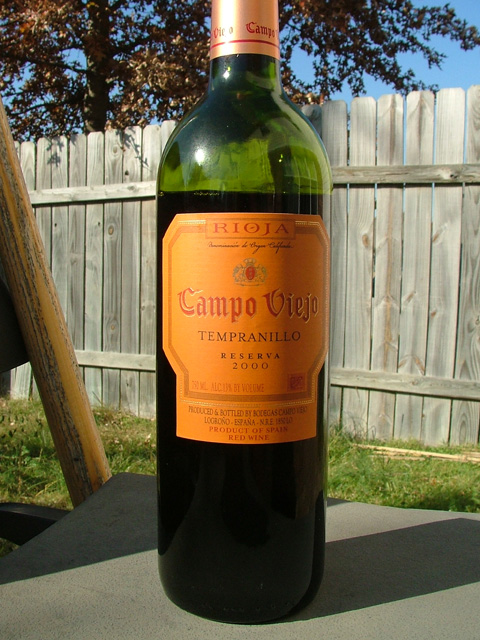
2000 Campo Viejo Tempranillo Reserva

Sometimes you have to wait until after a meal to make a good wine match.

I had lunch at a little Mexican joint here in Memphis--La Guadalupana if you're interested. It's one of those great little places that breaks out of the tacos & fajitas structure you see in the more mainstream Mexican restaurants. Those items are on the menu, but you also get a wide range of soups and seafood options, as well as dishes incorporating more authentic (but scarier to your average gringo) ingredients like tripe and tongue.

I was in the mood for something different, so I went for the barbacoa de chivo, goat braised in a rich broth made with guajillo peppers. Served with some fresh corn tortillas and the standard beans and rice, though the refried beans had a wonderful smoky flavor that hinted they had been made from scratch with love.

Goat, in case you haven't had it before, is somewhere between lamb and pork in flavor and generally has to be cooked for a while before it gets tender. The food was fantastic (particularly with the thick green hot sauce on the table), though when I got home I helped myself to a glass of Spanish wine while the taste was still lingering in my mouth. The 2000 Campo Viejo Tempranillo Reserva is from the Rioja region of Spain. (Today's Spanish lesson: Campo Viejo means "old country" or "old field".) Still some strong fruit and tannins for a six year old wine. I get some dried strawberry flavors, with that sort of ashy finish you get with some Old World wines. Occasionally reminiscent of spiced cider at Christmas.

Next time I might just have to get the goat to go.