Pleiades

Orion

And a couple of years ago, I shot this photo of the moon:


Pleiades
Orion
And a couple of years ago, I shot this photo of the moon:
 When you choose to focus on the weirdest parts of your local grocery store, you sometimes wonder how long certain products have been lingering beneath your unknowing gaze. For instance, the vegetable for this installment is Napa Cabbage, yet another ingredient that goes by many names. And hey, it's been cultivated for 6,000 years!
 I love sauerkraut and spicy food, so I'm bound to like kimchi. A conversation with a Korean friend of mine over Thanksgiving inspired me to make my own. So I looked up many recipes, and found many wildly divergent methods. I ended up picking Bobby Flay's recipe. I had all of the ingredients on hand, and it looked like fun.
 Here's what the jar looked like on day one, right after combining the ingredients. I really had to pack all of the cabbage in the jar, but after only a few minutes wilting had begun and I was able to stir the mixture with ease.
 The beef was braised in, and the dinner served with the Schlafly Coffee Stout from St. Louis, Missouri (scroll down to the October seasonal beers). Why not wine? Granted a sparkling wine or Riesling might have matched well, but I find a cold one tends to be a better match for certain dishes. The beer does in fact smell and taste like really good coffee, yet has the mouth feel of a creamy dark beer. Imagine Guinness with a coffee flavor and you've got a good idea. The coffee flavor is provided by Kaldi's Coffee using Fair Trade beans. It made an incredible broth for the beef and was a good pair with the meal. For future use, I'd suggest it as an after-dinner beer served in small cups.
 And while I'm posting this, why not point out a couple of other Memphis wine and food bloggers? Sprinkled throughout are some photos I've taken Downtown.
 Mantia's Musings by Alyce Mantia. Alyce is the proprietor of Mantia's, a local shop that is the best source of proper cheese and paté in the city. Plus, they host cooking demonstrations and let you bring your own wine. In fact, the first $100+ wine I had was at a cooking demo/wine party at her establishment back when I just turned 21.
 Midtown Stomp. Written by a local guy who recently completed his Sommelier certification. Includes writing about food, wine, and recently, a trip to the California wine country.
 Squirrel Squad Squeeks. Local restaurant reviews.
 The bizarre photo to the right is of my humble stove in la cucina di Benito. I trimmed the duck (saving all of the scraps for stock), boiled it for a while, dried it, rubbed the interior with salt and sugar and the exterior with molasses, and then hung it to dry with the roasting pan to catch anything that fell. Yes, that's a trussed duck hanging from the partition between two cabinets above my stove.
 The final product, certainly not the crisp and lovely mahogany bird of legend. However... The skin around the thighs and legs was perfect, nicely dry, crispy, and caramelized. And the meat throughout was wonderful, if a little more on the medium-well side. At home, I generally eat the breast in a genteel manner with fork and knife, and then consume the leg and thigh by hand. I served it with some couscous, freshly steamed broccoli, and the 2004 Francis Coppola Claret, a wonderful wine that isn't being made anymore.
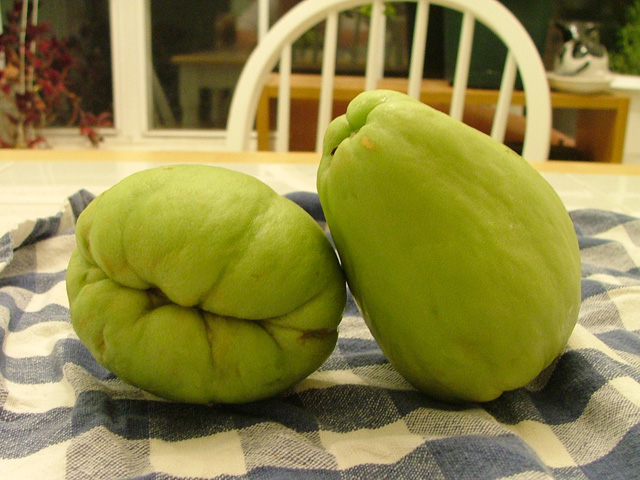 The chayote is a pear-shaped and -sized squash that goes by many names. My favorite is the one used in the French Caribbean islands: christophene. Oddly, the Larousse Gastronomique uses the English term "custard marrow", akin to the use of the word marrow when referring to a large zucchini.
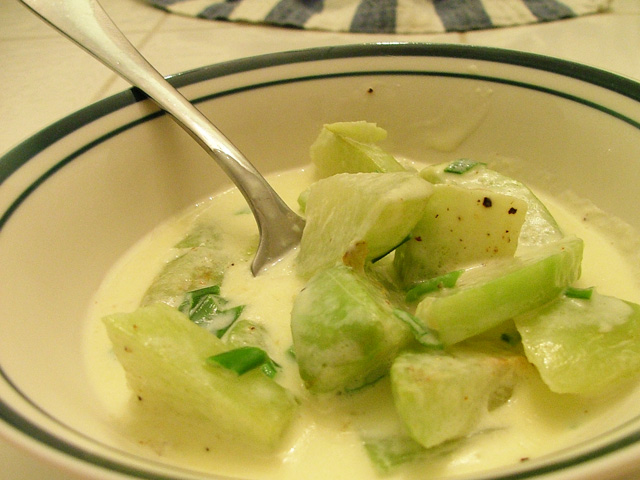 For the preparation of the chayotes, I found a recipe that suggested softening them in hot oil and then cooking with some cream for a bit, followed by a topping of sliced green onions. Most chayote recipes seemed to use them just for bulk, and I wanted to really focus on the flavor of the squash. I'd heard it referred to as "mild" before, but it's pretty flavorless. In general, I'd compare it to a cross between a cucumber and a honeydew melon, yet watered down. It's clean and crisp, and ever-so-slightly sweet, but more confusing than anything else.
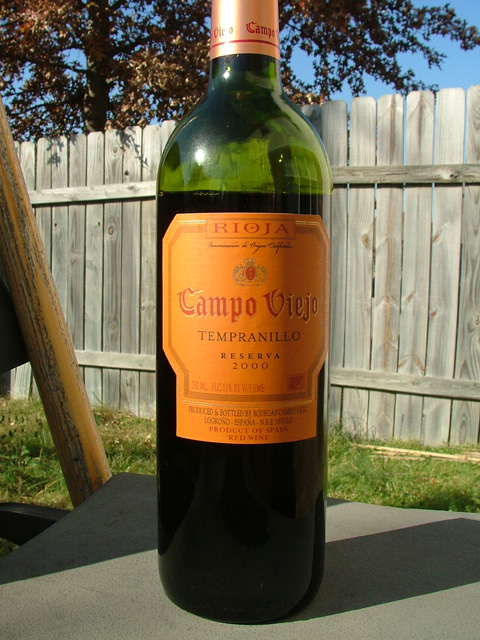 Sometimes you have to wait until after a meal to make a good wine match.
 I'm amazed at all of the various members of the cabbage family that are essentially the same plant, much in the same way that a Great Dane and a Chihuahua are the same subspecies of wolf: broccoli, kale, cauliflower, collard greens, kohlrabi... There's a dozen more, but today I'm focusing on the Brussels Sprout.
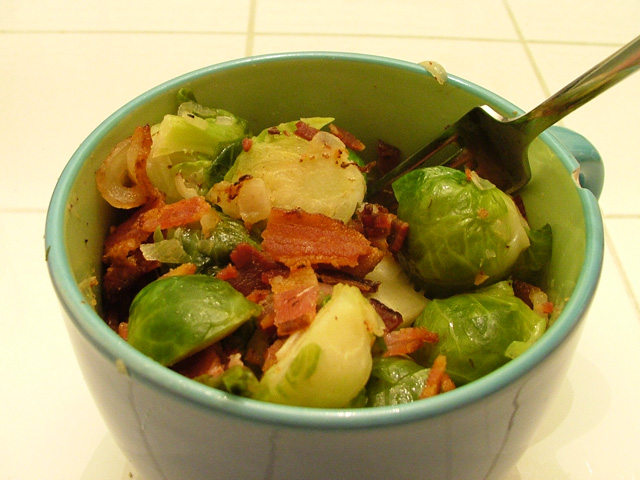 Going by a Yankee recipe, I cooked three strips of bacon and set aside the meat for topping at the end. (A note on this: my local grocery store has incredible thick-cut bacon at the butcher counter. I'm notorious for buying only three or four strips at a time. It's more expensive per pound, but the quality is much better and I don't normally buy bacon unless it's for a recipe.) A shallot went into the bacon fat until clear, and then I tossed in the sprouts (washed, trimmed, and halved on the longitudinal section). Cooked for a while, added some chicken broth, and let simmer until tender.
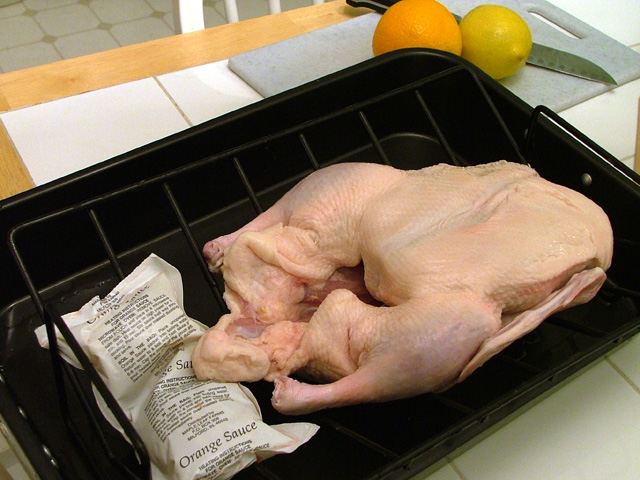 The girlfriend came over for dinner tonight, and I decided to make the classic French dish Duck à l'Orange. It was hugely popular in the 60s and 70s yet seems to have fallen out of favor. I'm cooking it simply because fresh ducks are on sale right now for $10 a bird and I've never made (or eaten) this particular dish. Plus, it's another one I can check off from the Les Halles Cookbook. This project has been loads of fun, and delicious as well. The inspiration comes in part from Julie Powell's book Julie and Julia: 365 Days, 524 Recipes, 1 Tiny Apartment Kitchen. I haven't actually read it, but followed the project online and in news reports. Parker spent a year methodically cooking her way through Julia Child's Mastering the Art of French Cooking, Volume One. Anthony Bourdain isn't Julia Child, and I'm not going to cook everything in his cookbook, but I'm picking up a lot of new techniques and flavor combinations that I look forward to incorporating in future dishes.
 Here's what the final roasted duck looked like, stuffed with cut up lemons and oranges, trussed up and dusted with salt and pepper. Total roasting time was around two hours, a half hour at a lower temperature and one and a quarter at a higher temperature. While the bird was roasting, I was pretty busy. The sauce was quite complex, involving many different steps and ingredients, and on top of that, I had decided to render down duck fat for use in roasted potatoes. I'm not going to get into all of the details of the sauce right now, but for the potatoes, I cut up two russet potatoes and coated them in salt, pepper, fresh rosemary, and tossed them with a half cup of freshly rendered duck fat, one of the most delicious substances known to mankind. I've roasted potatoes with butter and olive oil before, but the duck fat is sublime. (If I were taking a photo in the 70s, this duck would have been coated and glazed in the thickened sauce; it would be surrounded by piped rosettes of mashed potatoes, a ring of orange slices, and perhaps some vegetables slightly glistening in aspic. My copy of the Larousse Gastronomique is full of such presentations.)
 Here's the final plate. Typically whenever I take pictures like this, it's of the plate I actually eat. I serve my guests first, then set my plate, take a picture, and then get down to business. Here I've got myself a breast and a leg, covered in the orange sauce (plenty of long strips of orange zest visible on top), the roast potatoes, and a stalk of steamed broccoli. The sauce was thinner than I expected, but rich and savory considering everything that went into it (my improvised stock, red wine vinegar, orange liqueur, orange and lemon juice, orange zest, the pan drippings from the roasting pan, butter, and other things I'm forgetting). Everything was delicious, and I froze all the bones and scraps for use in making stock at a later date.
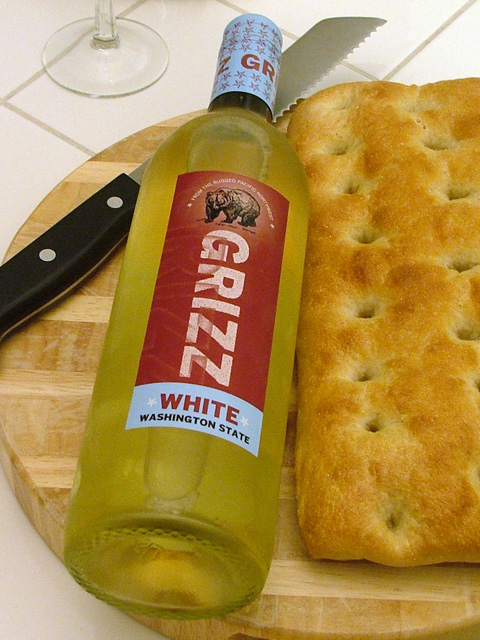 The wine tonight was nothing terribly special, a $6 bargain picked out of the closeout rack. I enjoyed the Washington State Grizz Red back in March, and decided to give the white version a try. The 2004 Grizz White is made from 90% Chardonnay and 10% Semillon grown in the Columbia Valley. Screwcap enclosure. It's rather full-bodied and fruity, with medium acidity. Some fizz clings to the side of the glass. A little apple and honey linger on the palate, but otherwise it's an uncomplicated, simple Chardonnay. I remember one of the first non-sweet white wines I really liked was a Chardonnay-Semillon blend from Columbia Crest. It's pictured with a loaf of pain rustique from the grocery store, though honestly it's just a big piece of focaccia.
 Le Beaujolais Nouveau est arrivé!
 Yet another Les Halles recipe... As winter draws near, it's getting colder, and it's time for soup. I used canned tomatoes for this recipe, and while it was simmering away I was working in the garden, cutting down my tomato vines and preparing the former patch as a compost pile in order to enrich the soil for next year.
 Here's the final product, with a little cheese toast (grated Sonoma Dry Jack) and a bottle of Hornsby's Crisp Apple Hard Cider. There's not much information out there about this cider--it's made by a Gallo company, and I'm pretty sure it's made with Golden Delicious apples (or something close), but it's a nice little hard cider. It avoids the vinegar aromas that you sometimes get with hard cider, and instead focuses on a bright and sunny flavor.
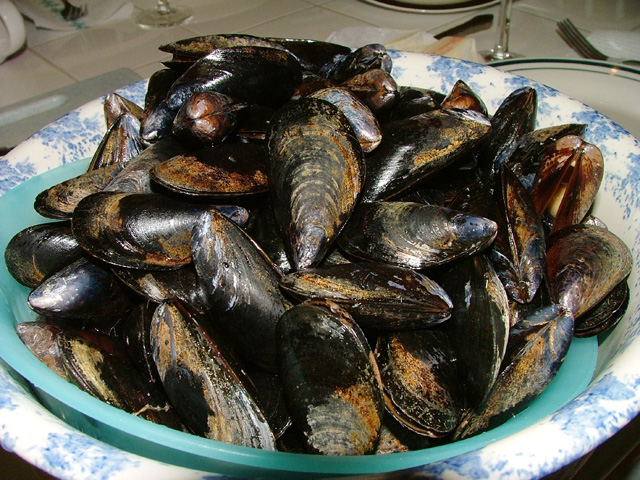 Lately I've been craving mussels. I've never lived near the ocean, though whenever I'm near the coast--regardless of state or country--I try to eat fresh seafood as often as possible. While the modern era of food shipped by plane means that the coasts are closer than ever, it's still nice to eat seafood that's as fresh as possible, and the cheapest way to do that is with mussels. Pictured at right are four pounds of live mussels picked up at Costco for $9 American. I brought them home, gave them a scrub, ditched the cracked or dead ones, and left the live ones to hang out for an hour before dinner. You've got to love the smell of live mussels; it's just like being on the beach right after a rain storm.
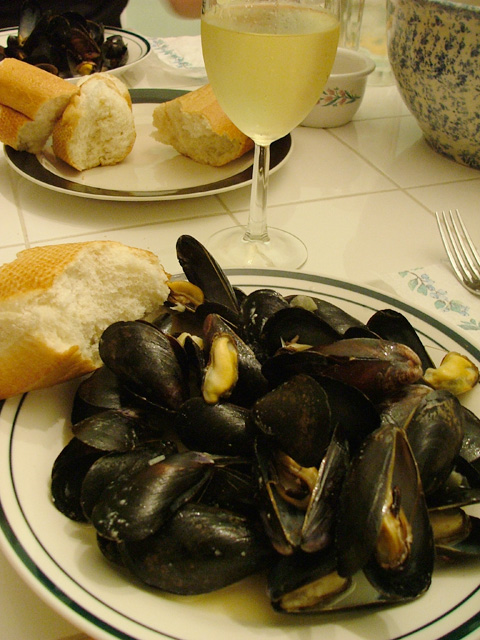 Previously when I've cooked mussels, I merely steamed them, and served them with a little butter and lemon. Nice, but not awe-inspiring. As part of my continuing personal education in French bistro cooking, I consulted the Les Halles Cookbook and picked the first mussels recipe, moules normande or Mussels Normandy. The French joke that the cooks of Normandy put butter, cream and apples in everything, but what's wrong with that? This recipe starts off with half a stick of butter in a large pot, followed by a shallot, an apple (I used a Johnathan), 3 slices of chopped cooked bacon, a cup of cream, a splash of Calvados (I used a little brandy and apple juice), and finally the load of mussels. Cook for 10 minutes, shaking occasionally. Serve when all the mussels are open.
 While hard apple cider would have been the most authentic Norman companion, and I really wanted a creamy white Burgundy, I opted for the 2004 Hayman & Hill Russian River Chardonnay. Pleasantly fruity, with abundant pear flavors. Hints of honey on the nose. Nice and unoaked, not sweet at all, but the fruit flavor makes it a delightful match for the savory dish served. For $11, not a bad wine, and it definitely hit the spot with this simple yet rich dinner. I look forward to trying the other four classic mussel recipes.
 2005 Rex Goliath "47 Pound Rooster" Chardonnay from Monterey County, California. A nice and fruity California Chard, with lots of apple and pear flavors. Slightly floral aroma and a barely sparkling mouth feel, and some lemon notes on the finish. I'm pretty sure it's unoaked.
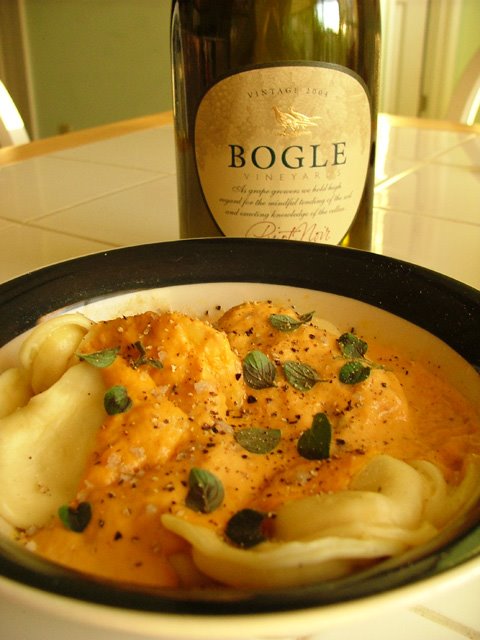 For dinner, I was faced with a bit of a quandary. I really wanted some cheese ravioli, but the girlfriend isn't eating tomatoes right now. And a simple cream sauce would be boring. So I turned to this recipe found on Taste Everything Once: A Pumpkin Cream Sauce for Pasta. Follow the link for the recipe, it's very simple. I don't have any sage, but substituted fresh oregano with good results. (Next year every windowsill in my house is going to have one or more herbs growing on it.) Just one critical note: if using canned pumpkin, make sure you get the pure pumpkin, and not the pumpkin pie filling. Though if you like your sauce sweet, knock yourself out.
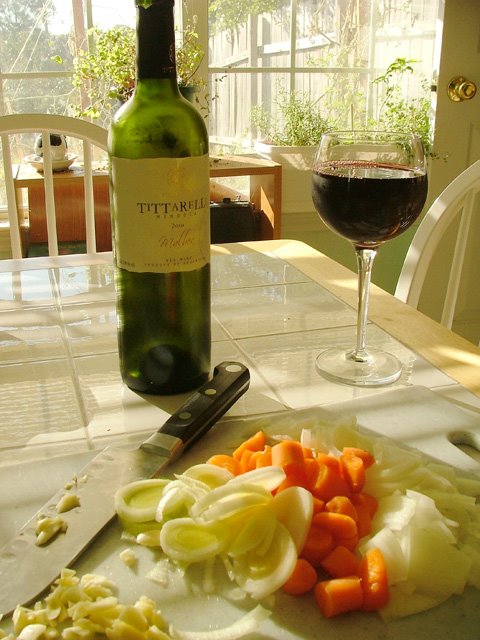 What went into it?
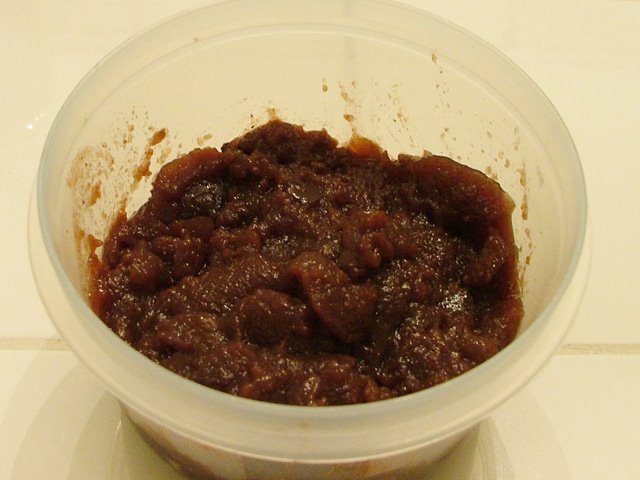 Final analysis: it's not too attractive here in the plastic container, just waiting for a liner of plastic wrap to lay over the sauce and send it on its way to the freezer. The final product, after cooling, was the consistency of jelly, hence the lumpy appearance in this photo. But once again, it smells and tastes incredible. Just taking a pea-sized portion and letting it melt on your tongue is like enjoying a good steak and a glass of wine.
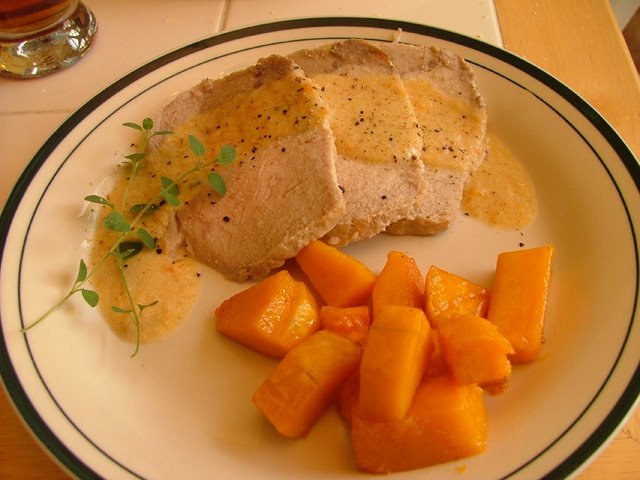 Here's my first attempt at one of the recipes... Rôti de porc au lait. Literally translated, roast pork in milk. That doesn't sound really appetizing, but it's quite good. You take 3 lbs of pork loin, sear it in a Dutch oven, add in a mirepoix of vegetables, pour in some whole milk, add a bouquet garni, and then cook the loin for an hour. Remove the pork, blend the sauce, and serve over slices of the pork, but only after the loin has rested for fifteen minutes.
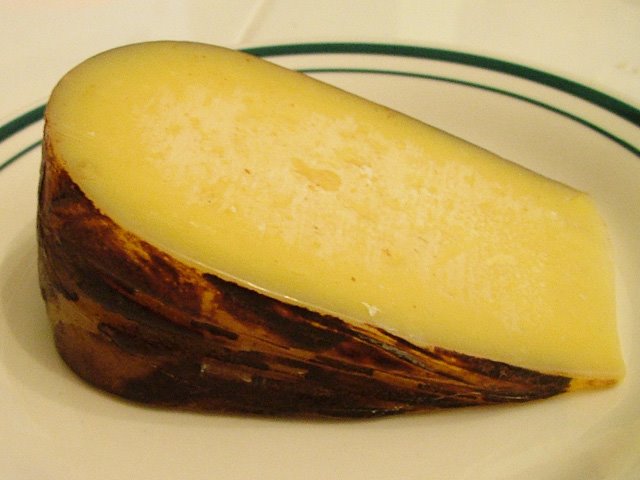 Afterwards, we had some Sonoma Dry Jack, a relative to the more well-known Monterey Jack and much closer to the original "Jack" recipe as opposed to the modern "white cheddar" incarnation. Think about a cheese that's somewhere between smoked Gouda and Romano. A thin, smoky rind, and a great firm cheese underneath. We ate it in slices, but I'm sure it would be good grated in certain dishes.
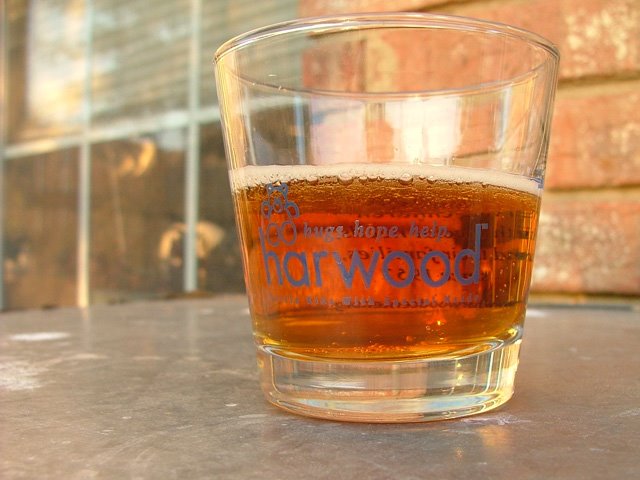 I even got a commemorative tasting glass, with a line drawn at the exact 3 ounce mark, which turns out to be rather perfect for a beer tasting. There were two or three appetizers and four or five beers per station. And the staff on hand were well educated on the particular beers that were being served. Over 30 beers were available, and I was glad to see American microbrew pioneers like Sierra Nevada and Anchor Steam represented in full. As is my usual practice with massive tastings, I chose to try those beers I'd never had before, plus a few that I really enjoy.
 Edamame
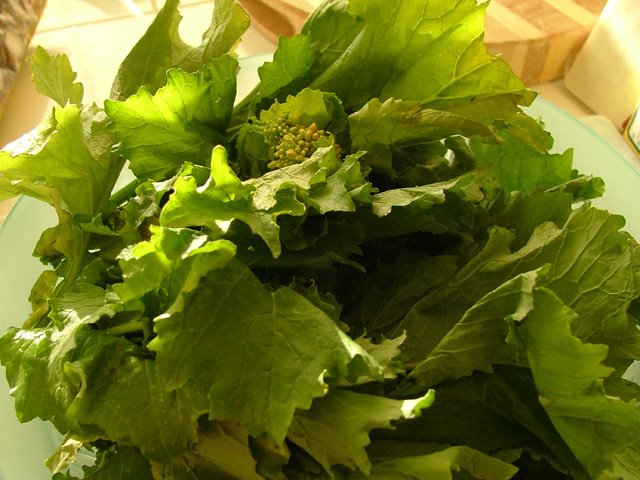 Rapini
 Black Arkansas Apple
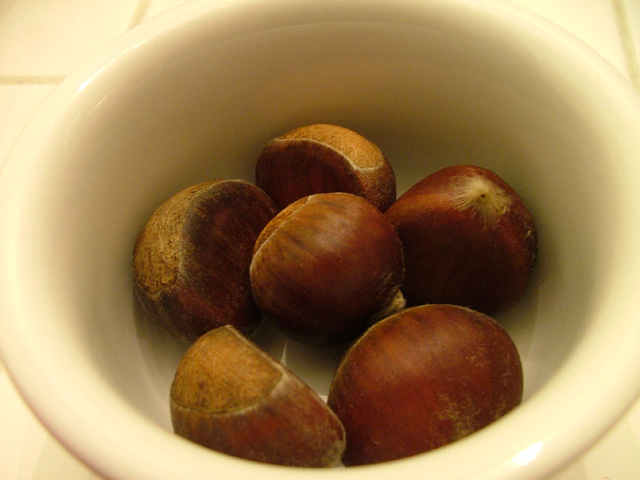 Chestnuts
 Once everyone arrived, we started out with a toast, basically thanking Paul for hosting and thanking my parents for giving birth to me 30 years ago. We toasted with the Schramsberg Blanc de Noirs, a non-vintage sparkler from California. I'd been holding on to this bottle for a few months and wasn't disappointed. It had a heady, vegetal aroma, but a cool and crisp mouth feel to it. I found myself sipping it throughout the evening as a palate cleanser. Some of my guests elected to toast with the Fetzer Riesling, a light and sweet wine. My roommate, a devout non-drinker, toasted with the 2006 Diet Coke.
 For the soup course, I made a "14 Carrot Soup". Pardon the pun... There were only about ten carrots in there, three parsnips, a good chunk of diced ginger, several cloves of garlic, and two leeks. I really didn't have to season the soup, which was fortified by a half gallon of chicken stock and half a bottle of wine. Root vegetables can have some incredible flavors on their own, if you cook them properly. For serving, I made a little vine design using some sour cream piped through a bag. Then I dragged a knife through the lines to produce the vine. (I picked this up as a decorating tip from a pumpkin soup recipe about 15 years ago.) A little dusting of freshly ground nutmeg and we're ready to go.
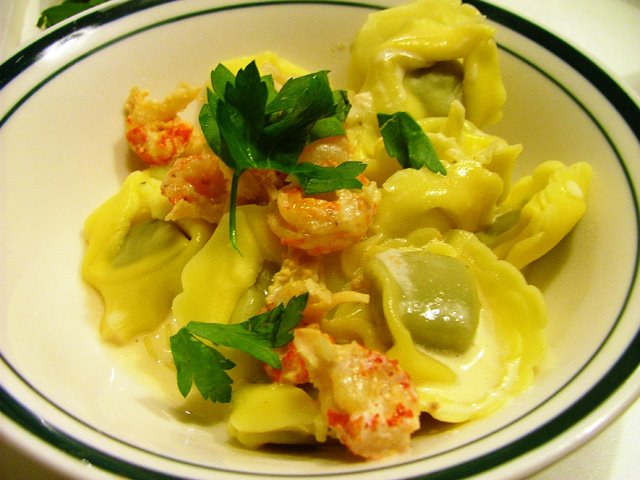 Throughout the evening, we sipped on my brother's red wine, the 2001 Chateau Potelle Zinfandel from Paso Robles in California. A dark and jammy Zin with hints of plum and black cherry. Typically I follow the Soup-Fish-Meat-Dessert paradigm, but I mixed it up a little this time and did a more Italian primo piatti dish with a Southern flair. What you see before you is spinach and cheese tortelli, topped with crawfish tails and a light cream sauce. A little grated Romano cheese and Italian parsley to top it off. This was a big hit of the evening, and while I was concerned that it might fill everyone up too fast, there was enough time before the secondo piatti for everyones stomachs to settle.
 Between the pasta and meat courses, I poured the 2002 Shelton Vineyards Cabernet Franc, a bottle I picked up after a recent tasting. This is an incredible wine, and everyone was shocked when I told them that it came from North Carolina and was very affordable. For the main course, I cooked a whole beef tenderloin (coated in a horseradish-mustard sauce with fresh rosemary and black pepper), served with a savory mushroom sauce and some grilled radicchio. The radicchio were made more or less in the style of chef Michael Chiarello, including the use of anchovies to spice up the vinaigrette. I didn't tell anybody beforehand about the anchovies, and nobody complained after the disclosure. The beef was really good. Several diners gorged themselves to excess. The primary wine for this course was provided by Dad, the 2004 Pilgrim Vineyard Zinfandel from V. Sattui's Lodi Vineyard.


