23 June 2006

Combinations #3: Flatbreads with Spiced Chicken, Pistachios and Roasted Peppers

It's time for Combinations #3, hosted by the chaps from Leeds. I missed the second one--a combination of work and forgetfulness got in the way, but Andrew was kind enough to remind me about it this month.

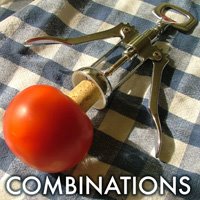
Speaking of which, if you go to Andrew's site, you can see the official Combinations logo, which I designed. I submitted a handful of designs to Andrew, he picked one, I refined it, and you can see the final result:


And here's my favorite alternate:


And the one that was probably a bad idea from the start:


On to the food! I managed to find most of the ingredients, even though I came up dry on my first visit to my favorite Persian-Turkish place. The lady of the shop gave me directions to another supplier, and in thanks I bought some baklava and assorted desserts. (I felt bad since upon seeing me enter she almost started making my standard döner kebab.) Upon arrival at the next place, I asked for lavash and za'atar. She didn't know what I was talking about, despite being from the region. I walked down the aisles with her, and found the za'atar. In the frozen section, she pulled out what looked like a baguette, and I said, "No, it's a flat bread." She began to hand me a bag of rolls when I found a few dozen flat bags filled with lavash, and with the word "Lavash" in big letters on the front. At the shop I also picked up some pisatchios sans shells. I couldn't find any sumac, but I could see plenty of the little red bits in the za'atar. I'll be giving the rest of the huge jar of this spice to my Syrian friend.

Way back in the day, my mother and grandmother used to occasionally brew sumac to make a sort of tea or "Indian lemonade", due to it's acidic and bitter flavor before adding sugar. Sumac grows wild all over the Mid-South, and everybody takes it for granted. Though the occasional hippie or art student will grab some for an herbal cure or pigment.

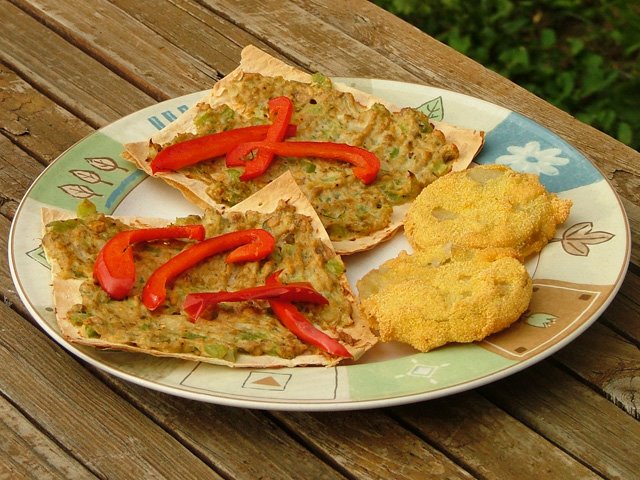
I made some slight modifications to the recipe: I used my homegrown chives instead of green onions, and I used minced green pepper for the chicken mixture rather than red. The original recipe from the New York Times suggests squares of six inches or fifteen centimeters. This provided me with twelve squares, and Paul and I consumed two each. Also, for the yogurt sauce (not pictured), I added a handful of my fresh mint, which provided a nice kick. And just because I could, I decided to pair the meal with fried green tomatoes.

Despite doubling up on all the spices and adding a lot of Tabasco sauce, I still found the meal dull. It wasn't bad, and it was definitely filling, but somehow the chicken mixture just didn't work for me. I really found myself craving a bit of tomato sauce and cheese to help it be more like a pizza. That may have something to do with my childhood friends of Lebanese descent, whose parents used lavash to make all sorts of fun fusion cuisine. (I also think this dish would have been better with lamb than chicken--it just needed more oomph.)

The wine I chose was actually a gift from my friend Tom, who dropped it off on his recent visit. I speak here of the 2005 Knobstone Traminette from Huber Winery in Indiana. Traminette is a Gewürztraminer hybrid. My previous experience with the grape was not pleasant, but this is fantastic. It tastes very much like a classic Gewürztraminer, but with a drier, crisper, and more lemony taste to it. As something of a random choice, it paired quite nicely with the Middle Eastern fare. The aroma is floral and mild, and the taste aside from the aforementioned spice and lemon has good elements of honey, with just a hint of acidity to keep things interesting. An excellent wine all around.

20 June 2006

2004 Cellier des Dauphins Prestige Rosé

Welcome to the Summer of Rosé 2: Electric Boogaloo!

Last summer I burned through as many dry rosés as my wallet and liver could handle. I intend to continue this quest this summer, with the goal as always of buying bottles I've never tried before. I've already had a couple in the past two months, but here's a great one to kick off the summer: the 2004 Cellier des Dauphins Prestige Rosé, a Côtes du Rhône rosé from around Provence that is made of Grenache, Cinsault, and Syrah. $12. The English site refers to the color as "deep rosé", but I prefer the French version, rosé vif, roughly vivid pink. In France, a lot of the same terms are used for describing rosé wines, actual roses, and lipstick. Some might make the association that drinking rosés is an effeminate act; on the contrary, I say that such descriptors are used much in the way that the manliest of men with a good grasp of their mother tongue will describe a car or boat in feminine, often sensual terms.

Rosés often don't have a lot to offer on the nose, and this one is no different. Yet it tastes wonderful. Good crisp berry flavors, bright and lively on the tongue due to some well-balanced acidity. Almost no aftertaste at all, which is perfect for a summer wine. Imagine raspberry lemonade that isn't sweet or overly tart, and you've got a good idea where this wine begins. After coming home from work and tending to the herbs and tomato plants, I drank this wine along with some grilled chicken and chorizo tacos, served on small white corn tortillas. Quite a good pairing, especially with some black beans on the side.

Side note: my bottle was the same old-fashioned shape as the one pictured in the link above, but the label was a little different. Similar design, but instead of a multicolored border, there was a simple and classy gold foil border around the calligraphic text.

19 June 2006

Welcome, Vino Keeno!

Over on the left hand side you'll see a new blogger link... I speak of Vino Keeno. Fun little wineblog, excellent graphics, and I immediately recognized a handful of wines I've tasted in the "Recent Wine Reviews" column. Give it a look, you'll be glad you did. And it really makes me think that I ought to spruce this place up one of these days...

18 June 2006

2004 Coppola Diamond Series Claret

In looking up the link for this wine, I discovered that Niebaum-Coppola is now going by the name Rubicon Estate. And apparently there's nothing on there about the old Coppola wines. A shame, as the Claret was always one of my favorites, as was the Sauvignon Blanc.

Dad took the family out to eat for Father's Day... I know that sounds odd, but he just wanted to see everyone for the day. We had dinner at Carrabba's, a chain Italian restaurant that's fairly decent. Dad had already ordered the 2004 Coppola Claret before I arrived, and I adjusted my entree selection for the wine. He had the sirloin, I had the pork chops marsala. The lentil and sausage soup was excellent, and I'd highly reccommend it to anyone who visits. Plus, their fried calamari is made with very small squid, so you get several tiny clusters of tentacles in addition to the standard rings. I almost made the rest of the table ill by claiming all the tentacles for myself. But truly, they're the best part.

The wine was quite good, full of dark berry flavors and just a hint of herbs and vegetation and leather on the nose. I think this bottle could have used another year, but I was happy with it. And it was good to split the bottle with Dad--no one else was drinking that evening. Dad's really responsible for my love of wine. He started getting a lot of wine as gifts back when I was in high school, and he let me cook with whatever I wanted. I was also encouraged to take a sip from the measuring cup, as long as I didn't tell Mom. (It was in that manner that I discovered the joy of a half glass of wine while cooking a big dinner. Just enough to relax you, but not enough to make you sloppy or forgetful.) Dad and I differ a bit when it comes to drinking: I prefer dark beers and powerful red wines, he prefers lagers and Merlot. However, Dad's a staunch fan of Scotch, and it takes me a while to work up to the point where I can truly enjoy the blessed whisky.

Here's to you, Dad. May we raise many glasses together in the years to come.

Tasting Notes for June 17, 2006

The theme for this tasting was supposed to be "Ugly Labels, Good Wines". I disagree with the statement about the labels for the most part--naturally it's a matter of personal opinion, but I've seen very few labels that are truly ugly. Some are better than others, but as long as it gets the information across and is distinctive enough to make it easy to remember, I don't have a problem with it. Hopefully the links will provide you with a chance to look at the labels, and just for kicks I'll give my opinion on each.

Wine 1: 2002 Rutz Sauvignon Blanc. North Cost, California. Major anise aromas, creamy and fruit-forward. Interesting flavor. $11. The label is obviously inspired by the work of Roy Lichtenstein, which I find cool. The "RVTS" thing is interesting, though I can't stand the font used for the thought bubbles.

Wine 2: 2004 Four Emus "Kylie" Sauvignon Blanc/Semillon. Western Australia. Big round fruit flavor aromas, but ultimately musky tasting and dull. $11. I don't have the huge aversion to animal-based labels that most people have, but a emu heads aren't the most attractive thing in the world. Still clever, and it seems to be successful for the casual wine drinking market.

Wine 3: 2003 Georges Dubœuf Macon Villages Fleur. Macon, France. This is an unoaked Chardonnay. Cake aromas, crisp and clean flavor, yet still elegant. I loved this one. $14. Once again, I'm fond of the floral Dubœuf designs combined with clean, easy to read text.

Wine 4: 2004 White Truck California White Wine. Oakley/Sonoma, California. A blend of Sauvignon Blanc, Viognier, Marsanne, and Roussanne. I enjoyed the Red Truck wine, and found it to be a fun casual sipper for barbecues and the like. This has aromas of apple, peach, and apricot. Pleasant fruit flavors and just a touch of oak. Good basic everyday white. $11. Hey, I've lived my whole live amongst old pickup trucks, and my first car was a 13-year old white pickup truck with large patches of rust and a gray tailgate. This label gets two thumbs up in my book.

Wine 5: Sushiwine. Loire, France. The wine is French, the website is in Italian, and you can read a little about it in English here. This is a Chenin Blanc made with input from Japanese chefs and designed to go with sushi. Specifically, to hold up to the strong flavors of soy sauce. It's also quite possibly the worst wine I've ever smelled or tasted. It smells somewhere between turpentine and a strong medical antiseptic. Really harsh and astringent flavors. One sip and I had to spit, dump the rest, and rinse thoroughly. Everyone else at the tasting had the same reaction, and we even opened a second bottle in case it was a fluke. The second was just as bad. My advice: stick with sake when eating sushi. $13. Despite all of that, I like the minimalist sketch of the fish and mountains on the label, and the Japanese text is a nice touch.

Wine 6: 2005 New Gewürz Gewürztraminer. North Coast, California. One of the driest Gewürztraminers I've ever had, which means I loved it. Very light, with floral and spice aromas dominating. Light spicy flavor. $10. The label's not spectacular but it's far from ugly. Traditional harvest images are used for all sorts of agricultural products with great success.

Wine 7: 2004 Vidanueva Rosado. Rueda, Spain. 100% Tempranillo. A really disappointing rosé. Butter and toast aromas, with wild strawberries, but almost no taste. Mild, no body, flabby acidity. $12. Couldn't find a website, but it's pink and burgundy. Again, not really ugly or beautiful.

Wine 8: 2003 Nobul Red Tempranillo. Madrid, Spain. Pure Tempranillo. It has an alcoholic, Zinfandel or Port-like aroma. Black cherry flavors, but thin and too mild. $11. This label does commit some fundamental graphic design errors: black text and drawings on a red background are difficult to read, and yellow and red can do weird things to the eyes when placed right next to each other.

Wine 9: 2004 Rex Goliath 47 Pound Rooster Cabernet Sauvignon. Central Coast, California. Oddly tastes like Pinot Noir--straweberry flavors and smooth. Nice drying tannins. Pleasant sipper and excellent bargain. I've passed by this wine a million times and never wanted to pick it up. $10. I love this label--it's based on an old circus poster.

Wine 10: 2004 Bodegas y ViƱedos de Murcia Jumilla Mad Dogs and Englishmen. Jumilla, Spain. A blend of Monastrell (Mourvedre), Shiraz, and Cabernet Sauvignon. Unusual mix, but a great wine. Dark black cherry flavors, firm tannins, and a mild aftertaste. $11. I consider this a classy label with an allusion to an amusing song.

Wine 11: 2004 Eric Texier Côtes du Rhône. Rhone, France. A blend of Grenache and Gamay. You mostly taste the Grenache, but it's softer than that grape alone. Good raspberry fruit and big tannins. $16. Probably the only truly ugly label out of the bunch. Lots of overlapping text kills the readability factor, and a bunch of ugly colors don't help either. Reminds me of a school textbook cover from the 1970s.

Wine 12: 2004 Laurel Glen Reds. Lodi, California. "A Wine for the People", it claims on the front. A blend of Zinfandel, Carignan, and Petite Syrah. Smells like a white wine, like a light Sauvignon Blanc. Floral and with a little grapefruit. Tastes entirely different--the Zinfandel dominates, and it has a bold full flavor. Really bizarre experience (confirmed by several other tasters and the host), but good wine. $12. The label's not that bad, but I've always found Soviet kitsch to be in poor taste. Plus lower in the page, they show a statue of Mao Tse-Tung and claim "The Chairman would have approved!" Sure, after being responsible for the deaths of tens of millions of Chinese, why not pop open a bottle of wine? It's a screwcap now, but the corks used to bear the images of Lenin and Marx, as well as Americans accused of being Communist sympathizers. Granted, the Soviet Union has collapsed and the Chinese are racing towards capitalism, but you'd never market "Folkswein" with a big swastika on the front and a stern image of Göring on the cork.

16 June 2006

Google Analytics

I'm part of the beta test group for a new service called Google Analytics. It's free, but you have to ask to join and may or not be let in for the beta testing. It provides you with a ton of data about your site and who visits it. I've only been using it for the past week--the first time in a year and a half of running this blog that I've ever tried to track how many readers I've got.

This handy map shows the past 500 visitors, which is about a week's worth. The small dots are one visitor a piece, the largest dots around the Memphis area are 9 and 12 visitors (though most of those have got to be me checking the site or looking up a wine I tasted):

Click to enlarge


And here's a zoomed-in version for North America and Europe. This is just a screenshot--when you mouse over the real report, it shows you the name of the city as well as the number of visitors from that city:

Click to enlarge


I'd just like to thank all the readers and visitors out there, hope y'all enjoy this site, and I look forward to providing wine reviews and random musings for years to come.

12 June 2006

Tomatoes Update

This is an update on my tomato growing project, in which I've got six plants of various varieties planted in the backyard, just on the other side of my kitchen. In fact, in a few of the pictures you can see a glimpse into my tiny kitchen with it's little white tile table and four chairs.

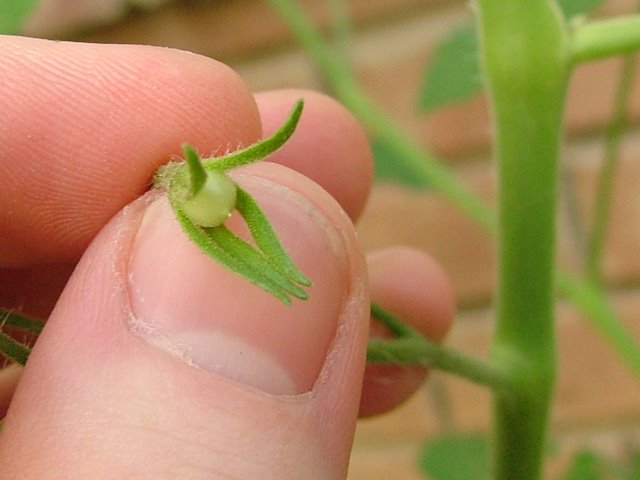
Pictured above is one of my first actual tomato fruits, about an eighth of an inch or 3mm wide. I've had a lot of blossoms, but many of them have dropped off. My red cherry plant has got several of these set, and I'm going to be carefully monitoring the others.

Apparently you can make wine from tomatoes, but I assure you, all of these are intended for fresh consumption, tomato sauces, and the odd roasting as on a pizza.

06 June 2006

2001 Cantina Zaccagnini Montepulciano d'Abruzzo

I had leftover lasagne in the fridge, and on the way home really wanted another Italian wine. Luckily, I stumbled upon an old favorite: the 2001 Cantina Zaccagnini Montepulciano d'Abruzzo. (Say that six times fast!) Affectionately known as "twig wine" in some parts, because of their marketing tactic of using a reed to tie a piece of dried grape vine around the neck of the bottle, fastened underneath the front label. A cheesy bit of marketing, but it's way more classy than the wicker basket Chianti bottles.

This wine tastes incredible right now. Not sure how long it will age, but right now it's silky smooth and full of strawberry flavors and aromas. The tannins are soft, but there's a residual acidity that's fascinating on the tongue. It's hard to get a well-aged, five year old wine for $15. It went well with the lasagne also, and my dining companion loved the wine. I had most of a baguette left over from Sunday night, so I sliced it up and made bread pudding for dessert, topped with a little Godiva Chocolate Liqueur. It was either that or make Italian bread soup, but that seemed kind of redundant to have a starchy tomato dish along with lasagne. No, the pain perdu turned out to be a good idea.

05 June 2006

2004 Crane Lake Sangiovese

Last September, I ran through a lot of the Crane Lake wines, which are essentially "Two Buck Chuck" relabled for sale outside Trader Joe's. I think by now I've had everything but the Pinot Grigio, and I think I can skip that one. I like the Petit Sirah, the Sauvignon Blanc, and don't mind cooking with the Chardonnay. The Cabernet Sauvignon and Merlot are forgettable. As for the Sangiovese? Eh, not bad, nothing to get excited about. Certainly preferable to really cheap Chianti. I'd say this would be good for an inexpensive Italian restaurant, maybe as a bargain house red. In fact, I served it last night with a vegetarian lasagne (lots of spinach and mushrooms) and some links of grilled sweet salsiccia. It was definitely serviceable.

There's a smoky nose with some blackberry flavors, but mostly it's surprising for having low tannins. You tend to expect young Italian wines (even if you're just using Italian grapes) to be pretty tannic, but apparently they held back on this. So it's smooth, but not complex.

Memorial Day Addendum

Here's two more wines and one clarification to add to last week's wine blowout.

First, the clarification. I referred to a Spanish Rioja. The wine we drank with the lamb was in fact the 2001 Sierra Cantabria Rioja Crianza. Beautiful, wonderful Tempranillo with just a dash of Graciano in it. I think I need to drink more Spanish wine this year.

And moving backwards in time, the first wine we cracked open--when I was washing vegetables and prepping sauces--was the 2004 Crossings Sauvignon Blanc from Marlborough, New Zealand. Light and crisp, with a touch of citrus aromas, but it's not overpowering. Sauvignon Blanc is rapidly becoming my favorite white grape.

Finally, on the second day of the festivities, Tom picked up a bottle of the 2004 Marquis Philips Cabernet Sauvignon on my recommendation. I've had this wine in an earlier vintage and loved it, but wasn't as impressed this time around. Good leather and chocolate flavors in addition to abundant dark fruit, but there's a strong vegetal nose that's hard to ignore. Sometimes that's a good thing; I guess I was just in the mood for a big fruit-forward classic Australian red.

04 June 2006

2004 Red Bicyclette Rosé

Last summer I burned through as many dry rosés as I could find... This summer I'm going to continue the voyage, and in my usual style, seek out new bottles that I've not tried before. Last week when I picked up the Cassagne the guy at the wine shop highly recommended the 2004 Red Bicylette Rosé. Don't follow that link, though--the website is annoying and doesn't have any information on this particular wine. If you want information, there are other options. The latter link provides me with what I really wanted to know: the grapes involved. For this little wine, it's a curious mix of Syrah, Grenache, and Pinot Noir.

Funny thing there... Aside from Champagne, are there any traditional wines that involve blending Pinot Noir? For some reason it alone seems to be sacred and thus protected from other grapes. You could say it's just a Burgundy thing, but Chardonnay gets blended with everything from Semillon to peach juice to 7-Up. I guess it's a little too soft and mellow and would disappear into the background of any blend, but that never stopped anyone from blending Merlot.

Anyway, back to the rosé. There's a classic rosé aroma that's hard to pin down. It's a sweet rhubarb-strawberry scent, but it's not overpowering. This wine has that, but it's good and dry. Very soft on the tongue, with a little kick of acidity at the end. Bright lemon and berry flavors abound. The color leans towards the lavender/grey side rather than bright magenta. Definitely a good, serviceable rosé for the summer, a great bargain at $8, and should be available damned near everywhere.

Tasting Notes for June 3, 2006

The theme for this tasting was Sauvignon... Sauvignon Blanc and Cabernet Sauvignon. The word sauvignon means wild, savage, or native plant in French, depending on who you ask. Surprisngly, none of these wines came from Bordeaux, the home of these grapes.

Wine 1: 2005 Zolo Sauvignon Blanc. Argentina. A good way to start the tasting--bold and fruity, with powerful grapefruit flavors and medium acidity. I remember enjoying the Malbec from Zolo, and this one is quite good as well. $13.

Wine 2: 2004 Rodney Strong "Charlotte's Home" Sauvignon Blanc. Sonoma County, California. Light nose, ashy flavor, a little flat. This and the Sancerre probably should have come before the more full-bodied whites. $14.

Wine 3: 2004 Chateau Potelle Sauvignon Blanc. Mendocino County, California. Charming story behind this winery. The husband and wife came over in the early 80s as tasters for the French government, but ended up settling in California and founding a vineyard. Very crisp, light fruit and a mineral quality that combines some of the best elements of California and France. $16.

Wine 4: 2004 Pascal Jolivet Sancerre. Loire Valley, France. Fresh bread aromas on the nose, light and mild. Easy sipper, and elegant. $25.

Wine 5: 2004 Pike & Joyce Sauvignon Blanc. Adelaide Hills, Australia. Citrus and pineapple aromas, similar flavors. Light and well-rounded with a smooth finish. $20.

Wine 6: 2004 The Jibe Sauvignon Blanc. Marlborough, New Zealand. Lots of grapefruit aroma, clean and clear but with mild flavors. $14.

Wine 7: 2005 Verget du Sud Rosé. Côtes du Luberon, France. A nice Provençal ros&0233; made from Cabernet Sauvignon. I don't think I've had Cab Sav as a pink wine before, but I enjoyed it. Lovely light salmon color, cherry tart nose with mild berry flavors and crisp acidity. $15.

Wine 8: 2003 Beringer Founders' Estate Cabernet Sauvignon. Napa Valley, California. Black cherry and cream aromas, jammy with medium tannins. Really impressive for the price. $11.

Wine 9: 2003 Chateau Ste. Michelle Indian Wells Cabernet Sauvignon. Columbia Valley, Washington. Mild spicy nose, very smooth plum flavors. Low tannins and a beautiful deep, dark color. I loved the Indian Wells Merlot, and am equally impressed with this wine. $21.

Wine 10: 2002 Artesa Napa/Sonoma Cabernet Sauvignon. 76% Napa Valley, 24% Sonoma County, California. Dark peppery aroma, fully tannic and dry. A bit too young in my opinion. Heavy red grape skin flavors dominate. $25.

Wine 11: 2003 Chateau la Grande Roche Cabernet Sauvignon. Napa Valley, California. Very little nose, no discernable flavors. Like the previous wine, I think it might need some time. $35.

Wine 12: 2003 Sbragia Family Vineyards Cabernet Sauvignon. Sonoma County, California. Part of the Beringer Reserve Club, made by the head winemaker. Spike cake on the nose, big round cherry flavors, hints of apple. Very dry, but not overly tannic. $35.

30 May 2006

Memorial Day Dinner

This is the first in a series of postings in which I attempt to track down and recall what transpired Monday evening, during a Memorial Day feast. I got to meet a great chap and his wife that I'd previously known only through a mutual friend and e-mail lists. Tom brought down a bunch of wine for his visit, and I brought a few bottles and cooked dinner. To kick things off, I started out with my favorite sparkler, the Domaine Ste. Michelle Blanc de Noirs. The first course consisted of grilled tilapia over blood oranges and bay leaves, fried green tomatoes, and a fire-roasted red pepper cream sauce to go with both, garnished with goat cheese and microgreens. For the wine, I served the 2005 Domaine de la Petite Cassagne, from the great importer Robert Kacher. This is mostly a GSM blend, and has a deep and lovely lavender color. Bright strawberry aromas and flavors with a dry finish. It's also a biodynamic wine, and I think the first one I've knowningly consumed. I don't have anything against the method, I'm just not convinced it does any good. We also opened one of Tom's bottles, the humorously named 2004 Rosenblum California Côte du Bone Roan, Château La Paws. An unusual blend of red grapes, but the Zinfandel gives it some wonderful complexity. Great fruit flavors without heavy tannins. Oddly a great pairing for this first course.

For the second course, I made a deconstructed navarin d'agneau, a traditional lamb stew. But it's too hot here for a stew, and I had a vegetarian present at the meal, so it was more fun to do it in pieces. I slathered the leg of lamb in Dijon mustard, garlic, and fresh mint, and grilled it over hot coals. At the same time, I was roasting a bunch of baby vegetables: potatoes, carrots, turnips, onions, and fennel, all coated in olive oil and fresh rosemary. And off to the side, I was reducing down a hearty sauce of red wine and beef broth. For the wine, we had one of Tom's, a Spanish Rioja by the name of Sierra Cantabria. (I'll double check the name and vintage later, but it was from the late nineties.) We decanted it and let it sit for half an hour before consuming, and it was a thing of beauty. Deep, rich black fruit flavors, with mellowed tannins and a velvety finish.

Beyond that, the evening devolved into a procession of Port and whiskey and me slouched in the chair, stuffed and content that all had gone well.

2000 Skouras Saint George

On the second evening of festivities at Paul's house with Tom and Jenny, we cracked open a bottle of the 2000 Skouras Saint George, a Greek wine from the Peloponessos region. The wine is made from the Saint George grape, known as Αγιωργιτικω in Greece. I have zero experience with Greek wines, aside from hearing rumors of the heavily pine scented retsina reds. And for some reason, I find it hard to think of Greek wine in a modern setting, and imagine togas and Dionysus and lots of half-naked maidens carrying amphorae sloshing over with potent wine... Ahem.

However, this is a light and mild red wine, possibly having benefited from careful aging over time. I get hints of chocolate on top, with milder fruit flavors below. Low tannins--quite light, but with enough acidity to keep things interesting. Fun to try out if you can find a bottle of it. Thanks, Tom!

24 May 2006

Tennessee Wine Festival

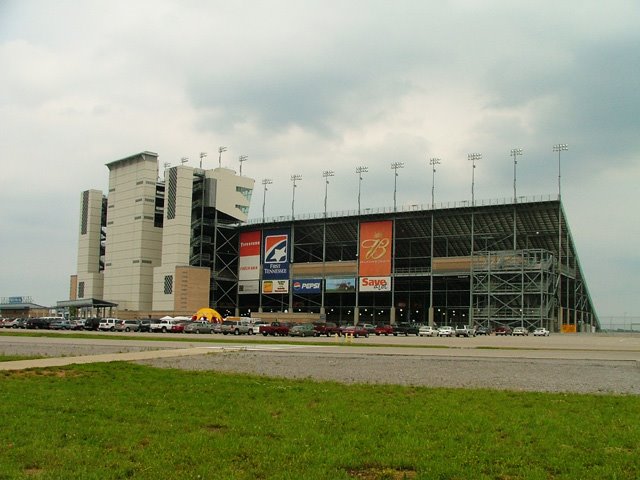
On May 20th, my lovely traveling companion and I attended the A Toast to Tennessee Wine Festival. A good friend in Nashville scored us some tickets to the event, and we spent the day in Middle Tennessee both at the festival and visiting with my friend. The event was held at the Nashville Superspeedway, a NASCAR race track to the east of the city. As of now, I may be the only wine blogger who has attended a tasting at a NASCAR facility.

If you want to try Tennessee wines, this annual event is the place to do it. There's about two dozen wineries in the state, and fourteen of them were present. I tasted at least one wine from each winery, and out of the hundred-odd wines present I sampled 26. I primarily sought out wines made from grapes that were either Native American varieties or French-American hybrids. I tasted a few made from traditional European grapes. There were some more I wanted to try, but I think I reached the limit of my palate. For that reason I also skipped almost all of the fruit-based wines (berries, mostly, with one rhubarb wine). In addition to the wines, Tennessee cheesemakers and other food producers were present, offering samples of their wares. This was a nice treat--I got to try some great artisanal cheeses, as well as fresh salsas, sausages, etc.

There's not a lot of online information on these wines, though I've provided links to contact information. When referencing some of the more unusual grape varieties, I've provided links to the Appellation America Grapes Varieties Index, which provides humorous character profiles and illustrations of each grape in addition to hard information about the background and growing regions of said grapes.

Unless otherwise noted, nearly all wines were fermented in stainless steel. After a dozen unoaked wines, you find yourself craving oak. For those unfamiliar with Tennessee geography, West Tennessee is flat, Middle Tennessee is hilly, and East Tennessee is mountainous.

Lauderdale Cellars, West Tennessee
  • Tennessee Peach: A sweet white wine with peach juice added. A really beautiful color--it had that slight blush of salmon you see in homemade peach ice cream. Really sweet, though.

Chateau Ross Vineyard & Winery, Middle Tennessee
  • Viognier: Lemon and big fruit flavors, clear and clean.
  • Maison Rouge: Cabernet Franc, Cabernet Sauvignon, Merlot. Creamy, spicy, some vegetable elements from the Cabernet Franc. Really quite nice.
  • Big Bitch Red: Amusing names were in abundance at this wine festival... A combination of many different red grapes. Soft, not too tannic, but the flavors are too heavily blended for anything to stand above the crowd. Good basic red wine.
  • Catawba: Native American grape. Smoky, foxy, but not sweet. I've had Catawba before that was as sweet as pancake syrup, but it was interesting to taste a drier version of the wine. The... earthiness can be offputting to some.

Beans Creek Winery, Middle Tennessee
  • Traminette: Very similar to Gewürtztraminer, which is one of the parent grapes of this hybrid. Spicy and sweet, but a rough aftertaste.
  • Chardonel: The flavors were similar to Chardonnay, but it needed more acidity. The name reminds me somewhat of the artificial vanilla substitute vanillin, or that it's a grey-market knockoff of Chardonnay.
  • Chambourcin Reserve: Wow. Tastes very similar to Merlot, but there's something in the background letting you know it's different. Mellow and fruit-forward, mild tannins. Definitely try a Chambourcin if you get the chance. This was aged in American oak for 8 months.

Keg Springs Winery, Middle Tennessee
  • Vidal Blanc: This hybrid grape is commonly used for making ice wine in Canada. Musky nose, semi-dry and lemony. Needs a little more punch, but definitely worth trying.
  • Crusade: Made from Concord grapes, which are native to North America. Sweet, but the flavor is a lot of fun. Rather than reminding you of wine, the taste is exactly that of purple grape juice and purple grape jelly. In fact, the flavor threw me back to Sunday School. Concord wines aren't taken seriously, but I found them one of the pleasant surprises of the day.

Sumner Crest Winery, Middle Tennessee
  • Sumner Queen: A white blend of Riesling and French hybrids. Very sweet, difficult to discern any dominant flavors. Reminiscent of a late harvest Riesling.

Holly Ridge Winery and Vineyard, Middle Tennessee
  • Hogeye Red: A sweet blush wine of unknown grapes. Good summertime wine if you like them sweet.
  • Seyval Blanc: A hybrid that's quite popular in England. Overly musky with a thin flavor.

Beachaven Vineyards & Winery, Middle Tennessee
  • Barrelhead Red: Chambourcin and Merlot Blend. Dry, mild fruit flavors and medium tannins. Excellent casual drinking red.

Stonehaus Winery, Middle Tennessee
  • Fairfield Red: Another Concord that was on the drier side, thanks to blending from some European grapes.

Highland Manor Winery, Middle Tennessee
  • Highland Red: Chambourcin and Marechal-Foch blend. Sort of rough, cough syrup flavor.

Mountain Valley Vineyards, East Tennessee
  • Cynthiana: Merlot-like, with cherry flavors abounding. Very enjoyable.
  • Mountain Valley Blush: Unknown grapes. Semi-dry, no prominent flavors.

Tennessee Valley Winery, East Tennessee
  • Appalachian Red: A combination of Cabernet Franc and Cynthiana, oak aged. Solid tannins, black cherry flavors, and decent balance. I'd definitely try this again.
  • Captain's Reserve: Chardonnay and Seyval Blanc blend. Burnt match nose, ultimately thin flavors.

Apple Barn Winery, East Tennessee
  • Vineyard White: Unknown grapes. Dry, with low fruit flavors and low acids. Similar to Pinot Grigio.
  • Applewood White: Made from Winesaps and other apples. I cheated here, because I love apples and really wanted to try an apple wine. It turned out to be my favorite out of the entire tasting. It's hard to describe: not terribly sweet, but amazing apple flavors and aromas. Unique feel and body that is distinct from apple juice, apple cider, and hard cider.

Savannah Oaks Winery, East Tennessee
  • Etowah Derailer: Sweet light red blend, bright cherry flavors. Think a sweet Beaujolais, but I'm not sure what grapes were used.

Striker's Premium, East Tennessee
  • Cynthiana: Also known as Norton in different parts of the country. Considered to be one of the Native American grapes with the best prospect for serious wine production. Peppery and spicy, low tannins and crisp acidity for a red. Definitely looking forward to trying more of these wines in the future.
  • Baco Noir: A hybrid red that I really didn't enjoy. Astringent nose and tasted like thin cough syrup.

21 May 2006

The Wine Century Club

Dr. Vino recently wrote about tasting his 100th grape and joining the Wine Century Club. Membership is free, and you get a certificate honoring your accomplishment. It works on the honor system, so it's mostly for fun. I went to a wine festival this weekend--more on that later--and got to try some unusual grapes. Late last night I decided to go through my notes and figure out how many grapes I've tried.

100.

As in, exactly 100 after yesterday's encounter with some oddballs. I just finished going through the list and auditing it, removing any duplicates (Spanish grapes often have multiple names, and some Italian grapes have different names in Spain and France). But it looks like it's solid. And it may be slightly more--I stopped digging through my notes when I hit Welschriesling and made it to 100. (Of course, I think you could probably spend a month in Italy and hit 200 grapes easy, but most would be unknown outside of their various regions.)

The vast majority of these are from posts on this blog, though sometimes you might have to follow the link to the winemaker to get the grape varieties. A few others are from old handwritten notes before I started the blog, and some include the Port and Sherry grapes, of which I've had a lot but don't blog about often.

My list includes eleven that aren't on the Century Club spreadsheet, mostly French-American hybrids and some obscure Spanish grapes. But I've researched each one, and they appear to be unique varieties, just not terribly popular. Here it is:

  1. Albarino
  2. Aligote
  3. Arinto
  4. Arneis
  5. Baco Noir
  6. Barbera
  7. Bianca Fernanda
  8. Blaufrankisch
  9. Bobal
  10. Bonarda
  11. Brachetto
  12. Cabernet Franc
  13. Cabernet Sauvignon
  14. Canaiolo
  15. Carignane
  16. Carmenere
  17. Catawba
  18. Chambourcin
  19. Chancellor
  20. Chardonel
  21. Chardonnay
  22. Chenin Blanc
  23. Colombard
  24. Colorino
  25. Concord
  26. Cortese
  27. Corvina
  28. Dolcetto
  29. Dornfelder
  30. Gamay
  31. Garganega
  32. Gewurtztraminer
  33. Godello
  34. Grenache
  35. Gruner Veltliner
  36. Kadarka
  37. Kerner
  38. Loureiro
  39. Macabeo
  40. Malbec
  41. Malvasia
  42. Malvasia Nera
  43. Marechal Foch
  44. Marsanne
  45. Melon de Bourgogne
  46. Merlot
  47. Meunier
  48. Molinara
  49. Montepulciano
  50. Mourvedre
  51. Muller Thurgau
  52. Muscadelle
  53. Muscadine
  54. Muscat Blanc
  55. Muscat of Alexandria
  56. Muscat Ottonel
  57. Nebbiolo
  58. Negroamaro
  59. Niagara
  60. Norton
  61. Palomino
  62. Parellada
  63. Pedro Ximenez
  64. Petit Verdot
  65. Petite Sirah
  66. Pinot Blanc
  67. Pinot Gris
  68. Pinot Noir
  69. Pinotage
  70. Prosecco
  71. Refosco
  72. Riesling
  73. Rondinella
  74. Roussanne
  75. Ruby Cabernet
  76. Sangiovese
  77. Sauvignon blanc
  78. Semillon
  79. Seyval Blanc
  80. Steuben
  81. Syrah
  82. Tannat
  83. Tempranillo
  84. Tinta Barroca
  85. Tinto Cao
  86. Tocai Fruilano
  87. Torrontes
  88. Touriga Franca
  89. Touriga Nacional
  90. Traminette
  91. Trajadura
  92. Trebbiano
  93. Trepat
  94. Verdejo
  95. Verdelho
  96. Vidal
  97. Viognier
  98. Welschriesling
  99. Xarel-lo
  100. Zinfandel

17 May 2006

Galena Cellars General's Reserve Red

Following a trip to Chicago to visit some relatives, my sister-in-law gave me a bottle of the Galena Cellars General's Reserve Red. The label features the visage of Ulysses S. Grant, 18th U.S. president, Union Civil War hero, and favorite son of Galena, Illinois, where this wine is made. (It's basically the etching from the old version of the $50 bill.) Oddly enough, the label features one of my favorite fonts, Souvenir, alongside one of my least favorite, Snell Roundhand. Ah well...

I'm not really sure what grapes are in this. The back label claims that it's made from a blend of European and American Hybrid grapes, while various websites claim that it's a Bordeaux-style blend using grapes from Sonoma. Yet other websites claim that it's an unorthodox blend of Cabernet Sauvignon, Merlot, and Pinot Noir.

As I type this, I'm uncorking the bottle and trying it out... And the damned thing is eaten up with brett. Whenever I bring the glass to my nose all I can smell is rotten asparagus. The wine tastes OK, if a little bitter, but the smell is so overpowering that I can't stand it. I appreciate the gift, and will give this a second try if I come across it, but this bottle's going down the drain. And I've been looking forward to it all day...

15 May 2006

Crops

When it comes to growing plants, I never really had much of an urge. My maternal grandmother was a horticultural wizard, able to grow damned near anything. She had a bamboo grove in her backyard, and growing up my brother and I could have Star Wars-style lightsaber fights with 20 ft. long dried bamboo poles. She grew championship roses and African violets and tulips and daffodils and all sorts of other things. In fact, there wasn't a surface inside or outside that wasn't covered with a growing plant. She passed away a few years ago.

On both the maternal and paternal sides of my family, I'm descended from farmers. Mostly cotton, with some corn and the odd livestock for family provisions. What remains of the family farms are mostly used for cotton, which is still one of the major cash crops of the Mid-South. I never spent any time working on a farm, and aside from one summer when we raised corn and pumpkins in the backyard, I have no experience farming. However, this year I was for some reason compelled to grow things. Here's a list of what's currently growing in my various pots and gardens:

Inside:
Microgreens, Basil, Chives, Rosemary, Greek Oregano

Outside:
Tomatoes: Brandy Boy, Fourth of July, Yellow Pear, Big Mama, Sweet Baby, Sun Gold, Husky Red
JalapeƱo Peppers, Cilantro, four colors of carrots (yellow, orange, red, purple)

The herbs are going quite well, and I'm able to harvest them along the way and grow more as needed. It will be a month or two before I harvest any tomatoes, but I'm really looking forward to all of these unusual varieties. As for the carrots, I'll be amazed if any of them make it, but I'd really like to try a purple carrot at some point in my life.

Why am I doing this? There's some things you can't buy in the store or at the farmer's market. For instance, those little yellow pear tomatoes. The size of cherry tomatoes, but shaped like a pear and bright yellow, with a delicious flavor. Stick on a toothpick with a chunk of feta cheese and a basil leaf. Flavor bomb appetizer.

14 May 2006

Tasting Notes for May 13, 2006

I was looking forward to this tasting for a couple of weeks... All of the wines featured were going to be from The Grateful Palate, a popular importer of Australian wines. (The website doesn't have any wine information, but you can see a comprehensive list of the Grateful Palate wines here.)

I got there a little early, and was going over the tasting sheet, checking off the ones I'd tried before. I was certainly going to try them again, but I saw some of my favorite Australian labels on there: Paringa, Marquis Philips, and Trevor Jones. A guy came up, tapped me on the shoulder and asked if I was there alone. I figured he wanted the other seat, which I was more than happy to give up. Instead, he shook my hand and said, "Hi, I'm Dan Philips." As in, the owner of The Grateful Palate. Super nice guy. We talked off and on throughout the tasting, and in particular I asked him about the Nuriootpa High School wines, which are produced by a sort of vocational education program. The students pick the grapes and make the wines, and all proceeds go back to the high school.

I've tasted about half of these wines before. Last year I got to sit down with Trevor Jones at a tasting and go through his entire product line, but I was happy to see those wines again.

Wine 1: 2004 Trevor Jones Boots White. Barossa Valley, Australia. A mix of Riesling and Muscat. Sweet nose with apple aromas and smoky notes on the tongue. Balanced acids and not as sweet as you first think. $13.

Wine 2: 2004 Marquis Philips Holly's Blend. Padthaway, Australia. You know, I forgot to ask for the preferred pronunciation of "Marquis" when referring to this wine. Americans tend to pronounce the first name "mar-KEE" and Australians I've met have called it "MAR-kwiss". I didn't particularly like this wine, it's got a heavy vegetal aroma that was offputting. Rough finish as well. A combination of Semillon and Verdelho. I liked this last year, so I'm willing to bet it was an off bottle. $10.

Wine 3: 2004 Paringa Chardonnay-Semillon-Sauvignon Blanc. South Australia. Grapefruit on the nose, but the creamy feel and taste of Chardonnay. Crisp acidic finish. Interesting little bargain. $10.

Wine 4: 2002 Trevor Jones Boots Grenache. Barossa Valley, Australia. I liked this one so much I took a bottle home and devoured most of it with dinner. It's got a creamy cherry aroma, almost like a cherry tart with whipped cream on it and lots of butter in the crust. Big fruit and soft tannins with a medium finish. Touch of chocolate flavor. Bigger than a Rhone-style wine but not as aggressive as some California Grenache I've had, even though it ranked in at 15% alcohol. $14.

Wine 5: 2004 McLean's Farm Shiraz-Cabernet Sauvignon. Barossa Valley, Australia. Some black cherry and pepper on the nose. Very dry, with mild tannins and a short finish. More alcohol becomes present on the tongue as you go along.

Wine 6: 2001 Alliance Shiraz. South Australia. Plum aromas, with a mild scent of a ruby Port. Delicious, with tannins that melt in your mouth. Quite nice for the price. $14.

Wine 7: 2001 Brothers in Arms Shiraz. Langhorne Creek, Australia. Alcoholic, hot aroma, but with plenty of classic Shiraz flavor. Short finish. I actually preferred the Alliance to this one. $36.

Wine 8: 2004 Marquis Philips S2 Cabernet Sauvignon. South Australia. Buttery aroma, deep and rich feel, very dark and intense color, yet velvety smooth on the tongue. Wow. $35.

Wine 9: Trevor Jones "Jonesy" Tawny Port. Barossa Valley, Australia. An amazing Port for the price. Molasses and raisins dominate the flavor, with some figs and chocolate in the background. Alcohol is subdued, and it's not too thick or sticky. $10.

12 May 2006

Flying Dog Gonzo Imperial Porter

I've got a cool wine tasting to attend Saturday, and then the following Saturday should produce a rather unique wine writeup... And the week after that I've got a big wine-based dinner party planned. But for tonight, it's yet another big beer.

I've always enjoyed the beers of Flying Dog Brewery, and though it's a shallow reason, I've always loved the labels, which are drawn by the great Ralph Steadman. In addition to doing some wine labels for Bonny Doon, he's also written and illustrated several books that take you on a bizarre and irreverent tour through wine country and whiskey country. His writeup on "Brit", a short-lived English version of Port, is hilarious.

Steadman was a longtime friend and collaborator with the immortal Hunter S. Thompson. To commemorate Thompson's death last year, Flying Dog has released the special edition Gonzo Imperial Porter, which features a skeleton dressed as Thompson on the label, as well as an amusing quote from the good Doctor.

This is a hell of a beer. It clocks in at a whopping 9.5% alcohol, surpassing some wines. It's got a slightly sour aroma at first, but don't let that fool you. It's a surprisingly smooth brew, almost solid black with a very light head on it and almost no carbonation. The flavor is dominated by chocolate and coffee, with just enough sweetness to keep it from being too bitter. Still, this is a powerful wine, thick and almost sticky. It actually clings to the side of a glass like brandy (and, in fact, it was consumed out of large red wine glasses). Perfect for relaxing and sipping. A buddy and I consumed one each while watching a movie and could barely move afterwards.

A box of four 12 oz. bottles runs $10, which is a bargain for such a fine beer. A single bottle is plenty to savor over the course of an hour or two following dinner--drinking this with a meal would be like trying to drink espresso syrup. I can't imagine drinking two in a row. You know that lovely golden crema that forms on the top of a properly made espresso? That's exactly what the head on this beer looks like.

I'll close with a classic Thompson quote, the opening lines of Fear and Loathing in Las Vegas:

We were somewhere around Barstow on the edge of the desert when the drugs began to take hold. I remember saying something like "I feel a bit lightheaded; maybe you should drive..." And suddenly there was a terrible roar all around us and the sky was full of what looked like huge bats, all swooping and screeching and diving around the car, which was going about a hundred miles an hour with the top down to Las Vegas. And a voice was screaming: "Holy Jesus! What are these goddamn animals?"