30 June 2010

Benito vs. the Cocktail: Pisco Punch

Punch recipes are at the same time glorious and frustrating. Glorious in that they incorporate a lot of delicious ingredients and are meant for serving dozens of soon-to-be happy people. Frustrating in that they don't often scale well and it's hard to justify making a drink for yourself and a friend that begins with "3 bottles rum, 1 case kumquats (zest only), 6 bunches mint leaves, 5 pounds hand-shaved ice..."

I picked up a simplified Pisco Punch recipe via another cocktail blogger who goes by the name barkeep.

Pisco Punch
3 parts Pisco
2 parts Pineapple Juice
1 part Lime Juice
1 part Simple Syrup
3-4 drops Gum Arabic

Combine ingredients, shake and strain. I skipped the gum arabic. It's a callback to a version of the original (and lost to the grave) recipe that involved soaking chunks of fresh pineapple in gomme syrup. Indeed, for true punches you need industrial quantities of liquor and lots of friends who want to celebrate Victorian-style in absence of other refreshment. Since I don't know 20 people who drink like 1880s gold miners, I prefer this simpler recipe.

The cocktail is sort of woody from the Pisco. There's a stems and clippings flavor and aroma that comes through in Pisco. When mixed up, the dominant flavor is pineapple, with the lime just providing a little undertone of additional acidity.

Final verdict? If this was made with vodka or rum people would gulp it down without a second thought. Pisco is a bit different, and the aroma forces you to take it a little slower. Whether this is a good thing or bad thing depends on your attitude toward Pisco.

28 June 2010

NV Martini Prosecco Frizzante

I'm not sure what it's like in the rest of the country, but here in Memphis it's hot. Summer came strong and early, and there are days when you can stand outside and watch the grass slowly brown and die. The thermometer has reached 38°C/100°F, and we've still got July and August ahead. At times like this it's nice to step back from heavier red wines and look to something lighter and colder.

The NV Martini Prosecco Frizzante is a light sparkling wine from northern Italy in the Veneto. $15, 10.5% abv. This frizzante or lightly sparkling product has recently received DOC status. On the nose there is a touch of toast and lemon peel, just a little apple. A dash of lemony acidity on the palate, nice and fruity and just barely fizzy. Go ahead and serve this one nice and cold, and keep it in a bucket of ice on the table.

The packaging on this one is interesting, with a metal screwcap. You don't see that a lot with sparkling wines. There's the traditional mushroom Champagne cork, some places use bottlecaps, and there are weird plastic corks that show up on really cheap bottles. I love screwcaps on casual, everyday sorts of wines because they're so convenient, and here the pressure is low enough with this wine to make it a practical option.

I often recommend Prosecco as an inexpensive and delicious alternative for making Champagne cocktails like the French 75. I stand by that, but the cocktails will work better with the fizzier, more bubbly spumante style. By the time you add peach nectar, liqueurs, or other ingredients to this one you're not going to have much carbonation left.


Note: This wine was received as a sample.

25 June 2010

2005 Château Greysac

I've written about several wines I've found on sale recently. In this economy, a lot of stuff gets marked down. Sometimes unscrupulous retailers are trying to shuffle off spoiled product on an unsuspecting populace, but other times there are incredible bargains to be found. For example: Wolfchase Wine & Spirits was recently selling 2005 Château Greysac for $11 a bottle. Greysac is generally an inexpensive Bordeaux, but I've paid $20 for it in the past and been happy with it. At $11, for the 2005 vintage, it's practically robbery.

The wine is 13% abv and comprised of 50% Merlot, 40% Cabernet Sauvignon, 8% Cabernet Franc, and 2% Petit Verdot. Aromas of black cherry, licorice, tomato leaves. Black cherry flavors dominate, with a clear and clean finish. Light body, a little on the tart side at first, but it mellows out with breathing. Medium tannins. Great match for any red meat and potatoes combination you could possibly imagine.

If you're looking to buy your first Bordeaux, or want an enjoyable wine of the style the Brits called a "good claret", this is the wine for you.

23 June 2010

Stone's Green Ginger Wine

On a recent hot Thursday afternoon, I joined Fredric for a wine tasting over at his place. I brought a very odd beer, and he sent me home with a very odd wine called Stone's Original Green Ginger Wine, a favorite in England since 1740. I looked at it, wondered where in the hell he got it, and ventured a sip. More on the flavor later, but he got it as a sample, and thought I might find it interesting since I have a tendency to write about some of the stranger corners of the wine and beverage world. (Though on previous visits, he has served me Mississippi corn wine and Italy's forbidden grape, Fragolino, so I do not mean to diminish his interest in esoterica.)

It's made with middle-eastern raisins and grated ginger, originally just a flavorful beverage that got a boost in the 1830s as a believed aphrodisiac and treatment for cholera. (You've got to love 19th century medicine.) It's sort of hard to call this a wine, as it's more like a low-alcohol liqueur or digestif than what we would normally call wine. I'd probably stock it with the vermouths if I had to make a choice. It is very sweet, and the overwhelming aroma and flavor is of ginger. You can barely taste the raisins in the background. Take flat ginger ale, mix with white grape juice, and bring the alcohol level up to 13.5%. You've got a mild version of this. The ginger is hot, peppery, and really blots out anything else. So for an experiment I had to try it as a cocktail ingredient. Looking at the website suggestions, I settled on the...

GVC Cocktail
2 parts Ginger Wine
1 part Vodka
1 part Cointreau
dash of Lime Juice
dash of Bitters

Shake with ice and strain into a glass.

The wine glass contains the cocktail, while the shot glass contains pure ginger wine, just in case anyone was curious what it looked like raw. The end result of this cocktail is just a more tart version of the main ingredient with a huge alcohol boost. I would not recommend it. I'm a bit biased here, because while I love ginger, I really don't have a sweet tooth, and this is almost painfully sweet. I suppose if your family has been drinking it for 270 years you might feel differently about it, but after attacking this beverage from a dozen different directions I'm hard pressed to endorse it or even find a good use for it.

I sincerely hope that my dear readers from the Commonwealth will provide helpful suggestions in the comments!

Here are the sources for the old ads, and I've intentionally retained a bit of the adjacent ads just for context and headers. Note that these PDFs are nearly a thousand pages each, annual collections of weekly magazines.

To-day, A Weekly Magazine-Journal, Volume 16, November 13, 1897
Google Books Link

The Strand Magazine, Volume 16, July, 1898 to December, 1898
Google Books Link

Also view dozens more ads on a blog devoted to the product.

21 June 2010

Sud de France Synchronized Tasting

Today I join 90 other wine writers and bloggers around the world in a synchronized online tasting of the wines of Sud de France. Sud de France is a brand that includes multiple winemakers around Languedoc-Roussillon, focusing on inexpensive, food friendly, drink-now wines. The tasting kit sent to each participant contained five wines, and I've got to give them big thanks for the selection. Usually when you get a set of wine samples, it's five Zinfandels or three sparkling wines or some other grouping. This batch included an ideal distribution: one each of sparkling, white, rosé, red, and sweet.

NV Sieur d'Arques Grand Cuvée 1531
Crémant de Limoux
$12, 12% abv
Blend of Chardonnay, Chenin Blanc, Mauzac, and Pinot Noir.

This sparkling wine is crisp and tart with big bubbles and a slightly yeasty nose. Touch of green apple on the nose. There is always a need for inexpensive bubbly that drinks well and also looks classy. This is dry but fruity enough to appeal to a wide range of palates. At a price like this it would be a great choice for parties or wedding receptions.

I also think it would be superb with fresh oysters, though I enjoyed it with a dish of ricotta-stuffed pasta shells and wilted spinach.

2008 Gérard Bertrand Cigalus
Vin de Pays d'Oc
$30, 13.5% abv
75% Chardonnay, 20% Viognier, 5% Sauvignon Blanc

Rich and floral, very light body, short aftertaste. Hints of apricot and jasmine, excellent balance. This is a fairly high end wine for Vin de Pays d'Oc, and shouldn't be treated as a simple table wine, and it drinks equally well at room temperature where more fruit fullness comes through in the flavor.

I enjoyed this with pizza topped with ham and mushrooms, a nice little lunch on a warm day. Anything salty and savory will help pull out the characteristics of the wine, so also think about olives and roasted garlic-based dishes.

NV Fruité Catalan Rosé
Côtes du Roussillon
$12, 13% abv
Blend of Syrah and Grenache.

This is a big, fruity rosé with dominant raspberry characteristics and just a touch of sweetness. There's a hint of tannins present and it is overall a fairly strong representative of the style. The Fruité wines also come packaged in boxes and tiny bottles, typically at bargain prices. Serve with a wide range of salads and sandwiches.

One funny little footnote: this wine is enclosed with a bright neon pink synthetic cork. I'm not a big fan of plastic corks, but out of the thousands of corks I've pulled this is the first one that looks like it belongs in Barbie's Malibu Dream House.

2006 Domaine Dromadaire 30670
Vin de Pays d'Oc
$12, 13% abv
Blend of Syrah and Grenache.

This is big, tannic, spicy, jammy. Lots of dark plum and black cherry, and you'll want to serve this with full-flavored burgers, roasted meats, or other strong food. It's more of a Rhone-style blend that you would expect from California or Australia than France, so think big and fruit-forward when making pairing decisions.

Background trivia here: 30670 is the postal code for Aigues-Vives. The word dromadaire refers to the dromedary, or one-humped camel. A blue and white checkered flag means the letter N or "no" in sailing.

2006 Mas de Madame
Muscat de Frontignan
$17, 15.5% abv
Made from the delightfully named Muscat Blanc à Petits Grains, with the last part of the name meaning "small berries".

Sweet and musky, overripe peach and pear nectar aroma and flavor. Good acidity. This is very sweet for my tastes, but pair this with the right cheeses after dinner and you've got a solid hit.

Note that the label is scuffed up a bit here, a sad side effect of the shipping process. Also, all of the bottles here bear "FOR TASTING ONLY" white labels that are attached to the glass. I've attempted to position the bottles to minimize these, but you can still see them a bit.

* * *

Great lineup here, and many thanks to Sud de France for putting together this interesting tasting experience.


Note: These wines were received as samples from Sud de France. The tasting kit also included a complimentary wine glass and corkscrew.

18 June 2010

Benito vs. Spam®

Fans sometimes e-mail me and ask, "Why don't you do more posts using normal food? I don't keep duck wings and hydroponic Greek turnips on hand all the time." Perhaps I've spent too much time digging through the biological diversity of the local ethnic markets in search of weird and wonderful flavors. So to bring things back to ground level, I present...


Oh yeah, I'm talking about the real thing, Hormel's pride and joy since 1937, the beloved canned meat of the Hawaiian Islands... Spam®.

I haven't eaten the stuff since my Scouting days 20 years ago, when it was the high class alternative to the bargain varieties like Armour's Treet and the gritty paté version known simply as Potted Meat. At some point I grabbed a can, stuck it in the pantry, and forgot about it. A year later, I decided to go ahead and eat it, but didn't know what to fix. What dish would best show off the individual characteristics, the subtle essence that is Spam®?

Fortunately the back of the can provided the recipe for Spambled Egg Muffins. If you'll note the difficulty scale, this is much closer to watching TV than building a TV. I've actually done repair work on older televisions, and worked in a cable TV studio in high school, but when it comes to using a tricky ingredient like this you want to keep it easy. A few changes in my version: I only had shredded cheese, which I melted on the English muffins. Also, I made the eggs omelet-style so they would rest on the bread more cohesively. Since this dish is based on the classic French breakfast dish l'oeuf mcmuffin, I was tempted to use a carefully poached egg, but didn't want to stray too far from Hormel's sage advice.

How was it? Surprisingly not bad. I've had far worse from gas stations, where this style of sandwich (using ham or sausage) sits on a heating tray for hours and you have to peel the hot plastic wrap off like it's the week after a bad sunburn. I think the biggest issue was portion size--a quarter of a can of Spam® packs a considerable amount of porky flavor, and it overwhelms the rest of the sandwich. I don't know if it's possible to slice and fry slices of Spam® thinly. Perhaps chill it like a terrine first and use a hot wet carving knife? I think you might end up with something a bit closer to Italian handcrafted mortadella from Emilia-Romagna.

For those who wish to challenge the upper echelons of culinary acclaim, Spam® Musubi is the highest calling for this oft-maligned meat.

16 June 2010

The Cocktails of Sex and the City 2

I have not seen Sex and the City 2. I was a fan of the original series but I think I can wait for this one to roll around on TV in a year or so. The show was notorious for catapulting the Cosmopolitan into a nationwide phenomenon. Since everything about the second movie had to be bigger and flashier, nine signature cocktails were created for the main characters.

During our recent dinner, Lady A. had inquired about the Glamour Gal (Carrie's cocktail) and suggested I try it out. Fortunately, it happens to be the only practical recipe out of the bunch. (Really, they seem to formulated for event nights at bars and restaurants, where you can buy things like tangerine juice and rose petals in bulk.) Most of them involve flavored vodkas--I'm not keeping a dozen of those around. A few are simple Champagne cocktails but those really work best for a party. The less said about the Mr. Manhattan the better, for when its ingredients are mentioned aloud, heaven's angels look down and weep.

Let's get on with the show...

Glamour Gal
2 oz. SKYY vodka
½ oz. fresh lemon juice
½ oz. fresh lime juice
½ oz. simple syrup or 1 tsp. sugar
Drop of Crème de Cassis

Rim a crystallized Swarovski martini glass with Crème de Cassis and sugar. Combine all ingredients in a cocktail shaker with ice. Shake vigorously and strain into the martini glass. Finish the cocktail with a drop of Crème de Cassis on top.

Since the Swarovski martini glasses run upwards of $175 each, I felt a more pedestrian substitute would be appropriate. It may not be fully glamourous but should get the job done. Otherwise, this is a nicely balanced cocktail. Classic ingredients, fresh fruit, sweet/sour elements, and creative application of the currant liqueur. A few words of advice: you may want to add a bit more sugar to cut the edge of the citrus. Also, rimming the glass with Crème de Cassis and sugar produces a mess that runs down the outside of the glass. I skipped it for the photo because it didn't look good or positively impact the flavor of the cocktail. If you really want that purple, crusty rim, you might need to cook down the liqueur to a syrup and then dip and rim.

Overall, it is refreshing, and while not my favorite of all time, it's in the right tradition of mixology. Frankly, if you have a big enough bottle of Crème de Cassis you can just keep pouring and give it a stir, resulting in a darker but even more well balanced cocktail.

14 June 2010

Simple Summer Dinner

This is the story of another pleasant dinner with Lady A. She had no special requests this time around, so I dug back into some old favorites that I hadn't fixed in quite a while. I'll provide more details on the wines in future posts (both were parts of larger sets that I want to keep together), but for this post I wanted to focus on a truly delicious meal.

There was a time in the late 90s when you could find the spinach and strawberry salad everywhere. I don't know which caterer pioneered it but suddenly you would see this combination at every wedding rehearsal dinner, every charity function, and every lunch presentation about these crazy things called "e-mail" and "the interweb". I think people got burned out on it after a few years, but I always liked the flavor combination. Here I've got baby spinach greens, toasted pecans, sliced strawberries, thin red onion slices, shaved Romano cheese, and a homemade vinaigrette containing balsamic vinegar, honey, Dijon mustard, olive oil, etc. If you put the hot pecans on right before serving and add a little sizzling bacon, the spinach will wilt just slightly. But it's a hot summer, and I kept it cold. Served with an oaky Sonoma Chardonnay.

Next up: rack of lamb. I find this cut of lamb stupidly easy to make but it's always impressive. Just don't overcook it. I actually used a toaster oven and achieved a nearly perfect medium rare. I frenched the ribs first, removing the gristle and fat. I do this only when I care about presentation, and dogs love those little scraps. There's a smear of chimichurri sauce (olive oil, parsley, mint, garlic, white wine vinegar), and finally some glazed rutabagas. I cooked the rutabagas too long--they were tender, but shrank considerably. Still tasty with a last minute dash of sea salt, brown sugar, and butter on the final part of the roasting. Served with a California Petite Sirah.

As longtime readers know, I'm happy to leave dessert to guests, and A. performed admirably in that regard. A little peach pie from the Fresh Market with a savory layer of cream cheese in it, served with the vanilla ice cream from the Häagen-Dazs Five product line. The idea is simple: just five all-natural ingredients. This contains only skim milk, cream, sugar, egg yolks, and vanilla. Pop the pie in the oven for a while to warm it up, serve it with the ice cream... perfection.

This whole meal is really my favorite kind of dining. Not huge amounts of anything, but a focus more on quality of ingredients, flavors, and balances between those flavors. The salad and dessert were both big hits, while the lamb/chimichurri combination is always a show stopper.

11 June 2010

Olson Ogden Wines

Olson Ogden is a winery based out of the Russian River Valley of Sonoma, though grapes are also sourced from Napa, Mendocino, and Dry Creek. In addition to the wines listed here, they also produce several Syrahs.

2008 Persuasion
North Coast of California.
$19, 14.5% abv.
69% Syrah, 12% Pinot Noir, 13% Grenache, 6% Marsanne
Meaty and toasty, with an undertone of berries and earth. Big tannins. Interesting blend of grapes, and this is something you'll want to pair with grilled burgers or pizza. As a side note, I can't look at the name of this wine without thinking about my least favorite Jane Austen novel. Oh, yes, even Northanger Abbey was better.

2008 Olson Ogden "Margaret's Mandate" Marsanne
Stagecoach Vineyard
$35, 14.7% abv
Melon, buttery, toffee... That slight harsh edge that makes Marsanne stand out... Practically identical to the 2008 Stagecoach Marsanne I had from Maisonry. While both wines were very similar, it does not detract from the sheer joy I had trying such a well-made example of a somewhat obscure grape. I had Marsanne with eggs and fresh fruit, with a turkey sandwich, and with a light salad. Great all around.

2008 Olson Ogden Pinot Noir
Manchester Ridge, Mendocino
$38, 14.2% abv
Plum and stewed fruit, flavor of raisins and dried cherries. Low tannins, slight bitter finish. Great fruit flavor but not a fruit bomb, well balanced. I'd like to see this one with a couple more years in the cellar, where I think it would be perfect with nice rare veal chops.


Note: These wines were received as samples from Olson Ogden.

09 June 2010

NV Hacienda Los Azteca Pretexto

During Paul's recent month-long stay south of the border, he asked me what he could bring back. Naturally I asked for a bottle of Mexican wine, and he delivered. We recently popped this open along with an appropriate meal of Cuban mojo-marinated flank steak, thoroughly seared, sliced, and served on tortillas with roasted red peppers.

The NV Hacienda Los Azteca Pretexto is a blend of the 2005 and 2006 harvests and comes from Querétaro in central Mexico, just north of Mexico City. $37, 13% abv. It is a blend of 40% Cabernet Sauvignon, 20% Cabernet Franc, 15% Syrah, 10% Merlot, 10% Malbec, and 5% Tempranillo--not unlike a lot of red blends coming out of California these days.

Definitely let this one breathe for about an hour. There's nothing wrong with it straight out of the bottle, but it really becomes sublime with a little air. There's an initial nose of blackberry jam that yields to reveal green bell pepper, fresh hay, and a touch of chocolate. Very mild and smooth with restrained blackberry flavors, and an elegant finish. This is only the second Mexican wine I've tried, but I am once again amazed. It is made much more in the spirit of Spain or southern France rather than, say, the wines of California, Chile, or Argentina. I can't speak to the Mexican wine industry as a whole but I would love to go around the US slipping these into blind tastings.

Interested in a more local perspective on this particular wine? You can read a review en español by a Mexican wine blogger, Rafa Ibarra.

07 June 2010

Maisonry Wines

Maisonry, or MA(i)SONRY in their preferred orthography, is a facility in Napa Valley that contains art and design galleries as well as specialized wine tastings showcasing the products of their winemaking partners.

All three of these screwcap-enclosed wines are made by Blackbird Vineyards, with the first two under the Maisonry marque.

2009 Maisonry Sauvignon Blanc
Hanson-Hsieh Vineyard
$32, 14.1% abv
Grapefruit peel and pith, nice balance between crisp and round. Little bit of lime peel and nice minerality on the palate. There's a soft and easy finish to it. While there's a good bit of fruit here, it's not overpowering. Serve with a simple roast chicken with lemon and rosemary and nice crispy skin.

2008 Maisonry Marsanne
Stagecoach Vineyard
$38, 14.5% abv
Alluring, slightly musky nose with an exotic melon aspect. I also got some rose petals, and there's a toffee element to the flavor while remaining bone dry. You don't get to try a lot of Marsanne on its own, so this was a real pleasure. As it is very low in acidity, it might be fun to pair this with something tart like very ripe strawberries and a sharp blue cheese. Marsanne will never be as popular as Chardonnay or Pinot Grigio, but tasting it solo will help you understand the role that it plays in balancing out white Rhone blends. Highly recommended.

2009 Blackbird Vineyards Arriviste Rosé
Napa Valley
$24, 13.5% abv
58% Merlot, 30% Cabernet Sauvignon, 12% Cabernet Franc
Aroma of dried cherries with a very subtle tomato leaf undertone. As this is a classic Bordeaux blend, it's got some serious depth and balance, with flavors that incorporate cherry, fig, cream, toast, and many other elements. If you ever wanted to convert a red wine lover to rosé, this would be an excellent choice. Unlike some wines that might be charitably described as "Kitchen Sink Pink" (and I love some of those), this is made in a very old world style, and has a certain level of dignity and class to it. While I'm sure there is a perfect pairing from the French countryside, I found that a chicken salad sandwich on good wheat bread with red leaf lettuce was a delightful accompaniment.


Note: These wines were received as a sample from the winery.

04 June 2010

Shiner 101

I think every beer lover is excited that Shiner has continued its anniversary series with the release of Shiner 101. This Czech-style Pilsner was created to celebrate the 101st birthday of the venerable Texas brewery. $7/6 pack, 4.6% abv.

Slightly bitter with a hint of an orange peel edge to it. There's an earthy, musky element from the Saaz hops. Bitter finish and lingering aftertaste. This one screams out for barbecue, even if it is that roasted beef stuff they make down in Texas. (I kid, I kid... I love brisket and there are some Memphis BBQ joints where I actually prefer it to the pulled pork or ribs.) The bitterness and rougher flavors will play well against the sweet/acidic sauces, but it's not too heavy for summertime drinking.

Pilsner gets a bad rap at times because it's the ancestor of American lager, the dominant style of Budweiser/Coors/Miller. I've had a few imports from Czech Republic and once you've had a real Pils, you lose your taste for the pale imitation. Since the Shiner 101 is brewed using Bohemian Hana barley and the aforementioned Saaz hops, it's about as authentic a Pilsner as you're likely to get from a domestic brewery.

02 June 2010

2003 Santo Wines Vinsanto

UPDATE: There's a comment below with more detail from Jeremy Parzen about the disambiguation between Vin Santo and Vinsanto. He further elaborated on the topic in a separate blog post with far more detail. I'd encourage you to check it out for some solid research that clears up a lot of the myths and misconceptions surrounding the two products.

* * *

Vin Santo/Vinsanto is more more of a style of wine than a protected trademark, so it's made in a few different places under various monikers. In general you take white grapes and let them dry on straw mats until they resemble raisins, then make a sweet dessert wine from the concentrated, sugary juice. (Contrast to Sauternes, Tokaji, and Trockenbeerenauslese, where noble rot dries and shrivels the grapes while still on the vine.) The style most likely originated around Tuscany, where there are a wide range of protected DOCs with specific regional names.

Once again courtesy of Constance, this is the 2003 Santo Wines Vinsanto from the Greek island of Santorini. $40/500mL, 11% abv. It's a blend of
75% Ασύρτικο/Assyrtiko and 25% Αηδάνι/Aidani. It has a rich copper hue to it, and due to seven years of aging, there are some thick chunks of sediment down at the bottom. (The back of the bottle contains an explanation for the sediment, and you'll want to decant carefully when serving.) We served it chilled, but I think it holds up well near room temperature. Just don't let it get too warm.

Beautiful aroma of golden raisins and brandy, with deep flavors of stewed fruit. It has firm acidity which balances nicely against the sweetness. I shared this with a group of friends who had differing levels of wine experience, and it was well-received. Despite the fact that it reminded a lot of people of brandy, it's only 11% alcohol and thus is a lighter option for an after-dinner drink. Vin Santo definitely goes great with a selection of cheeses. We used Stilton and Brie, the latter having been roasted and topped with macadamia nuts and honey by my brother.

I didn't start keeping notes on wines until 2004, and the blog didn't start until 2005. But I do have a few odds and ends in old journals, and I can state authoritatively that the first time I had Vin Santo was on December 23, 1996 at a little trattoria in Siena with a college girlfriend. I had no idea what it was, and just picked something at random off the dessert list. I knew it meant "saint wine", or "holy wine", but didn't know if that referred to a soaked cake or a wine-based custard or what. (You never know with dessert names. Shoofly pie and snickerdoodle lend zero information about their contents, to grab two random American examples.) What we got was a bottle of Vin Santo, little thimble-sized glasses, and tiny biscotti called cantuccini. Pour some of the wine, dip the cantuccini, enjoy. Much better than dipping cookies in milk or coffee, I assure you.

* * *

Quick Greek lesson from the label: the tagline says "Οίνος Φυσικώς Γλυκός - Λιαστός"

οίνος = oinos = wine (the study of wine is called "oenology" because of this)

φυσικώς = physikos = natural (physics is the "natural science")

γλυκός = glukos = sweet (which is where we get the simple sugar "glucose")

λιαστός = liastos = sun dried (this comes from helios, meaning sun, like how plants and scantily-clad beach babes are heliotropic because they turn towards the sun)

So the translation right below is almost word for word. "Naturally sweet wine from sun dried grapes." Never hurts to learn some Greek, even if there's the challenge of a different alphabet. And hey, this wine would go great with a nice warm slice of π.


Note: This was received as a sample from Santo Wines.

31 May 2010

Villa Pozzi Wines

For the past couple of years, I've been the first result on Google for Villa Pozzi, a winery based out of Sicily. I don't use any SEO strategies, but when this happens I get a lot of traffic and e-mails related to the individual wine. As of today, the one post I did on Villa Pozzi is the fourth most popular I've written, with 4,000 page views.

Likewise, I sometimes hear from winemakers themselves. These affordable IGT wines are made on the west side of Sicily by Daniele Pozzi, a fourth-generation winemaker. He'd noticed my old review of his Nero d'Avola and sent me samples of his current releases.

2008 Villa Pozzi Merlot
$10, 13.5% abv.
This bottle starts off somewhat closed, but give it half an hour to breathe. It opens up to breathe and reveal big plum flavors, chocolate, and a touch of coffee.

2008 Villa Pozzi Cabernet Sauvignon
$10, 13.5% abv.
This is a pretty standard Cabernet Sauvignon that is smoother than you might expect from a warmer climate. Black cherry, oak, touch of toast, smooth, low tannins.

2009 Villa Pozzi Pinot Grigio
$10, 12.5% abv
Previously made from Veneto grapes, this wine is now made on Sicily like the others. An interesting green tomato/green pepper relish aroma, rich and herbal. Great match for fish that's been poached with a little fennel and vermouth.

2008 Villa Pozzi Nero d'Avola
$10, 13.5% abv
By far my favorite, and this grape has an interesting underground popularity now. I always smile when I see it on a wine list or sitting on a shelf, because it is a little sign that someone is thinking outside the box. This has that cherry pie aroma that I encounter from time to time--bright cherry aromas, mixed with a toasted pastry crust undertone. Lovely little hints of prune and mint. Smooth and fruity with a touch of tannins on the finish. I enjoyed it with a simple dinner of some grilled salsiccia, peppers, and a bit of bread.


Note: These wines were received as samples from Villa Pozzi.

28 May 2010

Fee Bros. Whiskey Barrel Aged Bitters

Out of the dozen bottles of bitters I own, my favorite, and the one that I hoard with Gollum-like tenacity, is the Whiskey Barrel Aged Bitters from the good folks at Fee Bros. in Rochester, New York. I've written about these products previously, and even did a taste test using all of my bitters at the time with the Manhattan cocktail.

These bitters are similar to the Fee Bros. Old Fashion, but are aged in the charred barrels that were used to make Tennessee whiskey. For me this is fascinating: empty barrels from my state go to upstate New York, where they are filled with bitters, and then the resulting product is shipped back to me in small bottles. The flavor is certainly more complex and smoother than the regular Old Fashion, and it lends a distinguished, smoky element to the proper cocktail. Obviously I had to test it out with another Manhattan, this time with my friend Paul splitting the whiskey portion between Bourbon and Rye. Absolutely amazing. And if you want something really cool, make one with just Rye, Red Vermouth, and the bitters. It's like breathing in a whole library worth of antique books. One sip and you're thrown back in time 70 years, and you desperately want a cigar.

You can order a sampler of 6 bitters or the Whiskey Barrel Aged Bitters from my Amazon store.


Note: I received this bottle of bitters as a sample from Fee Bros.

26 May 2010

NV Smoky Mountain Winery Blackberry Wine

Here's a bottle of Tennessee blackberry wine my brother gave me last year. My home state isn't the most ideal place to grow wine grapes, but we've got a long tradition of fruit wines such as the NV Smoky Mountain Winery Blackberry Wine. This is from Gatlinburg, Tennessee, way on the east side of the state near the North Carolina border, nestled in the Appalachian Mountains.

For those of you unfamiliar with the Volunteer State, I should explain that it is divided in thirds. The eastern third is mountainous, the center third hilly, and the western third is flat. These regional distinctions extend to agriculture, industry, music, accents, and barbecue. But that's a whole other doctoral thesis.

There's not a lot of detailed tasting notes to share: it's sweet, and smells/tastes exactly like blackberries. What else did you expect? That's not a criticism, but think about that delicious Smuckers Blackberry Syrup you used to put on your pancakes if Mom was in a good mood and picked up a bottle at the store. Add some alcohol, and you've got the wine. I think there's some good potential applications for reduction glazes. I enjoyed the wine with a thick ham sandwich on whole wheat bread, and I was very happy. It was sort of like a grown-up fruit punch to go along with dinner, and I polished off half the bottle. And I used a Riedel glass, which might be a first for Tennessee wines but could get me barred from entry to Austria.

Lots of people ask me about "drinking local", and admittedly I don't drink much wine that comes from a hundred mile radius of my home. Or 250 miles, or 500 miles. Frankly I'd like to see vintners develop their fruit wines and muscadine wines in interesting directions rather than trying to force Chardonnay to survive on land where it was never meant to grow.


Interested in more wines from Tennessee? Back in 2006 I tasted 25 Tennessee wines at a festival outside of Nashville. Also, I guess I should disclose to the FTC that this wine was a sample/gift from my own flesh and blood, my younger brother with whom I shared a room for eight years of my childhood. I was Best Man at his wedding, I don't know if that's a conflict of interest in the eyes of federal authorities.

24 May 2010

Kare Poaka

Round about 1990 I saw a cooking show on TV hosted by an odd chap named Graham Kerr. I knew nothing about him, but he was rather exuberant, despised cooking with alcohol, and promoted a lot of low fat recipes.

This confused me, because my father spoke of the exact same chef who went by the name Galloping Gourmet and used butter and cream in everything, juggled eggs, and swilled wine throughout the show. Each episode concluded with his signature "find a hot chick in the audience and invite her to dine on the completed meal with a nice glass of wine". (For info on his transformation and details on his biography, check the Wikipedia article.)

As this was a formative period in my cooking self-education, I remember a show in which Graham Kerr made a dish he called Kare Poaka, something from his New Zealand days. In fact, he made it as a special dish for a visit from the late Queen Mother. I remember it being odd but easy, as it was basically a stew of pork, sweet potato, coconut, and rice. I made it the weekend after the show and it went over well with the family. For years I thought it was an authentic Maori dish, but the name is just "dear pig" in the local language and further research doesn't reveal anything specifically like it. It should also be noted that, aside from the sweet potato, absolutely none of the ingredients are native to the islands, and even the local version of the sweet potato (kümara) made its way from South America around a thousand years ago.

Similar dishes are made in the Caribbean, and while I don't have access to Kerr's recipe (his book is out of print and this whole thing is curiously absent from the internet), I can remember enough to make it happen. And even improve upon it. The original was something of a starchy mess, with big cubes of pork and a mash of sweet potato and rice. I've tried to treat it more like a Thai curry, and an array of hot sauces are ideal to perk up individual bowls. Here's my rough recipe:

Benito's Coconut Pork Curry

3 lbs. Pork Scraps (I grabbed cheap packages of neckbones and boneless ribs; chicken thighs also work quite well)
1 can Unsweetened Coconut Milk (not the cocktail ingredient)
1 can Chicken Broth
1 cup White Wine
1 Small Onion, Diced
1 Large Sweet Potato, Peeled and Cubed
2 Cloves of Garlic, Smashed
1 cup Basmati or Jasmine Rice

Brown the pork or chicken. This can be done in the Dutch oven on the stovetop, or using a dish inside the oven. Either way you don't want to fully cook them, just get them brown on the outside and render out some of the fat. Pour a couple of tablespoons of the fat in the Dutch oven and sauté the onion and garlic until clear. Add in the meat and stir, then add in the liquids. (The coconut milk may be semisolid and look like yogurt--don't worry, just stir it in.) Mix well, add in the sweet potato. If you'd like, feel free to add some peppers for color, flavor, or heat. Seasonings like Chinese Five Spice Powder would be appropriate, or go nuts with ginger, cumin, lemongrass, etc.

Let it simmer with the lid askew for a couple of hours. You want the liquid to reduce somewhat. Stir gently once in a while (you don't want to smash up the potatoes), and skim off most of the fat that collects at the top. When the meat is easily shredded with a fork and tastes good, kill the heat and let it rest. Right before serving, make the rice. I like something aromatic like basmati or jasmine, but anything will work. Serve some of the shredded pork and sweet potatoes over the rice, and ladle a bit of the sauce over it. Some chopped fresh basil or cilantro would be great on top.

This goes great with a nice cold beer, but an inexpensive sparkling wine would work as well, maybe a crisp Sauvignon Blanc.

21 May 2010

Octavin Boxed Wines

I usually skip boxed wines, even with samples, but these octagonal prisms from Octavin caught my attention. For one thing, they actually list vintages, regions, and named winemakers. For another, some of these are also available in traditional bottles. I think the latter is ultimately going to be what helps the market in alternative packaging. Not only will customers feel like it's more of a "real" product, but they also have the chance to try it in 750mL format before purchasing the big box.

2008 Big House Red
Central Coast of California
$24/3L box, 13.5% abv
Light start with a very mild cherry aroma. More cherry on the palate, with a touch of tea and spice. Low oak, but a bigger tannic finish.

It's a blend of 13 grapes: 23% Syrah, 14% Petite Sirah, 9% Grenache, 9% Montepulciano, 6% Mourvedre, 6% Sangiovese, 6% Aglianico, 6% Tannat, 5% Nero d'Avola, 4% Sagrantino, 3% Touriga, 3% Barbera, 3% Petit Verdot. The only one of those that's new to me is Sagrantino, a grape from Umbria in central Italy. With any blend like this it gets difficult to pick out anything specific.

Silly side note: this design takes advantage of the orange/blue contrast, a color arrangement that shows up on tons of movie posters. One of those many things that once seen, can't be unseen.

2008 Monthaven Chardonnay
Central Coast of California
$24/3L box, 13.5% abv
Yellow apple, pears, and just a touch of honey. Big round fruit flavor, followed by a tart finish. Partially oaked, but it doesn't stand out. It's a pretty standard Chardonnay.

While this isn't spectacular, it's quite good at the price. Most inexpensive Chardonnay (and particularly that which ends up in boxes) has a rough, sour aroma. You've all had it at a party or a wedding reception, that stuff that smells like spoiled orange juice and goes down like battery acid. The Monthaven is nothing like that, rather it is smooth and balanced out. This would also be great for wine-based punches like white sangria, or for cooking purposes. In the bag it's supposed to last for six weeks with proper refrigeration, not bad when you need a cup here and there to add to a sauce or soup.

So let's talk about the packaging, known as the Octavin Home Wine Bar.

The box is 14 cm/5.5in across, 28cm/11in tall, a bit shorter than a standard wine bottle (regular Burgundy-style bottle shown above for comparison). At $24 per 3 litres, you're looking at the equivalent of four $6 bottles. I think the form factor is better than your standard boxed wine. The footprint is similar to that of a magnum, it should fit easily in a fridge, and I think they look more attractive sitting on a store shelf.

This is also interesting because a traditional line of boxed wines is made by, say, Franzia and comes in several varieties. Here, you've got wines that are made by six different producers in different countries, and Octavin is the packaging and marketing. I think it's a step in the right direction toward mainstream acceptance. For instance, good literature can still be published in paperback, and we don't automatically assume that the contents of a paperback are inferior to those of a hardback.


Note: These were received as samples from Octavin.

19 May 2010

2009 Redwood Creek Malbec

I had a Malbec on hand, and a craving for rack of lamb. A match made in heaven.

Here's what I did to the rack of lamb. I just trimmed the fat cap as usual, but brushed it in a mixture of golden syrup, Dijon mustard, and soy sauce. What were the precise ratios? I have no idea. Mix them 1:1:1 and taste, and if you want it sweeter, add more syrup (or honey/molasses/corn syrup/whatever you're using). If you want it hotter, add more mustard, or dash in some hot sauce. If you can't make up your mind, but it doesn't taste quite right, add canned tomato sauce. Bingo. I've just taught you how to make BBQ sauce on your own. Have fun. If you bottle it and make a million dollars, at least give a little shout out to Benito on the back label.

I trussed it up with string and roasted the rack of lamb in the oven with a probe thermometer, and added another layer of glaze two or three times. Note this was all done at low temperatures. A sugar-based sauce will turn black and unappetizing in a hot oven or grill, so slow and low is your friend here. I gave it a final blast under the broiler just to caramelize the exterior, and set aside the rack to rest. The end result was as mild as veal and tender as butter, with a mouth-watering sweet/salty layer on the outside. Brother Paul provided homemade creamed spinach and grilled zucchini to accompany.

I've made a lot of racks of lamb, but I think this one is the best by far. I almost stood up and applauded myself. Perfect balance of flavors, textures, and appearance. This cut is usually served in four rib sections, or as individual chops, but for this preparation I found that carving into double ribs was fun. And the dogs were growling and begging the whole time, which is generally a good sign. (Zoe, pictured above, was well-behaved, but I saw some drool once we cut into the lamb.)

For the wine, I opened up the 2009 Redwood Creek Malbec. $7, 13.5% abv, Mendoza region of Argentina. Smoky, dark black cherry, black pepper, firm tannins, lots of jammy fruit. Great bargain Malbec, not particularly smooth or complex but good for the price point. I fell in love with Malbecs as a wine newbie because of the affordability, and I found that a $7 Malbec was far superior to a $7 Cabernet Sauvignon. Higher end Malbecs deserve to be paired with more serious meals, but the entry level ones go great with pizzas, burgers, ribs, and the rest of the great summer fare we enjoy here in the Northern Hemisphere during the April to August months.


Note: This wine was received as a sample.

17 May 2010

Book Reviews: Mr. Boston: Summer Cocktails and Sommelier Prep Course

I got the chance to review a pair of new books on wine and spirits... First up is Mr. Boston: Summer Cocktails, a new companion to the popular bartender's guide that's been a standard since 1935.

I'm a bit wary of modern cocktail cookbooks. They either tend to be stupid (100 recipes in which the main ingredients are rum, 7-Up, and food coloring), or just a little too precious when it comes to obscure ingredients.

For example, on page 61 there's a recipe for a cocktail called the Trident. It includes Peach Bitters, Cynar (a bitter artichoke flavored liquor), Aquavit (sort of a Swedish gin-whiskey cross), Manzanilla Sherry, and a twist of lemon. Now I've got the peach bitters because I'm a bitters fanatic in the extreme minority, but aside from the lemon none of the ingredients are that common, even among cocktail enthusiasts. If you have those bottles on hand, you probably own a bar. And an odd bar at that.

(Anyone that gives me any lip about weird, obscure cocktails that I've posted here gets smacked with a cocktail spoon. Specifically, a nickel-plated spoon that has a handle twisted in the proper fashion for a right-handed mixologist. I save the left-handed spoon for visitors that might need it.)

But the vast majority of the recipes require far less exotic ingredients, and incorporate two very important things for summer: fresh fruit and fresh herbs. Time to hit the farmers market and have some fun. You'll find uses for berries, pineapple, all sorts of citrus, and tropical fruits. Many fruit-based cocktails get a bad rap because they're made using purely artificial juices, or juices that are heavily sweetened and altered through blending (often cheap apple or pear juice is used as filler). And as for herbs, it's not just mint in a julep: recipes include sage, basil, rosemary, thyme, even cilantro. So the theme of Summer Cocktails is all about taking great fresh ingredients, matching them with the proper spirits, and serving appropriately.

And that is really in the best tradition of old cocktails. Back then you had cases of fresh fruit and a small army of people zesting and juicing fruit, and chipping big blocks of ice into the proper smaller pieces. Don't want to squeeze a bunch of fresh fruit? Employ one of your guests, a roommate, spouse, significant other, or if you've got kids, pick the one with the strongest arms and put her in charge of juicing limes. There are a lot of great ideas in this book, and once you get into the swing of things you'll get a feel for where you can substitute or improvise.

Most of the recipes (which were written by renown mixologists) sound appetizing, and bright full-page photos are included for about half of them. If I was going to pick one to run with for this review, my choice was simple. Page 26 lists one called...

Carter Beats the Devil
1 oz. Fresh Lime Juice
Pinch of Ground Chile
½ oz. Agave Nectar
¼ oz. Mezcal
1½ oz. Resposado Tequila
Garnish: Lime Wheel

In a mixing glass combine all of the ingredients, top with ice cubes, cover, and shake thoroughly. Strain into a chilled cocktail glass and garnish with the lime wheel.

The cocktail, named after the mystery novel by Glen David Gold, resembles an authentic margarita (not the green slushies pumped out of a machine). The agave nectar is a perfect sweetener for tequila, and the chile gives it a nice little bite. I skipped the Mezcal and just used 2 oz. of Tequila. If you've got it on hand the Mezcal will add a smoky element. And nothing wrong with serving this one on the rocks if it's hot out.

The Sommelier Prep Course by Michael Gibson is, as the title might suggest, a study guide if you're working on a sommelier certification.
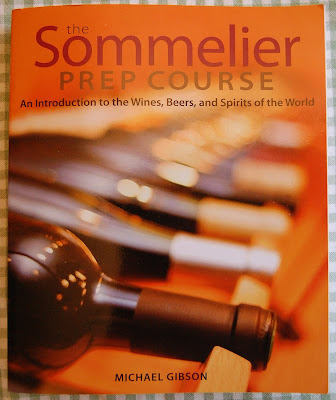
There are 350 pages on wine (production, terms, regions, styles), followed by about 75 pages on beer, spirits, storage, and service. It's a large paperback, and you're certainly going to want to read this with a highlighter and a pen handy. I've got several wine encyclopedias, but this is the only one I have that focuses on how wine and other beverages relate to the restaurant experience. There's lots of tips on how to serve various things, problems to look out for, and longevity. For instance, I'm not a fan of sake, but I now know that once opened a bottle needs to be finished off in 24 hours because it oxidizes quickly.

This is really a textbook, but it's written at a beginner to intermediate level. You're not going to get the details on every single producer in Bordeaux, but you'll get an excellent overview of the region. Where I think this book would really shine is in keeping a couple of copies at a restaurant or wine shop. If you're hosting a tasting geared toward a specific region, it's a quick read to get the major facts and details for talking to customers. If you've got a self-motivated employee, loan out the book for a couple of weeks and let him or her read through it.

Also, if you've got a relative that's getting interested in wine, this would make a thoughtful gift. Buying for wine fans is always difficult unless you're very close to that person and also know a lot about wine. They've typically got more corkscrews than they know what to do with. They're picky about their glasses. They've already got plenty of wine. They've developed a grudge against one of the big magazines. All you know is they like French wine, but that gets you nowhere at the wine shop. I'd suggest this book because it's not too basic or too detailed, and it's not tied to specific producers or vintages. If the individual is considering a certification at some point, it's obviously a great study guide. Otherwise it's a casual read that you can pick up for five minutes at a time if you want a refresher on a certain region.


Note: These books were received as samples from Wiley Publishing.