31 May 2010

Villa Pozzi Wines

For the past couple of years, I've been the first result on Google for Villa Pozzi, a winery based out of Sicily. I don't use any SEO strategies, but when this happens I get a lot of traffic and e-mails related to the individual wine. As of today, the one post I did on Villa Pozzi is the fourth most popular I've written, with 4,000 page views.

Likewise, I sometimes hear from winemakers themselves. These affordable IGT wines are made on the west side of Sicily by Daniele Pozzi, a fourth-generation winemaker. He'd noticed my old review of his Nero d'Avola and sent me samples of his current releases.

2008 Villa Pozzi Merlot
$10, 13.5% abv.
This bottle starts off somewhat closed, but give it half an hour to breathe. It opens up to breathe and reveal big plum flavors, chocolate, and a touch of coffee.

2008 Villa Pozzi Cabernet Sauvignon
$10, 13.5% abv.
This is a pretty standard Cabernet Sauvignon that is smoother than you might expect from a warmer climate. Black cherry, oak, touch of toast, smooth, low tannins.

2009 Villa Pozzi Pinot Grigio
$10, 12.5% abv
Previously made from Veneto grapes, this wine is now made on Sicily like the others. An interesting green tomato/green pepper relish aroma, rich and herbal. Great match for fish that's been poached with a little fennel and vermouth.

2008 Villa Pozzi Nero d'Avola
$10, 13.5% abv
By far my favorite, and this grape has an interesting underground popularity now. I always smile when I see it on a wine list or sitting on a shelf, because it is a little sign that someone is thinking outside the box. This has that cherry pie aroma that I encounter from time to time--bright cherry aromas, mixed with a toasted pastry crust undertone. Lovely little hints of prune and mint. Smooth and fruity with a touch of tannins on the finish. I enjoyed it with a simple dinner of some grilled salsiccia, peppers, and a bit of bread.


Note: These wines were received as samples from Villa Pozzi.

28 May 2010

Fee Bros. Whiskey Barrel Aged Bitters

Out of the dozen bottles of bitters I own, my favorite, and the one that I hoard with Gollum-like tenacity, is the Whiskey Barrel Aged Bitters from the good folks at Fee Bros. in Rochester, New York. I've written about these products previously, and even did a taste test using all of my bitters at the time with the Manhattan cocktail.

These bitters are similar to the Fee Bros. Old Fashion, but are aged in the charred barrels that were used to make Tennessee whiskey. For me this is fascinating: empty barrels from my state go to upstate New York, where they are filled with bitters, and then the resulting product is shipped back to me in small bottles. The flavor is certainly more complex and smoother than the regular Old Fashion, and it lends a distinguished, smoky element to the proper cocktail. Obviously I had to test it out with another Manhattan, this time with my friend Paul splitting the whiskey portion between Bourbon and Rye. Absolutely amazing. And if you want something really cool, make one with just Rye, Red Vermouth, and the bitters. It's like breathing in a whole library worth of antique books. One sip and you're thrown back in time 70 years, and you desperately want a cigar.

You can order a sampler of 6 bitters or the Whiskey Barrel Aged Bitters from my Amazon store.


Note: I received this bottle of bitters as a sample from Fee Bros.

26 May 2010

NV Smoky Mountain Winery Blackberry Wine

Here's a bottle of Tennessee blackberry wine my brother gave me last year. My home state isn't the most ideal place to grow wine grapes, but we've got a long tradition of fruit wines such as the NV Smoky Mountain Winery Blackberry Wine. This is from Gatlinburg, Tennessee, way on the east side of the state near the North Carolina border, nestled in the Appalachian Mountains.

For those of you unfamiliar with the Volunteer State, I should explain that it is divided in thirds. The eastern third is mountainous, the center third hilly, and the western third is flat. These regional distinctions extend to agriculture, industry, music, accents, and barbecue. But that's a whole other doctoral thesis.

There's not a lot of detailed tasting notes to share: it's sweet, and smells/tastes exactly like blackberries. What else did you expect? That's not a criticism, but think about that delicious Smuckers Blackberry Syrup you used to put on your pancakes if Mom was in a good mood and picked up a bottle at the store. Add some alcohol, and you've got the wine. I think there's some good potential applications for reduction glazes. I enjoyed the wine with a thick ham sandwich on whole wheat bread, and I was very happy. It was sort of like a grown-up fruit punch to go along with dinner, and I polished off half the bottle. And I used a Riedel glass, which might be a first for Tennessee wines but could get me barred from entry to Austria.

Lots of people ask me about "drinking local", and admittedly I don't drink much wine that comes from a hundred mile radius of my home. Or 250 miles, or 500 miles. Frankly I'd like to see vintners develop their fruit wines and muscadine wines in interesting directions rather than trying to force Chardonnay to survive on land where it was never meant to grow.


Interested in more wines from Tennessee? Back in 2006 I tasted 25 Tennessee wines at a festival outside of Nashville. Also, I guess I should disclose to the FTC that this wine was a sample/gift from my own flesh and blood, my younger brother with whom I shared a room for eight years of my childhood. I was Best Man at his wedding, I don't know if that's a conflict of interest in the eyes of federal authorities.

24 May 2010

Kare Poaka

Round about 1990 I saw a cooking show on TV hosted by an odd chap named Graham Kerr. I knew nothing about him, but he was rather exuberant, despised cooking with alcohol, and promoted a lot of low fat recipes.

This confused me, because my father spoke of the exact same chef who went by the name Galloping Gourmet and used butter and cream in everything, juggled eggs, and swilled wine throughout the show. Each episode concluded with his signature "find a hot chick in the audience and invite her to dine on the completed meal with a nice glass of wine". (For info on his transformation and details on his biography, check the Wikipedia article.)

As this was a formative period in my cooking self-education, I remember a show in which Graham Kerr made a dish he called Kare Poaka, something from his New Zealand days. In fact, he made it as a special dish for a visit from the late Queen Mother. I remember it being odd but easy, as it was basically a stew of pork, sweet potato, coconut, and rice. I made it the weekend after the show and it went over well with the family. For years I thought it was an authentic Maori dish, but the name is just "dear pig" in the local language and further research doesn't reveal anything specifically like it. It should also be noted that, aside from the sweet potato, absolutely none of the ingredients are native to the islands, and even the local version of the sweet potato (kümara) made its way from South America around a thousand years ago.

Similar dishes are made in the Caribbean, and while I don't have access to Kerr's recipe (his book is out of print and this whole thing is curiously absent from the internet), I can remember enough to make it happen. And even improve upon it. The original was something of a starchy mess, with big cubes of pork and a mash of sweet potato and rice. I've tried to treat it more like a Thai curry, and an array of hot sauces are ideal to perk up individual bowls. Here's my rough recipe:

Benito's Coconut Pork Curry

3 lbs. Pork Scraps (I grabbed cheap packages of neckbones and boneless ribs; chicken thighs also work quite well)
1 can Unsweetened Coconut Milk (not the cocktail ingredient)
1 can Chicken Broth
1 cup White Wine
1 Small Onion, Diced
1 Large Sweet Potato, Peeled and Cubed
2 Cloves of Garlic, Smashed
1 cup Basmati or Jasmine Rice

Brown the pork or chicken. This can be done in the Dutch oven on the stovetop, or using a dish inside the oven. Either way you don't want to fully cook them, just get them brown on the outside and render out some of the fat. Pour a couple of tablespoons of the fat in the Dutch oven and sauté the onion and garlic until clear. Add in the meat and stir, then add in the liquids. (The coconut milk may be semisolid and look like yogurt--don't worry, just stir it in.) Mix well, add in the sweet potato. If you'd like, feel free to add some peppers for color, flavor, or heat. Seasonings like Chinese Five Spice Powder would be appropriate, or go nuts with ginger, cumin, lemongrass, etc.

Let it simmer with the lid askew for a couple of hours. You want the liquid to reduce somewhat. Stir gently once in a while (you don't want to smash up the potatoes), and skim off most of the fat that collects at the top. When the meat is easily shredded with a fork and tastes good, kill the heat and let it rest. Right before serving, make the rice. I like something aromatic like basmati or jasmine, but anything will work. Serve some of the shredded pork and sweet potatoes over the rice, and ladle a bit of the sauce over it. Some chopped fresh basil or cilantro would be great on top.

This goes great with a nice cold beer, but an inexpensive sparkling wine would work as well, maybe a crisp Sauvignon Blanc.

21 May 2010

Octavin Boxed Wines

I usually skip boxed wines, even with samples, but these octagonal prisms from Octavin caught my attention. For one thing, they actually list vintages, regions, and named winemakers. For another, some of these are also available in traditional bottles. I think the latter is ultimately going to be what helps the market in alternative packaging. Not only will customers feel like it's more of a "real" product, but they also have the chance to try it in 750mL format before purchasing the big box.

2008 Big House Red
Central Coast of California
$24/3L box, 13.5% abv
Light start with a very mild cherry aroma. More cherry on the palate, with a touch of tea and spice. Low oak, but a bigger tannic finish.

It's a blend of 13 grapes: 23% Syrah, 14% Petite Sirah, 9% Grenache, 9% Montepulciano, 6% Mourvedre, 6% Sangiovese, 6% Aglianico, 6% Tannat, 5% Nero d'Avola, 4% Sagrantino, 3% Touriga, 3% Barbera, 3% Petit Verdot. The only one of those that's new to me is Sagrantino, a grape from Umbria in central Italy. With any blend like this it gets difficult to pick out anything specific.

Silly side note: this design takes advantage of the orange/blue contrast, a color arrangement that shows up on tons of movie posters. One of those many things that once seen, can't be unseen.

2008 Monthaven Chardonnay
Central Coast of California
$24/3L box, 13.5% abv
Yellow apple, pears, and just a touch of honey. Big round fruit flavor, followed by a tart finish. Partially oaked, but it doesn't stand out. It's a pretty standard Chardonnay.

While this isn't spectacular, it's quite good at the price. Most inexpensive Chardonnay (and particularly that which ends up in boxes) has a rough, sour aroma. You've all had it at a party or a wedding reception, that stuff that smells like spoiled orange juice and goes down like battery acid. The Monthaven is nothing like that, rather it is smooth and balanced out. This would also be great for wine-based punches like white sangria, or for cooking purposes. In the bag it's supposed to last for six weeks with proper refrigeration, not bad when you need a cup here and there to add to a sauce or soup.

So let's talk about the packaging, known as the Octavin Home Wine Bar.

The box is 14 cm/5.5in across, 28cm/11in tall, a bit shorter than a standard wine bottle (regular Burgundy-style bottle shown above for comparison). At $24 per 3 litres, you're looking at the equivalent of four $6 bottles. I think the form factor is better than your standard boxed wine. The footprint is similar to that of a magnum, it should fit easily in a fridge, and I think they look more attractive sitting on a store shelf.

This is also interesting because a traditional line of boxed wines is made by, say, Franzia and comes in several varieties. Here, you've got wines that are made by six different producers in different countries, and Octavin is the packaging and marketing. I think it's a step in the right direction toward mainstream acceptance. For instance, good literature can still be published in paperback, and we don't automatically assume that the contents of a paperback are inferior to those of a hardback.


Note: These were received as samples from Octavin.

19 May 2010

2009 Redwood Creek Malbec

I had a Malbec on hand, and a craving for rack of lamb. A match made in heaven.

Here's what I did to the rack of lamb. I just trimmed the fat cap as usual, but brushed it in a mixture of golden syrup, Dijon mustard, and soy sauce. What were the precise ratios? I have no idea. Mix them 1:1:1 and taste, and if you want it sweeter, add more syrup (or honey/molasses/corn syrup/whatever you're using). If you want it hotter, add more mustard, or dash in some hot sauce. If you can't make up your mind, but it doesn't taste quite right, add canned tomato sauce. Bingo. I've just taught you how to make BBQ sauce on your own. Have fun. If you bottle it and make a million dollars, at least give a little shout out to Benito on the back label.

I trussed it up with string and roasted the rack of lamb in the oven with a probe thermometer, and added another layer of glaze two or three times. Note this was all done at low temperatures. A sugar-based sauce will turn black and unappetizing in a hot oven or grill, so slow and low is your friend here. I gave it a final blast under the broiler just to caramelize the exterior, and set aside the rack to rest. The end result was as mild as veal and tender as butter, with a mouth-watering sweet/salty layer on the outside. Brother Paul provided homemade creamed spinach and grilled zucchini to accompany.

I've made a lot of racks of lamb, but I think this one is the best by far. I almost stood up and applauded myself. Perfect balance of flavors, textures, and appearance. This cut is usually served in four rib sections, or as individual chops, but for this preparation I found that carving into double ribs was fun. And the dogs were growling and begging the whole time, which is generally a good sign. (Zoe, pictured above, was well-behaved, but I saw some drool once we cut into the lamb.)

For the wine, I opened up the 2009 Redwood Creek Malbec. $7, 13.5% abv, Mendoza region of Argentina. Smoky, dark black cherry, black pepper, firm tannins, lots of jammy fruit. Great bargain Malbec, not particularly smooth or complex but good for the price point. I fell in love with Malbecs as a wine newbie because of the affordability, and I found that a $7 Malbec was far superior to a $7 Cabernet Sauvignon. Higher end Malbecs deserve to be paired with more serious meals, but the entry level ones go great with pizzas, burgers, ribs, and the rest of the great summer fare we enjoy here in the Northern Hemisphere during the April to August months.


Note: This wine was received as a sample.

17 May 2010

Book Reviews: Mr. Boston: Summer Cocktails and Sommelier Prep Course

I got the chance to review a pair of new books on wine and spirits... First up is Mr. Boston: Summer Cocktails, a new companion to the popular bartender's guide that's been a standard since 1935.

I'm a bit wary of modern cocktail cookbooks. They either tend to be stupid (100 recipes in which the main ingredients are rum, 7-Up, and food coloring), or just a little too precious when it comes to obscure ingredients.

For example, on page 61 there's a recipe for a cocktail called the Trident. It includes Peach Bitters, Cynar (a bitter artichoke flavored liquor), Aquavit (sort of a Swedish gin-whiskey cross), Manzanilla Sherry, and a twist of lemon. Now I've got the peach bitters because I'm a bitters fanatic in the extreme minority, but aside from the lemon none of the ingredients are that common, even among cocktail enthusiasts. If you have those bottles on hand, you probably own a bar. And an odd bar at that.

(Anyone that gives me any lip about weird, obscure cocktails that I've posted here gets smacked with a cocktail spoon. Specifically, a nickel-plated spoon that has a handle twisted in the proper fashion for a right-handed mixologist. I save the left-handed spoon for visitors that might need it.)

But the vast majority of the recipes require far less exotic ingredients, and incorporate two very important things for summer: fresh fruit and fresh herbs. Time to hit the farmers market and have some fun. You'll find uses for berries, pineapple, all sorts of citrus, and tropical fruits. Many fruit-based cocktails get a bad rap because they're made using purely artificial juices, or juices that are heavily sweetened and altered through blending (often cheap apple or pear juice is used as filler). And as for herbs, it's not just mint in a julep: recipes include sage, basil, rosemary, thyme, even cilantro. So the theme of Summer Cocktails is all about taking great fresh ingredients, matching them with the proper spirits, and serving appropriately.

And that is really in the best tradition of old cocktails. Back then you had cases of fresh fruit and a small army of people zesting and juicing fruit, and chipping big blocks of ice into the proper smaller pieces. Don't want to squeeze a bunch of fresh fruit? Employ one of your guests, a roommate, spouse, significant other, or if you've got kids, pick the one with the strongest arms and put her in charge of juicing limes. There are a lot of great ideas in this book, and once you get into the swing of things you'll get a feel for where you can substitute or improvise.

Most of the recipes (which were written by renown mixologists) sound appetizing, and bright full-page photos are included for about half of them. If I was going to pick one to run with for this review, my choice was simple. Page 26 lists one called...

Carter Beats the Devil
1 oz. Fresh Lime Juice
Pinch of Ground Chile
½ oz. Agave Nectar
¼ oz. Mezcal
1½ oz. Resposado Tequila
Garnish: Lime Wheel

In a mixing glass combine all of the ingredients, top with ice cubes, cover, and shake thoroughly. Strain into a chilled cocktail glass and garnish with the lime wheel.

The cocktail, named after the mystery novel by Glen David Gold, resembles an authentic margarita (not the green slushies pumped out of a machine). The agave nectar is a perfect sweetener for tequila, and the chile gives it a nice little bite. I skipped the Mezcal and just used 2 oz. of Tequila. If you've got it on hand the Mezcal will add a smoky element. And nothing wrong with serving this one on the rocks if it's hot out.

The Sommelier Prep Course by Michael Gibson is, as the title might suggest, a study guide if you're working on a sommelier certification.
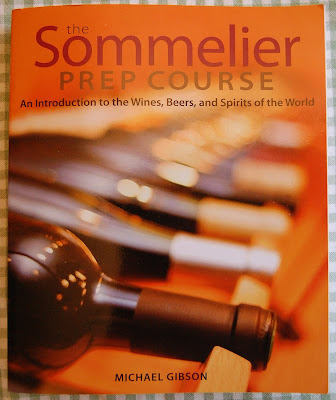
There are 350 pages on wine (production, terms, regions, styles), followed by about 75 pages on beer, spirits, storage, and service. It's a large paperback, and you're certainly going to want to read this with a highlighter and a pen handy. I've got several wine encyclopedias, but this is the only one I have that focuses on how wine and other beverages relate to the restaurant experience. There's lots of tips on how to serve various things, problems to look out for, and longevity. For instance, I'm not a fan of sake, but I now know that once opened a bottle needs to be finished off in 24 hours because it oxidizes quickly.

This is really a textbook, but it's written at a beginner to intermediate level. You're not going to get the details on every single producer in Bordeaux, but you'll get an excellent overview of the region. Where I think this book would really shine is in keeping a couple of copies at a restaurant or wine shop. If you're hosting a tasting geared toward a specific region, it's a quick read to get the major facts and details for talking to customers. If you've got a self-motivated employee, loan out the book for a couple of weeks and let him or her read through it.

Also, if you've got a relative that's getting interested in wine, this would make a thoughtful gift. Buying for wine fans is always difficult unless you're very close to that person and also know a lot about wine. They've typically got more corkscrews than they know what to do with. They're picky about their glasses. They've already got plenty of wine. They've developed a grudge against one of the big magazines. All you know is they like French wine, but that gets you nowhere at the wine shop. I'd suggest this book because it's not too basic or too detailed, and it's not tied to specific producers or vintages. If the individual is considering a certification at some point, it's obviously a great study guide. Otherwise it's a casual read that you can pick up for five minutes at a time if you want a refresher on a certain region.


Note: These books were received as samples from Wiley Publishing.

14 May 2010

Santorini Assyrtiko & Crabs Benedict

I spied with my little eye a delicious photo posted by Kate of Accidental Hedonist. It looked tasty, so I posted a link to it on my Facebook page.

Throughout the rest of the day a bunch of people wanted to know the recipe. But I didn't know precisely what was going on with the photo, so I commented on the originating post. Questions kept piling on my side of things, so I decided to go right to the source. Since I reviewed her whiskey book and interviewed her last year, I shot her an e-mail asking for more information on this delectable dish. She kindly provided as many details as she could. It was a brunch item served at Fresh Bistro in West Seattle, described thusly:

Sweet Potato-Dungeness Crab Eggs Benedict $15
Shredded sweet potato cakes, Dungeness crab leg, chipotle hollandaise, fresh baby arugula salad, sautéed veggies

Kate gave me a few more hints on the structure and I decided to give it a shot. I ran a sweet potato and shallot through the mandoline, bound it all with an egg and a little flour, and made a few sweet potato hash brown cakes. For the sauce, I made a straight hollandaise and added a little adobo sauce from a can of chipotles, just enough to season but not make it hot. Instead of Dungeness, I used some decent canned blue crab meat (hey, I'm a long way from the Pacific), and decided that as long as I'd whipped up a batch of hollandaise I might as well steam some asparagus instead of making a salad.

It's certainly an amazing flavor combination, but very rich. I think I'd prefer it with an English muffin base instead of the sweet potato, or perhaps as a much smaller course using little sweet potato cakes and a quail's egg. It's also a lot of work for one person in a home kitchen. I had a pot going with steaming water for the asparagus, and I was whisking my sauce over the heat coming off the top. I had a skillet going with the sweet potato cakes and jostled around to make some room for another skillet to poach some eggs. Almost forgot to add the crab as I was assembling everything. It takes some experienced juggling to have everything at the right temperature and texture mere moments before serving.

I had the perfect wine to go with this meal, and it curiously enough came from yet another blogger. Constance sent me a bottle of the 2008 Santorini Assyrtiko from the volcanic archipelago of Santorini in the Aegean Sea. 100% Ασύρτικο/Assyrtiko. $15, 13% abv.

I've mentioned this before, but Greek wine labels are getting better and better. Design-wise this could easily be mistaken for an Italian wine on the shelf. I'm not saying that the Greeks need to hide anything, but the older labels tended to be wholly unreadable to someone unfamiliar with the language/alphabet, with perhaps some poorly translated explanation on the back label. You can actually witness this evolution with labels just in the past 15 years. Different companies here, but look at a pure Greek label probably designed in the 60s and used for 40 years, to a hybrid label that still doesn't do much for the English audience, to a more modern layout that very obviously says, "This is a normal wine, nothing to be afraid of." If you can't figure out if the contents of the bottle are wine, a liqueur, a spirit, olive oil, or floor polish, you're going to be less likely to buy it, or even open it if someone brought it back as a gift from vacation.

The wine itself reminds me of Semillon. There's an earthy, honey-like tone to it, with a tart, crisp green apple finish. Hint of juniper on the nose. Absolutely gorgeous golden color. Totally dry, very short finish. It practically disappears after the sip. Should go great with any seafood dish, and the simpler the better. Think little fish grilled and spritzed with lemon juice, or a big bowl of freshly steamed mussels. Even oysters, though maybe not something oily and strongly flavored like mackerel or bluefish.

Big thanks to Kate and Constance for providing all the inspiration for this delicious meal, and to my Facebook readers for pushing me to try it out. Kind of makes me want to send a few categories to different bloggers and try a Mad Libs-style post in the future. "For dinner, Benito had a chicken liver omelet with a side of Doritos salad, pepperoni ice cream, and a glass of Purplesaurus Rex Kool-Aid." Or perhaps not.


Note: This wine was received as a sample from Santo Wines.

12 May 2010

2006 Anne Amie Cuvée A Amrita

Easter was never a big holiday in my family. When we were little kids I remember baskets with candy lovingly prepared by Mom, and hunting for eggs. Folks at church were maybe a bit more dressed up than normal, but the old school Scottish Presbyterians of Memphis were not ostentatious. I know a lot of people for whom the holiday is bigger than Thanksgiving, with massive dinners and traveling across the country to be with family. And of course, the annual debate over lamb vs. ham.

I found myself alone for Easter, but it was not a sad occasion. I'm always happy to fill the house with the sounds of classic jazz and putter around in the kitchen. I had the ingredients on hand to make a decent seasonal dinner. I started out with a broccoli-spinach soup. Dead simple: a handful of frozen chopped spinach, a handful of frozen broccoli, thawed in a pint of chicken broth. I added wine and cream, mixed it with the immersion blender, and added a dash of pepper and nutmeg toward the end.

Friends always rave over main courses that I fix, but somehow I've always been really excited when a soup turns out just right. This one was so delicious that I ended up eating two bowls.

I went for a simple lamb shoulder chop with a peach-white wine sauce. I generally prefer shoulder ground or slow cooked, but often a shoulder chop is a good deal if you just want to enjoy some lamb without making a big production.

For the wine I served the 2006 Anne Amie Cuvée A Amrita from the Willamette Valley of Oregon. $15. There seems to be conflicting information out there regarding the grapes and ratios, but among those listed are Chardonnay, Müller-Thurgau, Pinot Grigio, Riesling, and Viognier. The wine has a delicate apricot nose, slightly sweet, rich full fruit flavors. Spend some time with this one and you'll encounter peach, pear, and various floral elements as well. Oregon white wines are so nice, and need more attention.

10 May 2010

Zeepaard Wines

Zeepaard is a line of introductory-level wines from West Cape Howe out of Western Australia. The wine is named after Het Gulden Zeepaard (the Golden Seahorse), a Dutch ship that first sighted West Cape Howe in 1627. According to the Scheepvaartmuseum of Amsterdam, a really cool museum dedicated to maritime exploration and shipping that I visited in 1999, "Vertrek van Pieter Nuyts met het schip 'Het Gulden Zeepaard' voor een ontdekkingsreis naar de zuidwestkust van Australië." That's a note on an anniversary calendar of important events, and means, roughly, correct me if I'm wrong, "departure of Pieter Nuyts with the ship Golden Seahorse on an exploration near the southwest coast of Australia". If you know some English and German, reading Dutch is pretty easy. Pronouncing it is a whole different matter that requires a lifetime of eating pickled herring and salty licorice to properly train the vocal cords.

The wines are all affixed with convenient screwcaps (four cheers!) and retail for around $10.

2009 Zeepaard Sauvignon Blanc
12.7% abv, 100% Sauvignon Blanc
Crisp, lemony, with pink grapefruit pith aromas and flavors. A classic example of the Down Under Sauvignon Blanc style. Knowing that the crisp acidity goes well with vegetarian dishes and dairy, I served it with a goat cheese and spinach pizza.

2009 Zeepaard Chardonnay
12.5% abv, 100% Chardonnay
Pineapple and mango, very ripe, very tart and fruity. The ripe fruit explosion here is incredible, and while I tasted this on its own I'd recommend something spicy and full of flavor, like a curry or vindaloo. Even Thai or Mexican food would be interesting. It's too strong for something like baked salmon, roast chicken, or a salad, further proof that not all Chardonnays are identical.

2009 Zeepaard Rosé
12.7% abv, 77% Cabernet Sauvignon, 19% Pinot Noir, 4% Shiraz. Somewhere a Frenchman is crying over that mix of grapes, but I applaud the creativity. Bright strawberry/raspberry aroma, with matching flavors and a tart acidity. There is a slightly tannic, reddish finish to the wine. It's sort of dark for a rosé--not complaining, but it's a little more fuller bodied than you might think. I decided to try a fun pairing with a big bowl of aromatic phở tái. The red grapes went nicely with the beef, but the rosé style was a great compliment for the basil, sprouts, and savory broth. Certainly my favorite of the group.

2008 Zeepaard Shiraz
14.2% abv, 100% Shiraz
Black cherry, hint of licorice, a little leather. Very firm tannins, long tart finish. It's a good standard Aussie Shiraz, and I served it with my recent big batch of Sunday Gravy. It would also be great for barbecues this summer, with things like burgers and Polish sausage.


These wines were received as samples from The Country Vintner.

07 May 2010

Hook & Ladder Backdraft Brown

There's a curious marketing phenomenon in this country centered around firefighters. I don't know if it's confined to the United States, but I know in other countries you'll see similar fundraisers with the police, military, or even postal workers. What I'm talking about is branding a series of products (in this case food) for profit and charity. Here, firefighters are generally free from scandal or public scorn. Attitudes toward the police, for instance, tend to fluctuate depending on current events and personal experience. If a policeman does his job and gives you a speeding ticket, you're angry for the rest of the day. If a fireman does his job and saves your house, you're likely to break down in tears of joy.

I'm not arguing one against the other, but for some reason I always notice firefighter-branded products and companies. Hot Sauces are popular, and ripe fodder for all sorts of puns and fire references. There's a chain of sandwich shops called Firehouse Subs that, curiously, steams its subs rather than flame toasting them (I do love their brisket sandwich, though). Usually these are side projects for professional or volunteer firemen, or companies run by retired firemen. And there's usually some sort of charity connected to the operation as well.

So let's take a look at this beer, the Hook & Ladder Backdraft Brown, $8/6 pack, 4.5% abv.

1) Founded by a volunteer fireman

2) Firefighting terms used for the company name and the specific beer name

3) Donations to local burn wards ("Penny in Every Pint", "Quarter in Every Case", and the money goes to the city or region where you bought the beer)

4) Photographed with a fire extinguisher by your friendly neighborhood blogger just for fun (but note that this is a properly charged dry chemical fire extinguisher, safety first)

So how does it taste? It's a pretty basic English-style brown ale. Not very bitter, but the flavor focuses more on the malts, where you'll get toffee and chocolate elements. I found myself wanting more hops, but it's a good introductory beer for folks who might be afraid of any beer that's darker than tap water Coors Light. It really reminds me of the sort of standard brown ale you can find at just about any brewpub. Refreshing, not strongly flavored in any particular direction, and a great match for simple bar & grille fare.

There's another curious side to this beer. It's produced under a system called contract brewing by The Lion Brewery in Wilkes-Barre, Pennsylvania, even though the company is based in Maryland, but started in California. It's a form of outsourcing: if you don't want to operate an entire brewery, you provide the recipe and specifications to an existing facility. They produce the beer, you handle all the marketing and everything else. There are mixed feelings about this in the beer community. In some cases, it's a great way for a small producer to create a consistent product without a huge financial risk. In other cases, it can be viewed as removing the specific regional qualities of a beer. Order a Guinness in Australia, and it's produced locally by Fosters. Order one in the US, and it's made in Ireland, but if you want a stronger beer and order a Guinness Extra Stout, it comes from Canada. (There are also much stronger versions of Guinness made locally in Africa and Asia, but that's another story.)

I don't really have strong feelings on the issue, but I tend to be generally curious about where things come from, and I wanted to point this out to scare and shock wine lovers. Imagine buying "Barolo" that had been mixed and formulated in a factory in Kansas. OK, wine and beer production are a lot different, and it's easier to emulate a certain style with beer, but who knows what the future will hold?

Coincidentally as I was finishing up this post, I happened to take a closer look at my bottle of "Georgia's Natural Juice Pomegranate Juice". I picked it up because it was cheaper than POM, and I hadn't tried it yet. Pure juice, no sugar or other stuff, sounds good. I found out that it wasn't from the Peachtree State, but rather the former Soviet Republic of საქართველო. The juice tastes fine, and there's nothing wrong with it, but I found it a curious bit of slightly deceptive marketing. Like if the ancient capital of the Egyptian empire in the other Memphis decided to start selling BBQ sauce and Elvis records.

05 May 2010

NV Corbett Canyon Pinot Noir

I almost never drink boxed wine. It's not an elitist position, it really has more to do with volume. The box in this review is three litres, or four standard 750 mL bottles. I'd much rather try four different bottles just for the experience of the different flavors. It's possible to purchase bottles up to 30 litres in size, but I've never bought anything bigger than a 1.5 L magnum.

I picked this up at Kirby Wines & Liquors for one peculiar reason. While chatting with manager Angela Moon one day, we were discussing odd wine regions. We pointed out some Austrian and Israeli selections, but I found myself itching for something more exotic. She said the Corbett Canyon Pinot Noir was from Macedonia. Surely not, I thought. American box wine? That's all inexpensive California plonk, right? She fetched a box and showed me the small type on the back.

Well I'll be damned.

Macedonia is a confusing topic. It's an ancient region of Greece, but here we're talking about the bordering nation that became independent in 1991 as Yugoslavia fell apart. The country uses the Cyrillic rather than Greek alphabet, so the native name is Македонија. There are also (at least) three different pronunciations:

Slavic-derived Macedonian: mack-a-DOH-nee-ah
Greek: mack-a-doh-NEE-ah (spelled Μακεδονία)
English: mass-a-DOH-nee-ah

I was going to write a bit about my old philosophy professor who insisted on proper ancient Greek pronunciation for place names, but looking back over what I just typed I realize this emphasis on accent and consonants is just like Hermione needling Ron and Harry about wizard spells.

So how is it? Kind of buttery, light cherry, practically nonexistent tannins. Needs more acidity, more oomph, more character... It's frankly just manufactured and drinkable, but not memorable. But I've got to be honest: I wouldn't mind serving this at a big party full of people that aren't serious wine drinkers. It's a very mild and approachable red wine and while part of me wonders if it's really Pinot Noir, it's an easy drinking light red. Keep it chilled before drinking and after opening; even though the plastic bag keeps most of the air out, after a few days at room temperature it develops a harsher aroma and flavor.

I don't think I'll be buying this again, but I'm glad I tried it, and if someone asks me for a boxed wine recommendation at the $10 mark I'll probably suggest it. And you fellow wine geeks out there, racking up obscure grapes and regions with all the fervor of an adolescent stamp collector (hey, I still get excited about stamps), consider trying this wine to include Macedonia on your list. It's not bad, and I'm interested in seeing what else they have to offer.

03 May 2010

Sunday Gravy with Ween

I really don't know how to put together this intro, so I'm going to slap some facts together. There's an alternative rock band called Ween. I've never been a huge fan but I can certainly listen to their music and enjoy myself. Being 18 at the time, it was impossible to ignore the 1994 album Chocolate and Cheese, with a rather memorable cover photo. Years later, I listened to former Black Flag front man Henry Rollins deliver a positive rant about Ween. If you're curious about what the band sounds like, "Voodoo Lady" is relatively well known and representative. For something softer, try "The Mollusk".

Now let us step aside for a moment. There's a tradition in Italian-American households of "Sunday Gravy", a meaty red sauce that takes hours to prepare. The kind of big family meal that people dream about when they're away from home, and somehow the spaghetti plate at Olive Garden isn't the same. The New Jersey-style gravy infiltrated pop culture through dozens of movies, but most recently with The Sopranos. Gravy competitions are popular at Italian festivals throughout the United States, even here in the South where gravy is a very different sauce that generally goes on biscuits or grits, or perhaps is applied as a poultice to the head of a wounded man to bring him out of a coma. But Southern gravy is a topic for another post at another time.

In nosing around for information on this dish, I discovered a tasty-looking recipe for Sunday Gravy with detailed instructions and photos put together by Mickey Melchiondo, a.k.a. Dean Ween, one of the two founding members of the band back in the 1980s. Lately he's been really enthusiastic about running fishing charters off the Jersey shore. Seriously, for $300 he'll take you fishing and then you can watch Jaws together. What caught my attention was throwing a couple of whole pork chops in there for flavor. Mmmmm... I'm not going to repeat the recipe or instructions here, because I really want you to read his hilarious writeup. I will, however, comment on the results.

This is a lot of meat, and a lot of work. But worth it. Check out my beautiful photo above. Some penne rigate, some meatballs, a few pieces of the pork chops, and tons more left over in the pot for freezing later. (I should also explain that's a serving platter for three people, and we didn't finish it off. This dish is really filling.)

Unless you have some help, expect a good two hours of prep time before you start simmering the sauce. Making the meatballs, searing them, searing the chops, etc., takes quite a while. And I skipped the Italian sausage, even though I'd picked up a few links. Frankly the huge stock pot was so full of meat at that point that I felt a pound of salsiccia would be too much. Also, have some salt available at the table. I didn't add any salt to the big pot, because it's difficult to accurately salt something like that, especially when it's so thick and viscous. My favorite part of the whole thing was the meatballs, which were racquetball-sized and browned on the outside, but still raw on the inside when added to the pot. For three or four hours, they bob around in a slow simmering tomato broth and get cooked to a delightful tenderness.

I enjoyed this with an Australian Shiraz, but frankly after six hours of work the cook can drink whatever the hell he wants, and everyone else is free to imbibe or not as they wish. I'm not an Italian grandmother, but after a full day's work cooking a meal, I'll fight people off with a chef's knife and big wooden spoon when I need a break.

Melchiondo says he makes this once a month for the wife, parents, and assorted relatives, though without a regular engagement I'd probably shoot for about once a quarter. Once a week is a labor of love, and families are smaller these days and don't require eight pounds of meat right after church. But when you get that craving for some savory Italian-American cooking, put on the Frank Sinatra LPs, wear a red apron that won't get stained by tomatoes and pork fat, and get cooking.

30 April 2010

Tangley Oaks

The wines of Tangley Oaks are part of the Terlato Wine Group, with grapes sourced from Santa Barbara and Napa. They're doing a special promotion for Arbor Day: they'll plant a tree for every bottle of Tangley Oaks wine sold on April 30, 2010. Arbor Day is one of those holidays that doesn't get much respect. Not only is it associated with one of the weakest Charlie Brown cartoons, but the activity requires some forethought. Don't plant the tree too close to the house, under power lines, or on top of buried wiring. Try to pick the right tree for your region, and if you don't want a yard full of squirrels and pecans in 20 years, don't plant a pecan tree. For more tips, check out the advice from the Arbor Day Foundation.

2007 Tangley Oaks Chardonnay
Central Coast
Lot 4
$15, 14.2% abv
Pear and peaches, definitely fruity with a big ripe pear flavor. As it warms honey and floral elements develop. Light acidity, only a third of the wine was aged on oak. I tried this wine with the spinach and ricotta ravioli that I made recently, and it was a great fit.

2006 Tangley Oaks Merlot
Napa Valley
Lot 8
$15, 14.2% abv
Tart cherry aromas and flavors. Blackberry and bramble elements. Not full fruit: these elements are restrained and not overbearing. I'd suggest pairing this with something like slow roasted pork chops that involve a dried cherry or plum sauce.

Do you live in an apartment or otherwise don't have access to land for planting trees? Take a walk in a nearby park and enjoy yourself. The weather's great, and trees provide shade and keep the landscape interesting.


Note: These wines were received as a sample from Tangley Oaks.

28 April 2010

Survival Dining in Style

Folks, I've got to tell you that I am a late convert to the glorious deliciousness of sardines. Granted, there are good ones and bad ones out there, but, in a pinch they deliver a deeper and healthier seafood experience than canned tuna. (Alton Brown has popularized the little fish during his recent diet success.) Since they are packaged in convenient tins, they make great emergency rations, but it helps to know how to prepare them ahead of time.

Recently I took a tin of the Brunswick Sardines in Tomato & Basil and posited a little challenge for myself: delicious dinner in 5 minutes that doesn't rely on any modern technology. I mentioned "survival" at the top, because this only involves heating water. I'm fine with disappearing for weeks in the woods and eating bugs (seriously, termites taste like carrots, ants taste like lemon drops), but there are lots of situations where very simple methods can produce a delicious meal, like this. And it really was delicious. I've been to Italy, dined on the coasts, and while I've had much better seafood/pasta dishes, I've also had worse. The curse and blessing of dining in a small fishing town is the daily catch. If the fishermen had a bad day, you're going to be eating some nasty seafood.

If you can heat up water, either on a BBQ grill or over a candle, you can cook angel hair pasta. Why? Because it's very thin and only takes a minute or so to cook. Heat water up to boiling, dump in the angel hair, stir a little, and you're done. Much faster, easier, and efficient than beans, rice, or thicker pasta. Drain out the water using your fork as a strainer, then dump in the tin of sardines in tomato basil sauce. Stir lightly until warmed through, and you're done. The result is an improvised pasta con sarde that's salty, savory, pleasantly fishy, and the quickly cooked and sauced pasta is leaps and bounds above your Chef Boyardee canned varieties.

The wine is the 2007 Mandrarossa Fiano, a full-bodied white wine from Sicily. $12, 13% abv. Pure Fiano grape. It's got a lush and thick profile with lots of fruit. Which fruits? It's not a complex wine, but I got some overripe apple and peach, and there was also a magnolia blossom element to the wine as well. It's a good strong Italian white, if you're in the mood for that style. I served it in a Ball Mason jar just to continue the emergency rations theme. (If you don't have an ice chest for some of your perishables, you can chill your wine by wrapping it in a wet towel or wet newspapers and allow evaporative cooling to do its magic.)

Reviewing some other sardine cans: The Beach Cliff Fish Steaks with Louisana Hot Sauce were disappointing. Cross-sections of herring slathered in hot sauce. There's too much of the hot sauce and it's not a great compliment to the fish. I enjoy a dash of hot sauce with canned fish, but I prefer to use the right sauce for the right occasion and moderate its use. Plus, hot sauce fresh out of the bottle has a bright and refreshing acidity to it. After it's been sitting in a tin with fish for months or years it becomes flabby and uninteresting. I ended up adding Dijon mustard to this, but it didn't help much. Definitely have to eat these with crackers.

I mentioned the Beach Cliff Sardines in Mustard Sauce in a prior post, but after trying some different varieties they're still my favorite. Something about that cheap yellow mustard just goes so well with the fillets. It's probably the most balanced of the three, and stands well on its own. With crackers or toasted points of rye, the sardines are even better, but you can eat these straight from the tin if the situation requires it.

26 April 2010

Dinner With A.

From time to time it's nice to dine with a friend, though not everyone wishes to become world famous on a wine blog. Thus I respect the privacy concerns of my associates, and present this dinner with the lovely Miss A.

The first course was seared mahi-mahi topped with a fire-roasted orange bell pepper sauce and steamed broccolini. Between this particular cut of fish and the cooking method, I ended up with something as rich and succulent as a lobster tail. A. was quite fond of the pepper sauce, which was a nice balance of smoky, bitter, and sweet.

There was also a salad course after this--simple mesclun greens with shaved Asiago and thinly sliced croutons from a baguette. Both first courses were served with the 2008 Höpler Grüner Veltliner from Burgenland in eastern Austria. $15, 11.5% abv. Clean and crisp at first, but smooth and rich on the finish. Light and refreshing with a very mild citrus flavor. Touches of lime peel and jasmine linger on the nose. I absolutely love this wine and I think it's a great one to keep on hand for all sorts of occasions. Despite coming from a landlocked country, it is superb with seafood.

The main course was mostly prepared ahead of time... I braised short ribs in beer, shallots, garlic, and tomato sauce for about six hours. On the next day, I shredded the meat and stuffed it in homemade ravioli. I used a bit of the braising liquid as a sauce, and also used a sour cream-horseradish sauce just to punch things up. Here I was somewhat mimicking Michael Symon's beef cheek pierogies at Lola in Cleveland. (Actually, now that I have a nearby source of beef cheeks, I might have to really make this recipe.)

This dish didn't come off quite as I expected, but it was still very good and full of savory flavors. My pasta dough was a little sticky this time around, but the ravioli still boiled up properly.

For the main course I poured the 2006 Signaterra Three Blocks from Sonoma. $49, 14.5% abv. 64% Cabernet Sauvignon and 36% Merlot, roughly 4400 cases made. The three lines on the label signify the forces of Earth, Nature, and Man (the name Signaterra means "earth sign"). Most of the grapes are grown using biodynamic practices. I visited Benziger last spring in Sonoma, and while I didn't taste the Signaterra then, I was very impressed with the property tucked back in the hills and valleys of Sonoma.

The initial profile is of black cherrry, earthy, plum. After some breathing, swirling, and sniffing, you get more classic Bordeaux-style aromas like tobacco and cocoa. With the braised short ribs, it worked quite well, but I can see it pairing successfully with practically any red meat. I'd strongly recommend this one in a restaurant, as it opens and develops nicely over the stretch of three hours.

Finally, I have to thank A. for bringing an amazing dessert--cheesecake made in-house from Mosa in east Memphis. We divvied up a pair of slices, one plain, one strawberry. Both were great, but what really set them apart from the herd of factory stamped cheesecake is that they were slightly runny, like brie on a hot summer day, with a similar texture and luscious creaminess to boot. I may have enjoyed mine with a snifter of well-aged Scotch, I'm afraid my notes are incomplete at that point.


Note: The Signaterra was received as a sample from Benziger.

23 April 2010

ANZAC Biscuits

I keep an eye on holidays that aren't part of the usual US calendar. I noticed that ANZAC Day was approaching on April 25, a holiday that I knew mostly because of the little cookies (more properly, biscuits) that show up in grocery stores each April. ANZAC stands for Australian and New Zealand Army Corps and the day began as a memorial for soldiers who served in WWI, though today it covers a general remembrance for veterans from the two countries. It's a very important and solemn day, marked by traditional Dawn Services.

I was thinking about the holiday, my relatives who served alongside troops from AU/NZ in the world wars, and the myriad connections that America continues to hold with members of the Commonwealth. I also thought about the incredible wines that I've tried from Down Under, and how lucky I am to be able to enjoy them in peacetime, with clear shipping lanes between our continents.

And lastly, I thought about the biscuits.

The store-bought ones are tasty, but homemade is always best. I Googled around for some authentic recipes for ANZAC biscuits and began to get concerned. After all, if someone wanted a great BBQ sauce recipe, the internet might direct them to some perverted source in Texas or Kansas, surely a travesty against all that is good and holy in this world.

So I e-mailed Jane Cleary, my contact in Western Australia who has sent me many interesting wine samples through The Country Vintner. I asked her advice, and within an hour she called up her 93-year old grandmother and retrieved the family recipe. With her permission and my deep gratitude, I reprint it here, only slightly modified for American cooking units and spelling:

Nanna's ANZAC Bikkie Recipe

1 cup rolled oats
1 cup plain flour
⅔ cups sugar
¾ cup dried coconut flakes
2 tablespoons golden syrup*
1 stick butter
1 teaspoon baking soda
2 tablespoons hot water

"Preheat oven to 320°F. Mix the oats, flour, sugar and coconut in a bowl. Place the golden syrup and butter in a saucepan over low heat and melt. Mix the baking soda with the water and add to the butter mixture. Add to the dry ingredients and mix well. Sample some of the mixture (go on--it is so hard to resist!) Place tablespoons of the mixture, leaving space between each one for spreading, onto baking trays lined with non-stick baking paper and flatten to about 3 inches in diameter. Bake for 8-10 minutes or until a deep brown. Cool on trays for 5 minutes, then transfer to wire racks to cool."

Now, as longtime readers know, I don't have a sweet tooth, and I almost never write about desserts here. But it doesn't mean that I don't know how to make them. I'm actually pretty good at making cookies, and used my air-flow baking sheets lined with parchment paper. It's just that I don't often find myself in need of several dozen bourbon-pecan-chocolate cookies.

Let's get back to the ANZAC biscuits... Utterly delicious. Great balance of the butter, coconut, sugars, and oats. Next time I might even add a few crystals of sea salt on top just to play against that caramelized sugar flavor. A lot of cookie recipes require a dollop on the cookie sheet that will flatten over time, but these do need to be pressed into roughly the size and shape of the finished product, with just a little room left for expansion. These are fun to make, particularly with the heating of the butter and syrup, which negates the need for mixers. In fact, the brilliance of this recipe is that it relies almost entirely on dried ingredients that ship well--butter is the only perishable, and there's no chocolate that might melt. Butter/margarine/shortening/lard can last for a good while at room temperature and could probably be scrounged up somewhere, while traditional cookie ingredients like eggs or milk require fresher sources.

It's also worth noting that once baked, these cookies could survive a long, unrefrigerated sea voyage from the ports of Sydney and Auckland to the fields of Verdun and Gallipoli, a welcome treat for brave lads thrown into a war far from home.


*Note: Lyle's Golden Syrup is like a very light molasses (more properly a treacle) without any bitterness and with a luscious butterscotch flavor. You can substitute corn syrup or honey if absolutely necessary, but it won't have the purely authentic flavor... er, flavour. Lyle's invented the process and is the most popular producer. Founded in 1883, it has held a Royal Warrant to supply the British royal family since 1911. This stuff is tasty. I want to pour it on cornbread and distill rum from it.

The can and lid are the same style as wood varnish, and the logo is perhaps one of the ugliest in the world, depicting a lion corpse surrounded by bees. It's a Biblical reference, check out the link for more details. Also, I've heard this is really difficult to find in many parts of the US, so you can order it online if you like.

21 April 2010

Breakfast With My Brother

My brother John works night shifts, and last year I decided to surprise him with an invite for a little wine dinner at 4 a.m. I hadn't had the opportunity to hang out with him for a few months, and decided to replicate the experience.

This time the wine isn't quite as fancy, but it turned out to be a great one. I've got a soft spot for Paso Robles red blends, and this one did not disappoint. The 2005 Bishop's Peak Rock Solid Red was a steal on clearance at $10 (down from $15). 14% abv. 46% Cabernet Sauvignon, 28% Syrah, 23% Cabernet Franc, and 3% Petite Sirah. You never know with those bottles that end up on the sale rack, but this one aged well and had the structure to last until 2010. Soft and low tannins, full fruit flavors of black cherry, plums, and stewed fruit. I'm not going to recommend it for a typical breakfast, but with the more dinner-oriented meal we had it was a great match.

Needless to say, the meal was somewhat above the freeze-dried mystery rations we had to eat during a mountain backpacking trip in New Mexico. As I was on the tail end of housesitting for Paul and with the commandment to clean out the cupboard and larder, I defrosted a 2 lb. ribeye. I thoroughly covered it with Penzey's Northwoods seasoning and slow roasted it for a few hours until medium rare, and sliced it down the middle for two thick portions. For sides, I fried up sliced fingerling potatoes in a cast iron skillet and braised some baby bok choy with soy sauce. To top the beef, homemade red onion marmalade and a fresh sour cream-horseradish sauce.

Despite all of that description, you can't really see any of the food in this picture. But you can see a hungry and happy brother that had spent eight hours toiling in the dark. He put up with my early days of cooking when the results were often unpredictable and occasionally inedible, so the least I can do is put a good meal in the boy once in a while.

19 April 2010

Benito vs. Fresh Pasta

The year is 1990. A young Benito is playing around with cooking by checking out various cookbooks from the library. Which basically meant three weeks of Italian, three weeks of German, etc. The English-Scottish phase was not a high point. I really enjoyed the French cookbook--not one of the classics, but rather a "French Made Easy" book that was informative and fun. I learned how to make great soups and sauces on my own, and the chapters featured things like first aid tips on how to fix a curdled Hollandaise sauce at the last minute.

It was in the French cookbook that I encountered a recipe and detailed instructions for making fresh pasta. Simple flat noodles, like fettuccine. I didn't have a pasta machine, so I had to roll everything out by hand... thin out the dough, fold it over, and cut off the noodles. Then hang them all over the kitchen to let them dry.

The end result was doughy, and several of the noodles simply disintegrated in the boiling water. I decided the whole thing wasn't worth the trouble, and didn't make fresh pasta for 20 years.

Recently, I found a good deal on a simple hand-cranked pasta machine, and decided to give it another shot. After all, I've learned a lot in the past two decades, and I've got an audience for this kind of stuff now. I made a batch of dough--2 cups flour, 2 eggs, a dash of oil, let it rest, and then ran a test ball through the machine, slowly cranking it down from the widest setting to the thinnest, folding it over, able to see my fingers through the finished product, the whole magilla.

The result is shown in this first photo: thin, delicate, flexible but not sticky, and just about perfect. My rolling technique improved over the course of the rest of the batch.

The easiest thing to do for a first test would be lasagna, probably followed by fettuccine (there's an attachment for that on the machine). But I thought it would be more fun to make ravioli. In my opinion, that's the best reason to make your own pasta. You can do triangles, half moons, squares, big ones, little ones, whatever you want. And the fillings! If I wanted to do braised duck and goat cheese with a dollop of pepper jelly, by God I could do it.

I restrained myself a bit and chose to do a simple ricotta/spinach/garlic filling.

While rolling the pasta is time consuming and laborious, making the ravioli is pretty easy. Just don't use too much filling, and give yourself some room. Squeeze out as much air as possible, and try to keep them roughly the same size. I made some half moons here with scraps that didn't match up to another sheet of pasta. No real preference either way, it's more of an aesthetic choice. I set them on a sheet of parchment paper and let them rest while making the sauce.

Since this post is getting long, I'll write about the wines separately on another day. For the sauce, I roasted some golden beets and combined them with chicken stock and cream. A little salt, a little seasoning, blended with the immersion blender... Very tasty sauce. I gently boiled the ravioli in a deep skillet so I could keep an eye on them. You don't want a raging boil--they might rip apart. But they still need to cook. I gently lifted them out, drained them, sauced them, and added a little grated hard cheese.

Amazing flavor. The texture of the pasta was light and delicate but mostly it was just a lot of fun. Aside from a rough estimate on the pasta dough, this whole thing was just improvised using ingredients and methods that seemed like good ideas. I don't know how often I'm going to do this, but I do know that I want to experiment, like using spinach juice to make green and white striped pasta, or beet juice for striking red pasta. And one of these days I will get around to that sinful duck ravioli.

16 April 2010

Benito vs. the Durian

It's on the Omnivore's 100*. It's banned from airplanes, hotels, and public transit in Southeast Asia. It's about the only thing that Andrew Zimmern won't eat.

It was time for me to tackle the Durian.

The local international grocery store, my source for odd ingredients, provides durian in two forms. You can buy the entire fruit which is a bit bigger than a football, or you can purchase the pods as seen here. In both cases, the durian is kept completely frozen to avoid stinking up the entire building. This box contains three layers of shielding: the outer shrinkwrap, an airtight plastic box, and the individual pods are wrapped in plastic.

When I got home I placed the box in a Ziploc bag, placed that bag in a Tupperware container, and then tied all that up inside a garbage bag, which was placed in the refrigerator for overnight thawing. Why all the precaution? I didn't want to contaminate the fridge or damage every edible thing within it. I'd never tasted or smelled durian before, but I had enough forewarning that I didn't want to take any chances.

The next morning I started out my day with two glasses of water on an empty stomach. I took everything outside and began to unwrap the whole mass. By the time I got to the Ziploc bag I could already smell something rank. Not good.

I sliced open one of the pods, as seen in this photo. It smelled horrible, like rotten onions and garlic, combined with a really stinky cheese, a sulfuric chemical, and all that is evil and wrong in the world. If you've ever encountered a refrigerator that's been unplugged for a couple of weeks, allowing the contents to stew and ferment, you've got a good idea what durian smells like.

I ate a couple of spoonfuls--surprisingly, it tastes quite nice, very creamy and a little sweet, like a papaya custard. I was pretty proud of myself, and then I exhaled... and encountered the full power of that horrible aroma. A gasp, then I exhaled again, and there it was again. And not to get graphic, but I had been warned that durian burps were considered unpleasant and horrifying even by fans of the fruit, and I got to have yet another new and wondrous experience.

I closed everything back up, tied up the box in two layers of garbage bags, and threw it out at the edge of the street. (And yes, you can still smell it through all of those layers.) A few hours after the tasting, I managed to get down a little lunch without incident, and the aroma eventually disappeared. A long hot shower was necessary. I didn't stand under the water weeping uncontrollably, but only because I was afraid my tears would smell like durian.

Several people have suggested that it's best in a smoothie. There's a difference between enjoying a powerful ingredient on its own as opposed to how it performs in a recipe. Try eating a tablespoon of cinnamon some time. (Actually, don't do it.) I might try a durian milkshake in the future, but it's going to be a while before I can even think about smelling durian again.

*Last year I wrote about this list. By knocking out bagna cauda, carp, head cheese, and durian, I'm down to 17 items I haven't tried.